Collecting contemporary originals: what actually matters
Most advice about collecting art is about taste. The part that decides whether a purchase holds up is paperwork, scale and light.

Buying a first serious painting is less about knowing the market than about asking four unglamorous questions. Where does the work come from, what proves it, how does it get to the wall, and how does it live there afterwards. Get those right and taste has room to work.
A useful case study is the studio of the German neo-expressionist Markus Tollmann, born 1963, who works between Mallorca and Liechtenstein and held a solo exhibition at CCA Andratx in 2024. His sales run directly from the studio, which makes the mechanics unusually visible.
Provenance is a document, not a story
Every original should arrive with a hand-signed certificate of authenticity carrying a catalogue number, the provenance and a high-resolution reference photograph. The studio keeps the catalogue and asks to be told before a later resale, so the chain stays unbroken. That single habit is what separates a painting you own from a painting you can prove.
Copyright, reproduction and exhibition rights stay with the artist. Ownership of the physical work passes on full payment. Neither point is unusual, but both are worth reading before signing rather than after.
Scale is decided by the room, not the budget
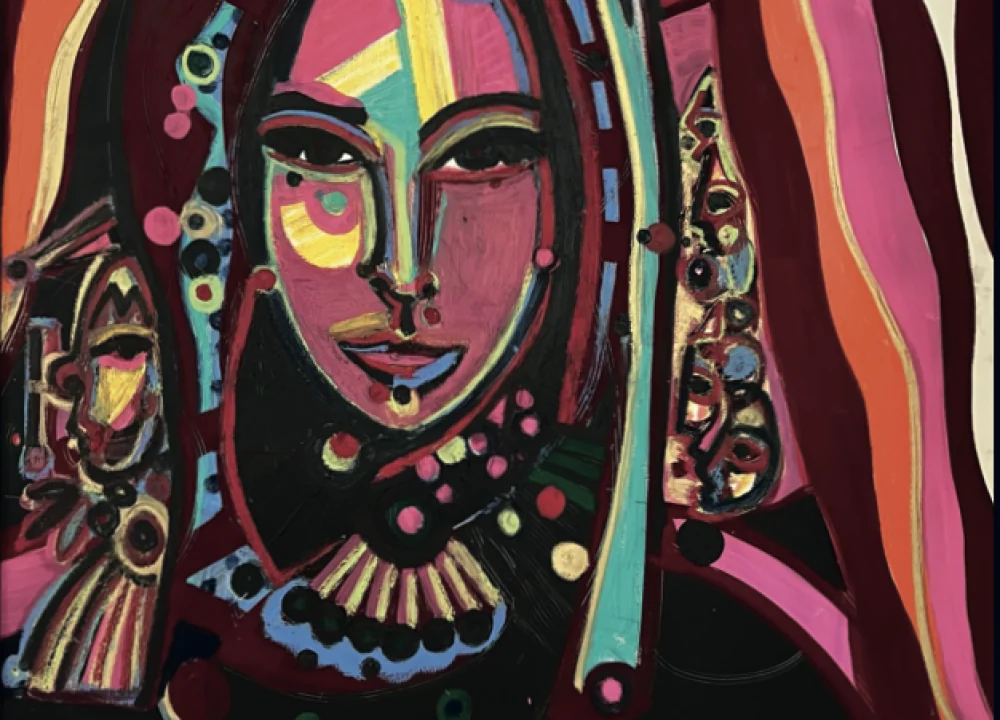
The most common mistake in a first purchase is a work that is too small. Three medium canvases side by side make a wall look busy. One large canvas makes the same wall look calm and the room look larger. Measure the wall, photograph it with a tape measure in the frame, and note when the sun hits it.
If a work is commissioned, format, palette and delivery window are agreed in advance. They cannot be renegotiated afterwards, which is another reason to describe the room early.
Transport is part of the purchase
- Acid-free tissue, corner protection, shock-absorbing padding and a rigid outer case as standard.
- Large formats and sculpture travel in custom-built packaging.
- Shipping fully insured through logistics firms that handle art, with a white-glove option including hanging.
- Transit damage reported in writing within 48 hours, ideally with photographs of packaging and work.
None of this is expensive relative to the work. All of it is expensive to arrange after something has already gone wrong.
Living with the work
Keep a canvas out of direct sun and away from a radiator. Aim for stable humidity, roughly 45 to 55 per cent. Dust once a year with a soft dry brush, top to bottom, and nothing else. Anything beyond that belongs to a conservator.
Lighting matters more than most people expect. Indirect daylight plus a neutral-white spot with high colour rendering at about 30 degrees will do more for a painting than a second piece of furniture ever will.
Why this particular hand
Tollmann grew up in the house of his father, the artist Günther Tollmann, where Niki de Saint Phalle, Jean Tinguely, Yves Klein and Joseph Beuys were visitors. He took private drawing lessons with Beuys from 1978 and worked in Francis Bacon’s London studio from 1981. In the 1980s his work was shown at the Museum of Modern Art in New York, and towards the end of that decade he advised Christie’s in London.
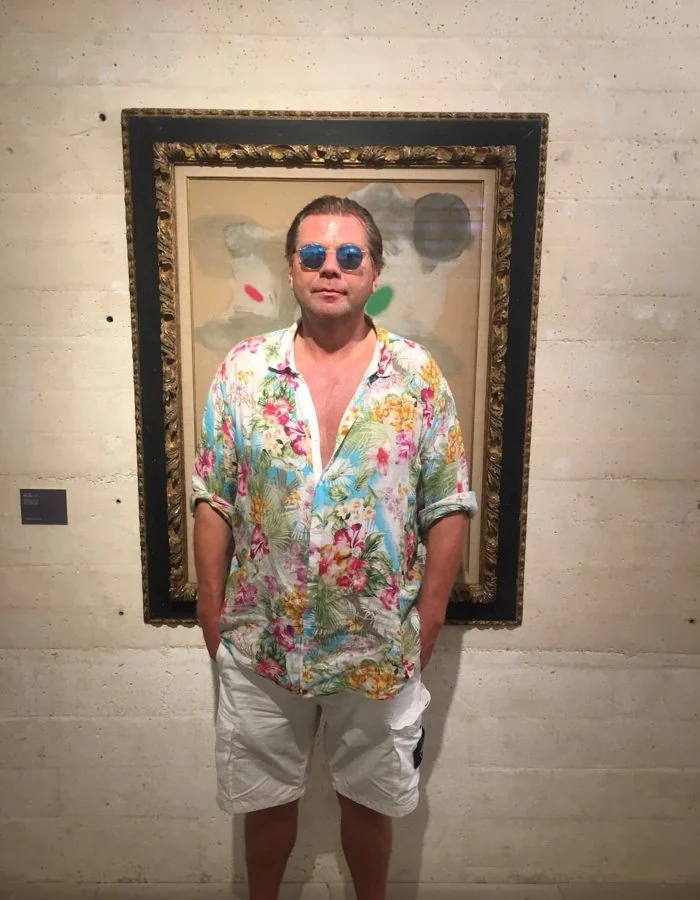
The paintings themselves are neo-expressionist: gesture, feeling and colour ahead of faithful depiction, with human encounter and the portrait as recurring subjects. Current work is listed in the studio gallery.
One last practical note
There is no statutory right of withdrawal on individually produced unique works. That is the trade-off for a painting made for one buyer rather than for an anonymous market, and it is the reason a studio visit or a private video preview belongs before the decision, not after.
See current work and arrange a viewing
Frequently Asked Questions (FAQ)
What documents should come with an original painting?
A hand-signed certificate of authenticity with a catalogue number, the provenance and a high-resolution reference photograph. The studio continues to keep the catalogue so the provenance stays complete on a later sale.
How large should a first painting be?
Larger than most buyers expect. One large canvas settles a wall, while several medium works next to each other make it look busy. Measure the wall and note the usual viewing distance before choosing.
How should a canvas be looked after?
Keep it out of direct sunlight and away from radiators, hold humidity around 45 to 55 per cent, and dust once a year with a soft dry brush. Anything further belongs to a conservator.
More from Living

Luxury Home Architecture & Design: The Complete Guide
The complete luxury home design guide: architectural styles, 2026 interior trends, smart-home tech, sustainable systems, kitchens, baths, lighting and…

The Smart Home Revolution: Integrating Cutting-Edge Technology into Luxury Residences
Beyond Gadgets: What Smart Home Actually Means in 2026 Step into any luxury property showcase today and you will hear the same buzzwords, smart home,…

Luxxu Presents the Talie Collection: When Mid-Century Modern Meets Sculptural Design
A New Era of Luxury Design The Talie Collection by Luxxu is more than furniture, it is a sculptural statement. With a strong architectural influence, t…