The Complete Guide to Luxury Travel: From Private Jets to Hidden Gems
What Defines Luxury Travel in 2026 Luxury travel in 2026 is no longer defined by thread count and champagne alone. Today’s affluent traveler demands authenticity, privacy, an…

What Defines Luxury Travel in 2026
Luxury travel in 2026 is no longer defined by thread count and champagne alone. Today’s affluent traveler demands authenticity, privacy, and transformation, the kind of experience that cannot be replicated, photographed adequately, or summarized in a TripAdvisor review. The post-pandemic recalibration has accelerated several trends: a flight from mass tourism toward remote and exclusive destinations, an insistence on wellness integration at every touchpoint, and a radical redefinition of what “five-star” means in an era where the world’s best hotels are often the ones you’ve never heard of.
The modern luxury traveler moves through the world differently. They value time over money, access over opulence, and stories over souvenirs. A private jet isn’t a status symbol, it’s a time machine that converts a three-day journey into a three-hour hop. A personal travel advisor isn’t an extravagance, they’re the architect of an irreplaceable week of your life. This guide unpacks every dimension of luxury travel as it exists today, from the practical economics of private aviation to the subtle art of packing for a month with a carry-on.
Private Aviation: The Ultimate Freedom
Private aviation has undergone a quiet revolution. What was once the preserve of billionaires and heads of state has fragmented into a spectrum of access points, each suited to a different travel profile. The key is understanding which model aligns with your frequency, flexibility needs, and budget.
Charter vs Fractional Ownership vs Jet Cards
On-demand charter remains the entry point for most private flyers. You book a specific aircraft for a specific trip, paying by the hour. The advantage is zero commitment, you pay only when you fly. Major operators like NetJets, VistaJet, and Wheels Up offer guaranteed availability within as little as 24 hours’ notice. Expect to pay anywhere from $5,000 to $15,000 per hour depending on aircraft size, route, and positioning requirements.
Fractional ownership suits those flying 50 or more hours annually. You purchase a share of a specific aircraft, typically in 1/16th increments, and pay monthly management fees plus an occupied hourly rate. NetJets pioneered this model, and it remains the gold standard. The economics make sense at around 50bis400 hours per year. Below that threshold, charter or jet cards are more cost-effective; above it, full ownership may pencil out.
Jet cards occupy the middle ground. You pre-purchase a block of flight hours, typically 25, 50, or 100, at a fixed hourly rate with guaranteed availability. The appeal is predictability: no capital outlay, no asset depreciation, and transparent pricing. Providers like Sentient Jet, Jettly, and Air Partner dominate this space. Jet cards are ideal for the traveler who values consistency but isn’t ready to commit to fractional ownership.
What Private Jet Travel Actually Costs
Let’s talk real numbers. A light jet, think Citation CJ3 or Phenom 300, seats 6bis8 passengers, has a range of roughly 2,000 nautical miles, and costs $2,500, $4,000 per hour on a jet card or charter basis. A midsize jet like the Hawker 800XP or Citation XLS runs $4,000, $6,500 per hour. Heavy jets, Gulfstream G450, Falcon 7X, push $8,000, $15,000 per hour.
A transcontinental round-trip from New York to Los Angeles on a midsize jet: approximately $40,000, $55,000. A New York to London round-trip on a heavy jet: $120,000, $180,000. These figures include fuel, crew, catering, and standard ground handling. International fees, de-icing, and overnight crew costs add incrementally.
For those who find these numbers daunting, semi-private services like JSX, Aero, and Surf Air offer a compelling middle path, scheduled flights on 30-seat jets from private terminals, with fares starting around $500, $1,500 per leg. You skip the commercial terminal entirely, arriving 20 minutes before departure.
The World’s Best Luxury Hotels and Resorts
The luxury hotel landscape in 2026 is bifurcated between urban sanctuaries and remote retreats, each serving fundamentally different needs. The best properties in both categories share a common thread: they make you feel like the only guest in a fully staffed private residence.
Urban Icons: Aman, Four Seasons, Mandarin Oriental
In the urban luxury space, three brands consistently set the standard. Aman, with city properties in Tokyo, New York, and Venice, delivers monastic minimalism with obsessive service ratios (often 5:1 staff-to-guest). The Aman Tokyo, occupying the top floors of the Otemachi Tower, remains the benchmark for urban serenity, with its 30-meter pool overlooking the Imperial Palace Gardens.
Four Seasons operates at a different scale but maintains remarkable consistency across its 120+ properties. The Four Seasons George V in Paris, with its three Michelin-starred Le Cinq, and the Four Seasons Bangkok, reinvented in 2024 along the Chao Phraya River, exemplify the brand’s ability to blend local character with global standards. Four Seasons excels at the business-luxury intersection: flawless connectivity, 24-hour anything-anytime service, and properties strategically positioned in every financial capital.
Mandarin Oriental distinguishes itself through design and dining. The Mandarin Oriental Hong Kong, the brand’s flagship, combines old-world glamour with cutting-edge spa technology. Their “Fans of MO” loyalty program, invitation-only and intentionally opaque, rewards repeat guests with personalized amenities that go far beyond a fruit basket.
Remote Retreats: Soneva, Six Senses, Como
If urban luxury is about removing friction, remote luxury is about creating magic. Soneva, with properties in the Maldives (Soneva Fushi, Soneva Jani) and Thailand (Soneva Kiri), pioneered the “no news, no shoes” philosophy. Villas start at $3,000 per night and can exceed $25,000 for overwater reserves with private water slides. The Soneva experience is defined by its “barefoot butler” service, open-air cinema screenings, and a commitment to sustainability that includes on-site glass recycling studios and organic gardens.
Six Senses has expanded aggressively from its Asian roots into Europe and the Americas. Properties in Ibiza, the Douro Valley, and the Maldives emphasize wellness integration, sleep programs designed by neuroscientists, spa treatments rooted in local healing traditions, and menus calibrated to your biometric data. A week at Six Senses Zil Pasyon in the Seychelles, with its dramatic granite boulder beaches and private island setting, starts around $15,000 for two.
Como Hotels and Resorts takes a more intimate approach. With fewer than 20 properties globally, each Como feels like a wealthy friend’s impeccably designed estate. Como Shambhala Estate in Bali, the brand’s spiritual heart, offers wellness immersions that blend Ayurveda, Traditional Chinese Medicine, and modern fitness science. Rates are more accessible, typically $800, $2,500 per night.
When to Book Direct vs Through a Travel Advisor
For standard room bookings at major chain properties, booking direct often yields the best flexible rate and earns loyalty points. But for suites, multi-room villas, and stays during peak periods, a well-connected travel advisor unlocks value that no website can match: guaranteed upgrades at booking, resort credits of $200, $500 per stay, early check-in and late checkout, and, critically, someone who can fix problems when things go wrong. The best advisors belong to consortia like Virtuoso, Signature Travel Network, or American Express Fine Hotels & Resorts, which negotiate these benefits at scale.
Bespoke Experiences: Beyond the Hotel
The most memorable luxury travel moments rarely happen inside a hotel room. They unfold when a private guide unlocks the Sistine Chapel before dawn, when a helicopter drops you on a glacier with a pop-up lunch waiting, or when a local professor walks you through the backstreets of Kyoto revealing tea houses that have operated for four centuries.
Curated experiences now drive booking decisions more than thread count. Leading operators like Black Tomato, Based on a True Story, and Abercrombie & Kent specialize in constructing narratives: a week tracing the Silk Road by private train, a culinary odyssey through Oaxaca with a Michelin-starred chef as your companion, or a conservation safari in Rwanda where you participate in gorilla health monitoring alongside veterinarians.
The rise of the “experience designer”, a hybrid between travel agent and creative director, means that even seemingly impossible requests are negotiable. Want to dine at a restaurant with a three-month waitlist tonight? Your advisor has a relationship with the maître d’. Want your children to spend an afternoon learning falconry from a Bedouin master in the Dubai desert? It can be arranged with 48 hours’ notice. The currency of luxury travel is no longer money, it’s relationships and reputation.
The Luxury Travel Advisor: Why You Need One
The best travel advisors function as a combination of concierge, negotiator, and insurance policy. They have visited the properties they recommend, know which room numbers have the best views, and can tell you whether the “ocean view” category actually overlooks a parking lot at high tide.
A good advisor costs you nothing additional: they’re compensated by the hotels and operators they book. A great advisor saves you money by steering you away from overpriced mediocrity and toward properties that represent genuine value. They also serve as your advocate when travel disruptions occur: missed connections, hotel overbookings, and sudden itinerary changes are their domain, not yours to solve from a foreign time zone.
When selecting an advisor, look for specialization. Someone who books everything from cruises to safaris to ski trips is probably mediocre at all of them. The best advisors have deep expertise in one or two regions or travel styles. Ask about their last three trips to your intended destination. If they haven’t been there recently, find someone who has.
Seasonal Intelligence: When to Go Where
Timing is the single most under-leveraged variable in luxury travel. Visiting a destination during its shoulder season, the weeks flanking peak tourist periods, often yields the same weather, half the crowds, and rates reduced by 30bis50%. The Mediterranean in late September offers warm seas and empty beaches; the Caribbean in early December delivers perfect conditions before the holiday surge; Japan in late November gives you autumn foliage without the October crowds.
Understanding micro-climates is equally important. Bali’s “rainy season” (November, March) primarily affects the south, Ubud remains relatively dry and gloriously uncrowded. The Maldives’ monsoon (May, October) varies significantly by atoll; some northern atolls see only brief afternoon showers while southern atolls experience extended rain.
For the ultimate in seasonal strategy, consider the counter-programming approach: ski in the Southern Hemisphere (Chile, New Zealand) during the Northern Hemisphere summer; chase winter sun in the Seychelles or Mauritius while Europe shivers; visit the Greek islands in April when wildflowers blanket the hillsides and you’ll have ancient ruins entirely to yourself.
Travel Insurance and Security for High-Net-Worth Travelers
Standard travel insurance is inadequate for luxury travelers. When your trip costs six figures, a policy that caps trip cancellation at $10,000 is meaningless. High-net-worth travelers require bespoke coverage that accounts for non-refundable private jet deposits, villa prepayments, and the cascading costs of a disrupted multi-leg itinerary.
Specialist providers like Chubb, AIG Private Client Group, and PURE Insurance offer policies with cancellation limits of $250,000 or more, medical evacuation to the hospital of your choice (not the nearest one), and security extraction in the event of political instability. Annual multi-trip policies often provide better value than per-trip coverage for those traveling more than three times per year.
On the security front, firms like International SOS, Global Guardian, and Crisis24 provide real-time intelligence, on-the-ground security personnel, and extraction capabilities in high-risk destinations. For travel to regions with elevated kidnapping risk, parts of Mexico, Brazil, sub-Saharan Africa, a security detail is not paranoid; it’s prudent.
Sustainable Luxury Travel
Sustainability in luxury travel is no longer optional: it’s an expectation. But genuine sustainability goes far beyond eliminating single-use plastics and asking guests to reuse towels. The properties leading this conversation have fundamentally rethought their relationship with their environment.
Soneva imposes a 2% environmental levy on every stay, which funds the Soneva Foundation’s carbon offset projects, coral restoration programs, and community development initiatives. The Brando in French Polynesia runs entirely on solar power and coconut oil biofuel, with a seawater air-conditioning system that reduces energy consumption by 70%. Fogo Island Inn in Newfoundland operates as a community-owned social enterprise, with all profits reinvested into the local community.
The thoughtful luxury traveler evaluates properties not by their marketing claims but by third-party certifications: EarthCheck Platinum, LEED certification, B Corp status, and membership in The Long Run, an association of tourism businesses committed to the “4Cs” of Conservation, Community, Culture, and Commerce.
The Digital Nomad Luxury Edition
The convergence of remote work and luxury travel has spawned a new archetype: the affluent digital nomad. This traveler isn’t backpacking through Southeast Asia on a shoestring, they’re spending three months in a Soneva villa with Starlink connectivity, working New York hours from the Maldives.
Several hotel groups have responded with extended-stay luxury concepts. Oetker Collection’s Masterpiece Estates offers multi-month villa rentals with full hotel services. Mandarin Oriental Exclusive Homes provides private residences with the brand’s signature service. Inspirato and Exclusive Resorts operate on a membership model, giving access to a portfolio of luxury homes worldwide without the burden of ownership.
The infrastructure requirements for luxury remote work are specific: guaranteed high-speed internet (minimum 50 Mbps, preferably via Starlink), a dedicated workspace with an ergonomic setup and external monitor, reliable power (backup generator essential in developing markets), and timezone-appropriate service hours. Before booking, call the property and ask a staff member to run a speed test from the specific villa you’ll occupy, not the lobby.
Packing for Luxury: The Art of Traveling Light
The most sophisticated travelers move through the world with remarkably little luggage. The goal isn’t minimalism for its own sake, it’s the freedom of clearing customs while others wait at the carousel, of navigating cobblestone streets without wheels, of accepting an unexpected upgrade to a seaplane with strict weight limits.
The framework: one carry-on roller, one personal item, and a garment bag that folds into the roller when not needed. This provides enough capacity for a two-week trip with multiple climates and dress codes, assuming you’re willing to use hotel laundry services (which, at the properties discussed in this guide, are exceptional and often same-day).
Essential gear for the luxury traveler: noise-canceling headphones (Bose or Sony), a universal power adapter with multiple USB-C ports, a portable Wi-Fi hotspot as backup, compression packing cubes (Peak Design or Eagle Creek), and a high-quality leather dopp kit that doesn’t leak. Clothing should follow a capsule wardrobe approach: neutral foundation pieces with one or two statement items, everything machine-washable or dry-clean-friendly, shoes limited to three pairs maximum including what you wear on the plane.
Your Luxury Travel Planning Framework
Distill everything in this guide into a repeatable planning sequence:
- Define the purpose. Are you seeking adventure, restoration, cultural immersion, or celebration? The answer dictates every subsequent decision.
- Select your window. Identify the shoulder season for your chosen destination and book 6bis12 months ahead for peak properties.
- Engage an advisor. Choose a specialist with recent, firsthand experience in your destination.
- Lock the hard-to-book elements first. Private aviation, the must-do restaurant, the specific villa or suite, everything else can flex around these anchors.
- Build in negative space. The most common luxury travel mistake is over-scheduling. For every three days of activities, leave one day completely unstructured.
- Verify connectivity. If working remotely, confirm internet speeds, workspace setup, and time zone compatibility before committing.
- Insure appropriately. Match your coverage to your total trip cost and destination risk profile.
- Pack light, leave room. You’ll acquire things along the way, art, textiles, wine. Leave space for them.
Luxury travel is ultimately about the deliberate allocation of your most finite resource, time. Every decision in the planning process should be filtered through a single question: does this make my experience richer, deeper, or more memorable? If the answer is no, eliminate it. The best luxury trip isn’t the most expensive one, it’s the one that changes how you see the world, and perhaps yourself.
Explore more travel insights at laxary.com/topics/travel/ and lifestyle content at laxary.com/topics/living/.
More from Travel

Private Aviation & Jet Charter: The Complete Guide
Private jet charter guide: compare aircraft types, hourly costs from $1,800, charter vs. fractional vs. ownership, jet cards, top operators, FBOs and …
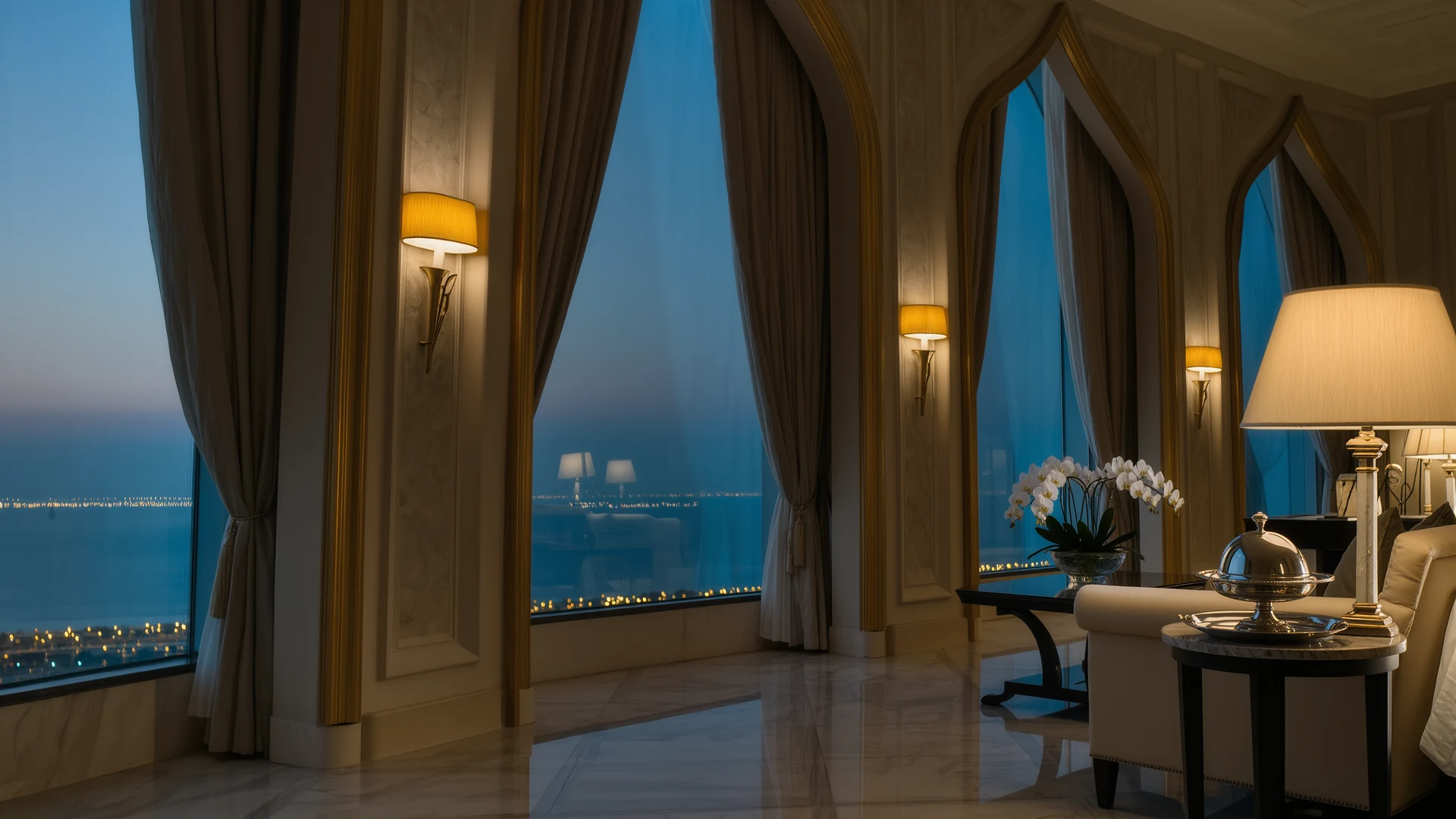
The World’s Most Exclusive Luxury Hotels: The Complete Guide
Discover the world’s most exclusive luxury hotels, from €25,000 Paris palaces and private Maldives islands to Serengeti safari lodges and iconic…
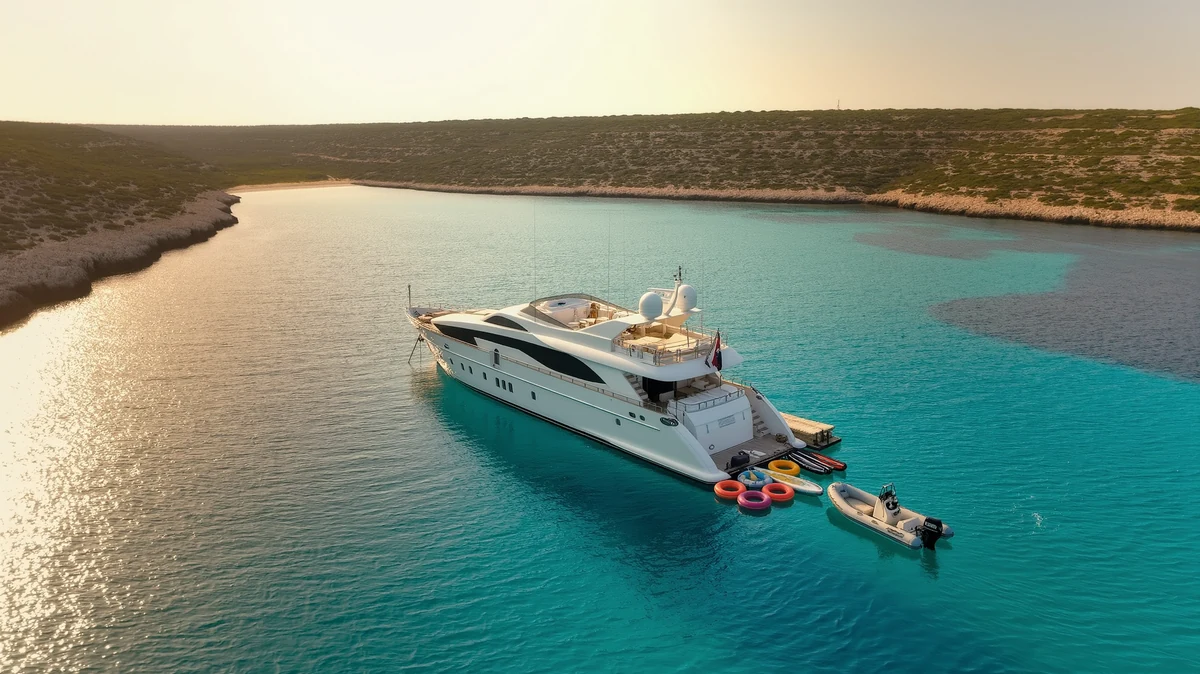
Superyacht Chartering: The Complete Guide to Luxury on the Water
Discover everything you need to know about superyacht chartering, from choosing the right yacht and destination to understanding pricing, crew expect…