Superyacht Chartering: The Complete Guide to Luxury on the Water
Discover everything you need to know about superyacht chartering, from choosing the right yacht and destination to understanding pricing, crew expectations, and charter etiquette …
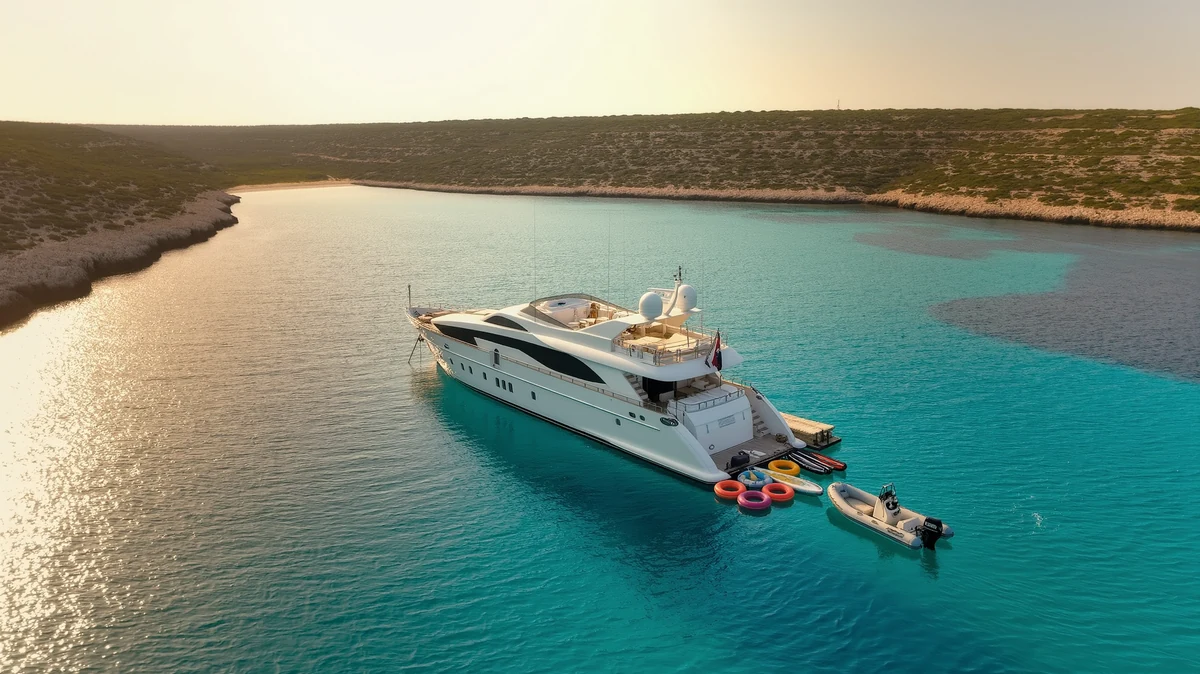
The Superyacht Experience: Why Charter Before You Buy
There is a reason seasoned ultra-high-net-worth individuals rarely purchase a superyacht outright without first chartering: the charter experience is the ultimate test drive, a no-commitment immersion into a world where every detail is curated to your preferences. Chartering a superyacht means stepping aboard a floating six-star resort where the itinerary bends to your whims, the chef prepares exactly what you crave, and the crew anticipates needs you haven’t yet articulated.
The financial logic is compelling. A 60-meter superyacht commands a purchase price north of $50 million, with annual operating costs routinely exceeding 10% of the vessel’s value. A one-week charter on a comparable yacht might cost $300,000 to $500,000, a fraction of the ownership burden. More importantly, chartering allows you to sample different builders, layouts, crew dynamics, and destinations before committing to a purchase that locks you into a single configuration for years.
Chartering also eliminates the hidden headaches of ownership: flag registration, crew management, dry-dock scheduling, and the endless parade of maintenance that even the finest vessels require. For first-timers especially, chartering transforms what could be an overwhelming logistical puzzle into a turnkey luxury experience where your only responsibility is showing up at the dock with your passport and a sense of adventure.
Understanding the Charter Market
The superyacht charter market is a global ecosystem valued at over $15 billion annually, with approximately 5,500 yachts available for charter worldwide at any given time. Navigating this market requires understanding the fundamental categories that define the experience, the price, and the destinations accessible to you.
Motor Yachts vs Sailing Yachts
Motor yachts dominate the charter market, representing roughly 80% of available vessels. They offer speed, stability, and expansive interior volumes that translate into larger staterooms, more elaborate entertainment spaces, and a broader selection of water toys. A motor yacht can cover 200 to 300 nautical miles in a day, allowing you to wake up in St. Tropez and fall asleep off the coast of Monaco. They are the definitive choice for those who prioritize space, luxury amenities, and the ability to cover ground quickly.
Sailing yachts, by contrast, appeal to purists: those who crave the romance of wind-powered travel, the sound of sails snapping taut, and the intimate connection to the sea that only a sailing vessel can provide. Modern sailing superyachts, particularly those from builders like Perini Navi and Royal Huisman, offer interiors that rival their motorized counterparts while delivering a completely different sensory experience. They tend to be quieter under sail, more environmentally conscious, and uniquely suited to destinations like the Greek Islands or the Caribbean’s Leeward Islands, where the journey between anchorages is measured in dozens rather than hundreds of miles.
Size Categories and What They Mean
Superyacht charter sizes fall into distinct tiers, each unlocking different capabilities and experiences:
Below 30 meters (100 feet): Intimate, often owner-operated or with a compact crew of 2bis4. Ideal for couples or small families. Limited toy storage and tender capabilities, but access to shallower anchorages and smaller, more secluded harbors. Weekly rates typically $20,000, $60,000.
30bis50 meters (100bis165 feet): The sweet spot for most charterers. Four to six staterooms accommodating 8bis12 guests, professional crew of 6bis10, comprehensive toy selection including jet skis and tenders, and genuine superyacht amenities including jacuzzis and beach clubs. Rates range from $70,000 to $250,000 per week.
50bis70 meters (165bis230 feet): True superyacht territory. Multiple decks, dedicated spa facilities, gyms, cinemas, and crews of 12bis20. These vessels carry multiple tenders, extensive water toy arsenals, and often feature helicopter-capable decks. Weekly rates from $250,000 to $600,000.
Above 70 meters (230+ feet): The megayacht tier. Seven or more staterooms, crews exceeding 20, onboard spas, beauty salons, submarines, and helipads. These are floating palaces that rival the world’s finest hotels. Weekly rates start around $600,000 and can exceed $3 million for the largest vessels.
The World’s Best Yachting Destinations
Destination selection is arguably the most consequential decision in planning a superyacht charter. The right destination matches your yacht’s capabilities, your group’s interests, and the season’s weather patterns. Here are the world’s premier yachting grounds, each offering a distinct flavor of the superyacht lifestyle.
Mediterranean: French Riviera, Amalfi Coast, Greek Islands, Croatia
The Mediterranean remains the undisputed heartland of superyacht chartering. The French Riviera delivers the definitive see-and-be-seen experience: dock in St. Tropez for lunch at Club 55, anchor off Cannes during the film festival, and moor in Monaco beneath the shadow of the Casino de Monte-Carlo. The coastline between Nice and Marseille is dense with glamour, Michelin-starred restaurants, and some of the world’s most exclusive beach clubs.
The Amalfi Coast offers a more romantic, cliffside version of Mediterranean luxury. Anchor beneath the pastel villages of Positano, explore the Grotta dello Smeraldo by tender, and dine at waterfront restaurants accessible only by boat. The waters around Capri and Ischia add volcanic hot springs and the legendary Blue Grotto to the itinerary.
The Greek Islands are a charterer’s dream for variety: the whitewashed Cyclades (Mykonos, Santorini) for vibrant nightlife and iconic caldera views; the Ionian Islands (Corfu, Kefalonia) for lush, green landscapes and family-friendly anchorages; and the Dodecanese (Rhodes, Patmos) for history-rich exploration. Greece’s dispersed geography makes it ideal for two-week charters that sample multiple island groups.
Croatia has emerged as the Mediterranean’s hottest new charter destination. The Dalmatian Coast offers over a thousand islands, medieval port towns like Dubrovnik and Hvar, and crystalline Adriatic waters. Croatia combines Mediterranean charm with relative affordability, making it an excellent choice for first-time charterers.
Caribbean: St. Barths, British Virgin Islands, Bahamas
The Caribbean winter season (December: April) is the mirror image of Mediterranean summer, offering warm trade winds, calm anchorages, and an island-hopping culture that feels effortless. St. Barths (St. Barthélemy) is the Caribbean’s answer to the French Riviera, a playground for the global elite where superyachts line the harbor at Gustavia, and New Year’s Eve is the social event of the season. Shell Beach, Nikki Beach, and the runway at Eden Rock are legendary.
The British Virgin Islands offer protected sailing grounds that are perfect for first-timers and families. Line-of-sight navigation between islands, the famous beach bars of Jost Van Dyke, the Baths at Virgin Gorda, and consistent 15bis20 knot trade winds make the BVI the world’s most forgiving charter destination. Sailing yachts particularly thrive here.
The Bahamas, particularly the Exumas, deliver the postcard Caribbean: impossibly turquoise water, swimming pigs, sandbars that appear only at low tide, and the kind of solitude that feels genuinely remote. The Exuma Cays Land and Sea Park offers some of the most pristine snorkeling and diving in the hemisphere.
Southeast Asia: Thailand, Indonesia, Maldives
For charterers seeking the exotic, Southeast Asia offers experiences that the Mediterranean and Caribbean cannot match. Thailand’s Phang Nga Bay, with its limestone karsts rising vertically from emerald water, is one of the world’s most visually spectacular cruising grounds. Phuket and the surrounding islands combine rich culture, extraordinary cuisine, and excellent marina infrastructure.
Indonesia, particularly the waters around Raja Ampat, Komodo, and the Spice Islands, offers the ultimate off-grid adventure. These are destinations for the intrepid charterer: world-class diving among manta rays and whale sharks, encounters with Komodo dragons, and anchorages in bays that have never seen another yacht. The Indonesian archipelago requires a purpose-built explorer yacht and an experienced captain familiar with local conditions.
The Maldives takes luxury isolation to its logical extreme. Chartering here means cruising between atolls so remote that your yacht may be the only vessel visible on the horizon. Overwater dining, world-renowned diving, and resorts accessible only by tender create an experience that exists entirely apart from the rest of the world.
How Charter Pricing Works
Superyacht charter pricing is less straightforward than hotel pricing, and understanding the components is essential to avoiding surprises when the final invoice arrives.
Base Rate vs All-Inclusive
The base rate, the figure you see advertised, typically covers the yacht, crew wages, and onboard insurance. It does not include fuel, food and beverages, dockage fees, communication costs, or crew gratuity. Think of the base rate as the cost of the floating hotel room: you are paying for the physical asset and the professionals who operate it.
Some yachts offer an all-inclusive rate that bundles food, standard beverages, fuel for a specified number of cruising hours, and dockage into a single figure. All-inclusive pricing simplifies budgeting but may limit your choices, the included wine list, for example, may not match your cellar at home. Always clarify what “all-inclusive” means for the specific yacht you are considering.
APA (Advance Provisioning Allowance)
The Advance Provisioning Allowance (APA) is the industry-standard mechanism for covering variable expenses. Charterers deposit an amount, typically 30bis35% of the base charter fee, into an account managed by the captain. Throughout the charter, the captain draws from this account to pay for fuel, provisions, dockage, and any other variable expenses, providing a transparent accounting at the end of the trip. Any unspent funds are returned; any shortfall must be settled before disembarkation.
The APA system creates an unusual dynamic: the captain becomes, in effect, your personal CFO for the week. A well-managed APA account ensures that every euro is accounted for and that no time is wasted haggling over individual expenses during your vacation.
Hidden Costs
Beyond the base rate and APA, several expenses can surprise first-time charterers. Delivery fees apply when a yacht must reposition to meet you at an embarkation point outside its home port, this can add tens of thousands of dollars. Dockage in premium ports like Monaco or St. Barths during peak season can exceed €5,000 per night for a large yacht. Satellite communications and high-speed internet are often billed separately and can be substantial. Crew gratuity, while discretionary, is customarily 10bis15% of the base charter fee and should be factored into your budget from the outset.
Working with Charter Brokers
A skilled charter broker is the single most valuable asset in planning a superyacht charter. Brokers operate on commission paid by the yacht owner, meaning their services cost you nothing directly. A reputable broker brings deep knowledge of individual yachts and crews, information that cannot be gleaned from a brochure or website. They know which captains excel with children, which chefs specialize in specific cuisines, and which yachts have recently undergone refits versus those showing their age.
When selecting a broker, look for membership in industry associations like MYBA (Worldwide Yachting Association) or CYBA (Charter Yacht Brokers Association), which impose ethical standards and financial protections. A good broker will ask detailed questions about your group composition, dietary requirements, preferred activities, and past charter experience before making recommendations. They will also negotiate the contract, handle APA administration, and serve as your advocate if any issues arise during the charter.
The Crew: What to Expect
The crew is what transforms a beautiful yacht into an unforgettable experience. A professional superyacht crew operates with a level of discreet, anticipatory service that surpasses even the finest luxury hotels. The captain is the ultimate authority aboard, responsible for safety, navigation, and the overall guest experience. Expect a captain who is equal parts mariner, diplomat, and concierge, someone who can navigate a storm and arrange a last-minute table at a fully booked restaurant with equal competence.
The chief stewardess manages the interior: housekeeping, table service, laundry, and the countless small details that make a charter feel seamless. The chef operates from a galley that is smaller than most home kitchens yet produces meals that rival Michelin-starred restaurants. The deck crew handles everything from tender operations to water toy setup to the vessel’s immaculate presentation. On larger yachts, specialized roles appear, spa therapists, dive instructors, personal trainers, and nannies, each dedicated to a specific dimension of the guest experience.
A crucial pre-charter ritual is the preference sheet: a detailed questionnaire covering everything from food allergies and wine preferences to favorite flowers and desired cabin temperatures. The more detailed your responses, the more precisely the crew can tailor the experience to your expectations.
Onboard Life: Dining, Entertainment, Water Toys
Life aboard a superyacht revolves around three pleasures: extraordinary dining, seamless entertainment, and access to the water in ways that land-based luxury cannot replicate. Dining is the centerpiece of most charter days. The chef will have reviewed your preference sheet weeks in advance and provisioned accordingly, sourcing local ingredients at each port of call. Meals can be served anywhere, a formal dinner on the aft deck under the stars, a casual lunch on the beach set up by the crew, or breakfast delivered to your stateroom terrace as the sun rises over a new anchorage.
Water toys have become a signature differentiator in the charter market. Beyond the standard selection of jet skis, seabobs, paddleboards, and towable inflatables, top-tier yachts now carry e-foils, underwater scooters, inflatable slides and climbing walls, and even personal submarines. The tender garage doubles as a watersports command center, with the crew trained to deploy and retrieve toys within minutes of anchoring.
Evening entertainment ranges from outdoor cinema setups with popcorn machines to karaoke systems, casino tables, and DJ-equipped beach clubs. The yacht’s AV system is typically controllable from your personal device, allowing you to set the mood, and the volume, for every space on board.
Special Events and Corporate Charters
Superyachts have become premier venues for milestone celebrations and corporate events. A 50th birthday aboard a yacht cruising the Amalfi Coast, a wedding reception anchored off Santorini at sunset, or a multi-generational family reunion exploring the BVIs, these are experiences that no land-based venue can match. The yacht becomes both venue and vantage point, transforming each moment of the celebration into a memory with a constantly changing backdrop.
Corporate charters serve a different purpose: they are relationship-building tools of extraordinary power. Inviting key clients or top-performing employees aboard a superyacht for a day or a week creates an environment of intimacy and exclusivity that fosters genuine connection. Many yachts are equipped with conference facilities, satellite communications, and presentation technology, allowing business to be conducted seamlessly between snorkeling excursions and sunset cocktails. The key constraint for corporate charters is guest count, most yachts are limited to 12 overnight guests regardless of size, a function of international maritime regulations.
Charter Etiquette and Tipping
Superyacht chartering comes with an unwritten code of conduct that seasoned charterers observe instinctively but that first-timers benefit from understanding. Bare feet or soft-soled shoes are standard on deck, high heels and dark-soled shoes damage teak and should never be worn aboard. Respect the crew’s hierarchy: direct requests to the chief stewardess or captain rather than individual crew members, and understand that the crew’s quarters are strictly off-limits.
Tipping is both customary and significant. The industry standard is 10bis15% of the base charter fee, distributed at the end of the charter in cash (typically in the vessel’s operating currency, euros in the Mediterranean, dollars in the Caribbean). The tip is usually handed to the captain, who distributes it among the crew according to rank and responsibility. For exceptional service, charterers sometimes tip above 15% or supplement with individual gifts. A well-tipped crew is a well-motivated crew, and many charterers build long-term relationships with captains and crews they tip generously.
From Charter to Ownership: When to Make the Leap
Many superyacht owners begin as charterers, and the transition point is highly individual. The calculus typically shifts when you find yourself chartering more than six to eight weeks per year, at which point the all-in cost of chartering begins to approach the annual operating cost of a comparable owned yacht. The key advantage of ownership is complete control: your yacht is available on your schedule, configured to your taste, and staffed by a crew you have personally selected and trained.
However, ownership introduces complexities that chartering elegantly avoids. A yacht depreciates. It requires a management company or a full-time captain to handle maintenance, crew payroll, flag registration, and regulatory compliance. It must be positioned seasonally, Mediterranean in summer, Caribbean in winter, which means multi-week transatlantic crossings or expensive transport-ship bookings. And when you are not aboard, the yacht must either sit idle (costing money) or be chartered to offset expenses (introducing wear and tear from strangers).
The most pragmatic path for many is to charter extensively for several seasons, building preferences and relationships, and then, when the time is right, commission a new build or purchase a late-model yacht through a reputable brokerage. The charter experience provides the knowledge base to make that investment wisely.
Your First Charter: A Step-by-Step Plan
Planning your first superyacht charter can feel intimidating, but breaking it into discrete steps makes the process manageable and even enjoyable.
- Define your group. How many guests? What is the mix of couples, singles, and children? This determines the stateroom configuration you need. Remember the 12-guest limit: if your group is larger, you are looking at either multiple yachts or a vessel certified to carry more than 12 (rare and typically above 70 meters).
- Choose your destination and season. Mediterranean charters run May through October; the Caribbean from December through April; Southeast Asia has two distinct monsoon windows. Align your preferred dates with the destination’s prime season.
- Set a realistic budget. Calculate as follows: base charter fee + 35% APA + 15% crew gratuity + travel to and from the embarkation point. A €100,000 base-rate charter typically costs €150,000, €160,000 all-in.
- Engage a charter broker. Interview two or three brokers. The right broker listens more than they talk and asks detailed questions about your preferences before making recommendations. Check MYBA or CYBA membership.
- Complete the preference sheet thoroughly. This document drives the entire onboard experience. Be specific about food allergies, wine preferences, activity levels, and any special occasions being celebrated.
- Review the charter contract (MYBA agreement). Pay particular attention to cancellation policies, insurance requirements, and the force majeure clause. Ensure you have adequate travel insurance that covers charter cancellation.
- Arrive a day early. Fly into your embarkation port the day before boarding. This provides a buffer against travel delays and allows you to board refreshed rather than jet-lagged.
- Communicate openly with the captain. The first conversation upon boarding sets the tone. Express your priorities for the week, any concerns, and your preferred pace, the captain will adjust the itinerary accordingly.
Explore more luxury lifestyle content at Laxary Travel and Laxary Living.
More from Travel

Private Aviation & Jet Charter: The Complete Guide
Private jet charter guide: compare aircraft types, hourly costs from $1,800, charter vs. fractional vs. ownership, jet cards, top operators, FBOs and …
The World’s Most Exclusive Luxury Hotels: The Complete Guide
Discover the world’s most exclusive luxury hotels, from €25,000 Paris palaces and private Maldives islands to Serengeti safari lodges and iconic…

The Complete Guide to Luxury Travel: From Private Jets to Hidden Gems
What Defines Luxury Travel in 2026 Luxury travel in 2026 is no longer defined by thread count and champagne alone. Today’s affluent traveler dem…