The World’s Most Exclusive Luxury Hotels: The Complete Guide
Discover the world’s most exclusive luxury hotels, from €25,000 Paris palaces and private Maldives islands to Serengeti safari lodges and iconic design retreats.…
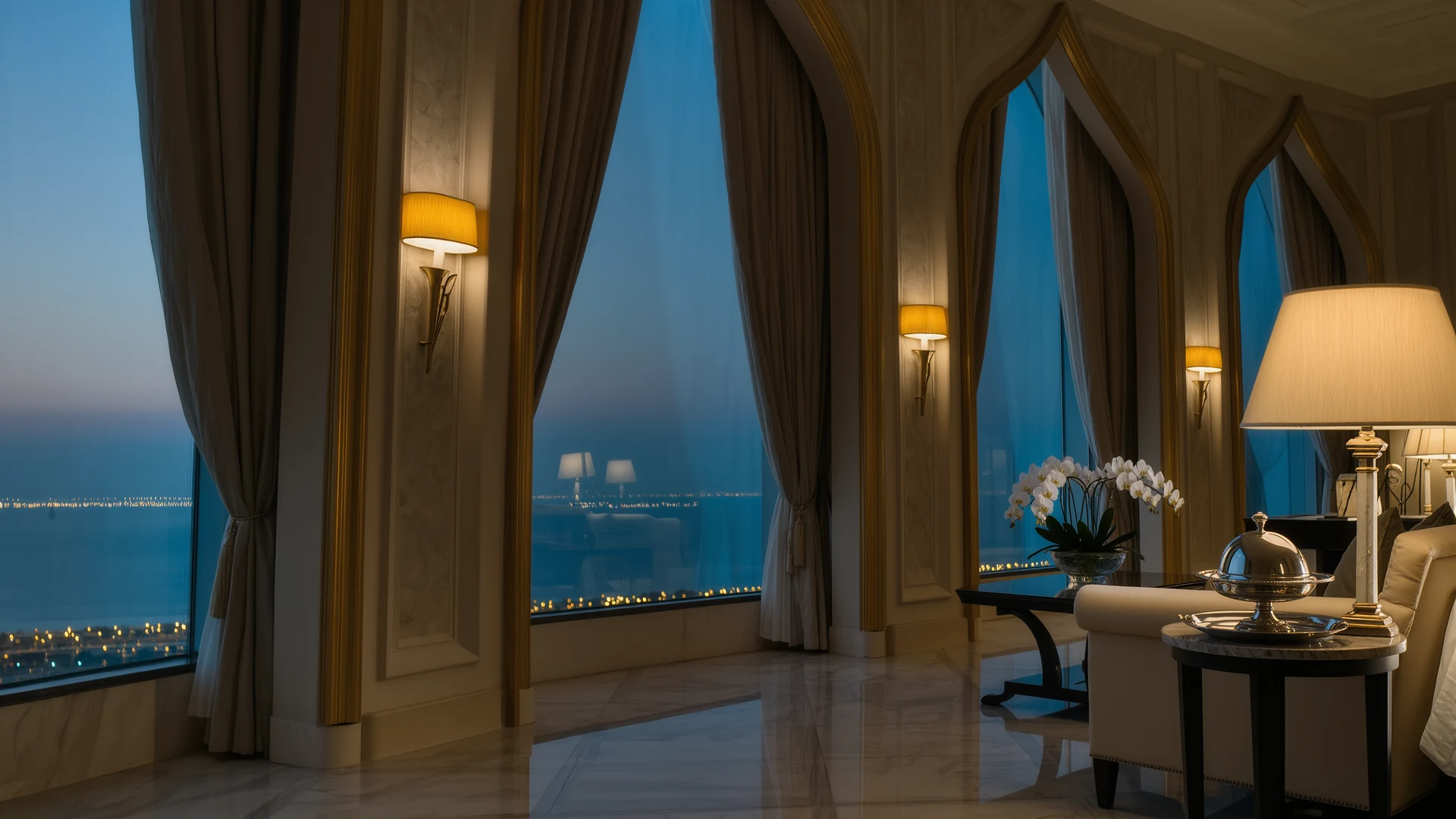
The world's most exclusive luxury hotels span European palaces, private tropical islands, urban sanctuaries, safari lodges and design icons, where rates can exceed €75,000 per night.
Key Takeaways
- Paris's Hôtel Ritz Place Vendôme reopened in 2016 after a €400 million renovation, and its Coco Chanel Suite commands rates routinely exceeding €25,000 per night.
- Cheval Blanc Randheli in the Maldives is LVMH's flagship resort, where the 10,700-square-foot Owner's Villa costs €50,000 per night, reached by a 40-minute seaplane flight from Malé.
- New York's The Mark Penthouse, a 12,000-square-foot duplex, is the largest hotel suite in the United States and commands $75,000 per night with a two-night minimum.
- Dubai's sail-shaped Burj Al Arab rises 321 meters on a man-made island, offering 198 duplex suites with 24-karat gold leaf and an $28,000-per-night Royal Suite.
- Singita Grumeti in Tanzania's Serengeti spans 350,000 acres of private concession, hosts just 140 guests, and funds an anti-poaching unit of 120 rangers.
- Soneva Fushi's 9-bedroom Private Reserve in the Maldives is the world's largest overwater villa at 29,000 square feet, with weekly dry-season rates from $150,000.
- Amangiri in Utah, set on 600 acres of 165-million-year-old sandstone, starts at $3,200 per night, with the three-bedroom Mesa Home at $10,000 per night.
🌐 Also available in: Español · Français
Europe’s Palace Hotels
Europe remains the undisputed epicenter of palatial hospitality, where centuries-old estates and royal residences have been transformed into the world’s most rarefied accommodations. These properties are not merely hotels, they are living museums, architectural masterpieces, and custodians of European heritage that offer guests a genuine taste of aristocratic life.
In Paris, the Hôtel Ritz Place Vendôme stands as the quintessential palace hotel. Following a four-year, €400 million renovation completed in 2016, the Ritz reemerged with 142 rooms and suites that blend Louis XV opulence with modern discretion. The Coco Chanel Suite, where the fashion icon lived for 34 years, remains the most coveted address in the city, commanding rates that routinely exceed €25,000 per night. The hotel’s Bar Hemingway, named for the writer who claimed to have liberated it during WWII, serves €40 cocktails in an intimate wood-paneled setting that has changed little since the 1920s.
Across the English Channel, Claridge’s in London’s Mayfair has been the home-away-from-home for royalty, heads of state, and Hollywood elite since 1856. The hotel’s recent seven-year, eight-floor subterranean expansion added a 9,000-square-foot spa and 40 new rooms without disturbing the Art Deco landmark above. Claridge’s penthouse suites feature interiors by Diane von Furstenberg and David Linley, with panoramic views across London’s most prestigious postcode. Afternoon tea at Claridge’s, served in the Thierry Despont-designed Foyer and Reading Room, requires reservations weeks in advance and costs £85 per person, a small price for a ritual that has remained essentially unchanged since Queen Victoria’s reign.
Italy contributes several crown jewels to the palace hotel canon. Hotel Cipriani on Venice’s Giudecca Island occupies 3 acres of private gardens overlooking St. Mark’s Square. Reachable only by the hotel’s mahogany launch, the Cipriani offers 96 rooms and suites where guests enjoy a level of serenity impossible in Venice’s tourist-choked alleyways. The Casanova Wellness Centre and the Olympic-sized heated pool, filled with filtered seawater, make it one of only two hotels in Venice with a pool. Suites in the Palladio wing start at €2,800 per night in high season.
Switzerland’s Badrutt’s Palace Hotel in St. Moritz has defined Alpine luxury since 1896. Perched above Lake St. Moritz with views of the Engadin Valley, this turreted neo-Gothic monument offers 157 rooms and suites alongside a legendary winter season that transforms the hotel into the social nexus of European high society. The Palace Galerie houses 30 boutiques including Bulgari, Cartier, and Louis Vuitton, while the King’s Social House, overseen by three-Michelin-star chef Jason Atherton, serves dry-aged Chianina beef and truffle-laced delicacies. During the Snow Polo World Cup St. Moritz each January, suites command €8,000 per night with a minimum one-week stay.
Hotel de Crillon, A Rosewood Hotel on Paris’s Place de la Concorde occupies an 18th-century palace commissioned by King Louis XV. Following a four-year restoration led by architect Richard Martinet and artistic director Aline Asmar d’Amman, the hotel reopened in 2017 with 124 rooms and suites that honor the building’s 250-year history while introducing contemporary Parisian flair. The Karl Lagerfeld-designed Les Grands Appartements, two suites conceived entirely by the late couturier, feature 200-year-old Versailles parquet, custom chandeliers, and 2,000-square-foot terraces overlooking the obelisk. Rates for these suites begin at €30,000 per night.
Austria’s Hotel Imperial in Vienna was built in 1863 as the Württemberg Palace and converted to a hotel for the 1873 World’s Fair. The Imperial became the first hotel in the world to install an elevator in 1887 and has hosted every major composer, diplomat, and monarch passing through the Habsburg capital. The Royal Suite, a 1,800-square-foot apartment with original stucco ceilings, silk wall coverings, and a 24-karat gold-trimmed bathroom, runs €15,000 per night. The hotel’s Imperial Torte, a chocolate-marzipan confection created for Emperor Franz Joseph I’s 1873 visit, remains available in the Café Imperial for €8 per slice.
These European palace hotels share a common thread: they are irreplaceable. No amount of capital can create a new hotel inside an actual royal residence that has accumulated centuries of provenance. This scarcity, combined with the continent’s unmatched concentration of cultural and culinary excellence, ensures that Europe’s palace hotels remain the most exclusive accommodations on earth.
Tropical Island Resorts
The world’s most exclusive tropical island resorts occupy that rare Venn diagram intersection of pristine natural beauty, absolute privacy, and flawless service. These properties exist on remote atolls, private cayes, and undeveloped coastlines where the modern world feels impossibly distant and every whim is anticipated by staff-to-guest ratios that frequently exceed five to one.
Cheval Blanc Randheli in the Maldives’ Noonu Atoll represents LVMH’s definitive statement in luxury hospitality. The resort occupies its own private island, accessible only by a 40-minute seaplane flight from Malé, and features 46 villas designed by Belgian architect Jean-Michel Gathy. Each villa, whether perched over the lagoon or nestled on the beach, spans a minimum of 2,600 square feet with 40-foot private infinity pools, 23-foot-high cathedral ceilings, and outdoor rain showers. The Owner’s Villa, a four-bedroom compound on its own islet, encompasses 10,700 square feet and commands €50,000 per night. Cheval Blanc’s Guerlain spa occupies a dedicated island with a single treatment suite, ensuring complete seclusion during the four-hand synchronized massage rituals.
Soneva Fushi, on the Baa Atoll’s private Kunfunadhoo Island, pioneered the “no news, no shoes” barefoot luxury philosophy that now defines the ultra-premium Maldivian resort category. The island spans 2,360 meters by 400 meters, harboring just 71 villas hidden within dense tropical foliage. Soneva’s Crusoe Villas are reachable only by personal speedboat or zipline, while the 9-bedroom Private Reserve, the largest overwater villa in the world at 29,000 square feet, features a waterslide that delivers guests directly into the Indian Ocean from the master bedroom. Weekly rates during the December, April dry season begin at $150,000. The resort employs a dedicated astronomer at its overwater observatory, and the complimentary chocolate and ice cream rooms, open 24 hours with unlimited consumption, have become legendary among repeat guests.
In the Caribbean, Jumby Bay Island, a 300-acre private isle two miles off the coast of Antigua, operates as a Rosewood resort accessible exclusively by the hotel’s private catamaran. No cars exist on the island; guests navigate by bicycle or golf cart along paths shaded by mature palms. The 40 suites and 14 private villas are distributed along two miles of white-sand beach, with the 7,000-square-foot Estate House villa commanding $15,000 per night. Jumby Bay’s hawksbill turtle conservation program, which protects nesting sites along Pasture Bay, allows guests to participate in evening turtle-watching excursions with the resident marine biologist.
The Seychelles contributes North Island, an eco-luxury sanctuary comprising just 11 handcrafted villas on a 500-acre private island. Each villa, designed by architects Silvio Rech and Lesley Carstens, is a sprawling complex of open-air living spaces built from locally harvested wood, glass, and stone, with retractable walls that dissolve the boundary between interior comfort and tropical wilderness. The island employs 150 staff, achieving a roughly 14:1 staff-to-guest ratio. North Island’s approach to exclusivity is absolute: the island is reserved for a maximum of 22 guests at any time, and helicopter transfers from Mahé cost €5,000 round-trip. Weekly all-inclusive rates begin at €60,000 per couple.
Laucala Island in Fiji, owned by Red Bull co-founder Dietrich Mateschitz, spans 3,500 acres with just 25 villas, an average of 140 acres per residence. The island operates its own organic farm, livestock herds, and hydroponic gardens that supply three restaurants and a 24-hour in-villa dining kitchen. Laucala’s fleet includes a DeepFlight Super Falcon submarine for underwater explorations, a fleet of riding horses imported from Australia, and an 18-hole championship golf course designed by David McLay Kidd. Villas start at $5,500 per night; the three-bedroom Hilltop Estate, reachable by private funicular, commands $40,000 per night.
What distinguishes these tropical sanctuaries from merely expensive beach resorts is the totality of the experience. At these properties, exclusivity is not a marketing claim but a physical reality: finite acreage, guest counts limited to double digits, arrival procedures involving private aviation, and ecosystems that cannot be replicated anywhere else. They represent the furthest frontier of the hospitality industry’s pursuit of privacy, where the presence of another guest is an anomaly rather than an expectation.
Urban Sanctuaries
The world’s most exclusive city hotels operate on a simple premise: to provide a sanctuary of absolute calm and discretion amid the world’s most kinetic urban environments. These properties function as private clubs, diplomatic neutral grounds, and cocoons of silence where the city’s chaos is held at bay by regiments of staff trained to render every desire invisible.
Aman Tokyo, occupying the top six floors of the Otemachi Tower in the capital’s financial district, reimagined the urban luxury hotel upon its 2014 opening. The property’s 84 rooms and suites, designed by the late Kerry Hill, are among the largest in any city hotel, with entry-level accommodations spanning 764 square feet. Each room features floor-to-ceiling windows framing Mount Fuji or the Imperial Palace Gardens, furo soaking tubs crafted from basalt, and washi paper sliding doors that evoke a contemporary ryokan. The Aman Spa’s 100-foot swimming pool, suspended 34 stories above street level, offers perhaps the most meditative swim in any metropolis. Entry-level rooms begin at ¥150,000 (approximately $1,100) per night; the 2,800-square-foot Aman Suite commands ¥1.5 million ($10,800).
In New York, The Mark Hotel on the Upper East Side’s Madison Avenue has established itself as the city’s most expensive and sought-after address. The Mark Penthouse, a 12,000-square-foot duplex occupying the entire 16th and 17th floors, is the largest hotel suite in the United States, featuring five bedrooms, six bathrooms, a 2,500-square-foot rooftop terrace overlooking Central Park and the Metropolitan Museum of Art, a conservatory, a grand ballroom, and a 26-foot-long living room ceiling. Designed by Jacques Grange, the penthouse commands $75,000 per night with a two-night minimum. The Mark’s restaurant by Jean-Georges Vongerichten and its Frédéric Fekkai salon reinforce the property’s position as a self-contained luxury ecosystem for the global elite.
Mandarin Oriental, Hong Kong has defined Asian urban luxury since 1963. The hotel’s 432 rooms and suites, renovated over decades while preserving the property’s 1960s soul, overlook Victoria Harbour and the Hong Kong skyline. The Mandarin’s Clipper Lounge has been the city’s power-breakfast venue for six decades, while the 25th-floor Mandarin Grill and Bar, with a Michelin star and interiors by Terence Conran, serves as the boardroom away from the boardroom for Hong Kong’s financial aristocracy. The hotel maintains a 50% repeat guest rate, extraordinary in a city with no shortage of luxury competition.
Dubai’s Burj Al Arab Jumeirah, occupying its own man-made island 280 meters offshore, remains the most recognizable hotel silhouette on earth. The sail-shaped structure rises 321 meters and houses 198 duplex suites, there are no standard rooms, with the smallest spanning 1,820 square feet across two floors. Each suite features floor-to-ceiling windows, private check-in on the suite floor, a dedicated butler team of eight, and 24-karat gold leaf applied to 1,790 square meters of interior surfaces. The Royal Suite at 8,400 square feet features a rotating four-poster bed, a private cinema, a marble staircase, and gold-leaf detailing throughout. Nightly rates for the Royal Suite approach $28,000. The hotel’s fleet of Rolls-Royce Phantoms and its rooftop helipad, which has hosted Tiger Woods teeing off and David Coulthard performing donuts in a Formula 1 car, reinforce the property’s commitment to theatrical luxury.
The Peninsula Tokyo, across from the Imperial Palace and Hibiya Park, combines Peninsula’s legendary service ethos with Japanese precision. The hotel’s fleet includes a custom Rolls-Royce Phantom in the signature Peninsula Green, a 1934 Phantom II for heritage tours, and two MINI Cooper S Clubmans for shopping excursions. All 314 rooms feature the brand’s proprietary in-room technology systems, bedside tablets controlling lighting, temperature, curtains, and television, alongside traditional Japanese elements like shoji-inspired screens and hinoki wood bathtubs. The Peninsula Spa’s ESPA treatments and the 20th-floor Peter restaurant and bar create a destination unto itself within Tokyo’s Marunouchi district.
London’s The Connaught in Mayfair represents the apogee of British understatement in urban hospitality. The 121-room hotel, which first opened in 1815, underwent a £70 million restoration in 2007 that added a six-story wing while preserving the property’s Georgian bones. The Connaught Bar, designed by David Collins, has been named the World’s Best Bar multiple times, serving cocktails like the £5,000 “Connaught Millionaire” featuring vintage champagne and rare cognac. The Aman Spa, the only Aman facility outside an Aman resort, occupies 3,000 square feet of subterranean space beneath Carlos Place. Hélène Darroze at The Connaught holds three Michelin stars for its celebration of seasonal French gastronomy.
The unifying characteristic of these urban sanctuaries is their ability to make the city irrelevant to the guest experience while simultaneously positioning the city’s greatest assets, its skyline, its culture, its gastronomy, at the guest’s absolute disposal. They are islands of perfect control in seas of urban chaos, and this mastery of contradiction is the source of their extraordinary pricing power and enduring appeal.
Safari Lodges and Wilderness Retreats
The most exclusive safari lodges and wilderness retreats redefine what luxury means in remote environments. Here, luxury is not measured in thread count or champagne labels, though both are plentiful, but in access to experiences that have become virtually impossible to replicate: private traversing rights across unfenced wilderness, wildlife densities that pre-date human encroachment, and the sensation of being the only humans for tens of thousands of hectares.
Singita Grumeti in Tanzania’s Serengeti ecosystem spans 350,000 acres of private concession adjacent to Serengeti National Park. The reserve’s five lodges accommodate just 140 guests total across an area larger than Los Angeles, yielding wildlife-viewing experiences that involve no other vehicles, a distinction impossible on the public Serengeti plains. Singita Sasakwa Lodge, the reserve’s flagship, comprises nine air-conditioned cottages and a four-bedroom villa, each with infinity pools overlooking the Serengeti’s endless grasslands. The Great Migration of 1.5 million wildebeest passes through the concession between June and October, providing front-row seats to one of the planet’s greatest natural spectacles. Rates at Sasakwa begin at $2,900 per person per night, all-inclusive. The reserve employs a dedicated anti-poaching unit of 120 rangers, making a stay here an active contribution to one of Africa’s most successful conservation partnerships.
Royal Malewane in South Africa’s greater Kruger National Park hosts a maximum of 24 guests across three lodges within the 30,000-acre Thornybush Private Game Reserve. The property’s guides, led by master tracker Wilson Maila, widely considered the finest tracker in Africa, achieve near-certain Big Five sightings on every three-night stay. The main lodge’s Africa House, a six-bedroom villa with dedicated chef, butler, sommelier, private vehicle, and tracker-guide team, accommodates families and private parties at $25,000 per night. Royal Malewane’s bush dinners, served under candelabra-lit acacia trees, and its spa, centered on a lap pool overlooking a waterhole frequented by elephant herds, create the improbable sensation of five-star European hospitality transplanted to the African bush.
Miavana by Time and Tide on Madagascar’s Nosy Ankao Island combines African safari sensibilities with Indian Ocean castaway fantasies. Reached by helicopter from Diego Suarez, the resort comprises 14 one-to-three-bedroom villas spanning an island that was, until 2017, uninhabited by humans. Each villa measures 4,800 square feet and features a private plunge pool, direct beach access, and a dedicated butler. Activities include helicopter excursions to Ankarana National Park to see crowned lemurs and the world’s largest population of the critically endangered Madagascar fish eagle, diving with humpback whales (seasonal), and deep-sea fishing for dogtooth tuna. Rates start at $3,800 per person per night. The resort’s helipad and fleet of two helicopters make Miavana the sole luxury access point to northern Madagascar’s unparalleled biodiversity.
andBeyond Sossusvlei Desert Lodge in Namibia’s NamibRand Nature Reserve lies in the heart of the world’s oldest desert. The lodge’s ten stone-and-glass suites are spaced for absolute privacy along a rocky escarpment, each featuring retractable skylights over the bed for stargazing in one of only 21 International Dark Sky Reserves worldwide. The on-site observatory houses a Meade LX200R 12-inch telescope; the resident astronomer guides guests through the southern hemisphere’s celestial marvels. The Namib’s dunes, the tallest on Earth at over 300 meters, provide a landscape so alien that it has doubled for extraterrestrial worlds. Quad-biking across the dunes, tracking desert-adapted wildlife including oryx and brown hyena, and hot-air ballooning at dawn over the sand sea constitute a desert experience found nowhere else. Rates begin at $1,400 per person per night.
Fogo Island Inn in Newfoundland, Canada, represents wilderness luxury of an entirely different character. Perched on stilts at the edge of the North Atlantic on an island of 2,400 inhabitants, the 29-room inn was conceived by eighth-generation islander Zita Cobb as both a luxury destination and an economic engine for the community, all operating surpluses are reinvested through the Shorefast Foundation. Rooms feature floor-to-ceiling windows framing the Atlantic, handmade quilts, and wood-burning stoves; the inn’s architecture by Todd Saunders draws on traditional Newfoundland fishing stages. Activities include iceberg watching in spring, foraging for wild berries and mushrooms with island guides, and seven-course tasting menus built around locally caught cod and foraged ingredients. Rates begin at CAD $2,875 per night, all-inclusive, making Fogo Island Inn simultaneously one of the most remote and most expensive hotels in North America.
What distinguishes these wilderness properties is that the luxury they offer, solitude, silence, immersion in functioning ecosystems, is fundamentally non-renewable. As wild places diminish globally, the value of access to genuinely untrammeled landscapes appreciates inexorably. These lodges are not merely hotels; they are conservation holdings, and their rates reflect the staggering cost of maintaining large-scale private wilderness in the twenty-first century.
Boutique and Design Hotels
The boutique and design hotel category has evolved from an alternative to traditional luxury into a luxury tier unto itself, defined not by square footage or star ratings but by singularity of vision, architectural ambition, and the ability to attract guests for whom provenance and aesthetics matter more than room count.
Amangiri in Canyon Point, Utah, represents perhaps the most complete expression of Aman’s philosophy of place. Set on 600 acres in the Utah desert near the Arizona border, the 34-suite resort was designed by architects Marwan Al-Sayed, Wendell Burnette, and Rick Joy to disappear into the 165-million-year-old sandstone landscape. The architecture, a series of concrete pavilions whose geometries echo the surrounding mesa formations, has achieved a form of iconic status rare for any 21st-century building. Amangiri’s 25,000-square-foot Aman Spa features a flotation pavilion, a water pavilion with a soaking pool, and treatments drawing on Navajo healing traditions. The hotel’s Camp Sarika, a collection of ten tented pavilions added in 2020, expanded the property’s footprint into a neighboring canyon. Nightly rates at Amangiri begin at $3,200; the three-bedroom Mesa Home commands $10,000 per night. Lake Powell and the slot canyons of the Grand Staircase-Escalante National Monument lie within a short helicopter flight.
Borgo Santo Pietro in Tuscany’s Val di Melfa occupies a 13th-century villa on 300 acres of organic farmland between Siena and the Mediterranean coast. The property’s 22 rooms and suites, each individually decorated with antiques sourced by the Danish owners during years of European travels, represent a maximalist counterpoint to minimalist boutique trends. Borgo Santo Pietro produces its own wine, olive oil, honey, cheese, and vegetables across 200 cultivated acres. The Michelin-starred restaurant Meo Modo sources 80% of its ingredients from the estate. The on-site 5,000-square-foot holistic spa, helipad, and 10-meter heated pool reinforce the sense of a self-contained Tuscan microstate. Summer rates begin at €1,800 per night.
Nobu Hotel Marbella, occupying a former private estate on Spain’s Costa del Sol, represents the hospitality debut of the Nobu Matsuhisa-Robert De Niro partnership in Europe. The hotel’s 81 rooms and suites frame the Plaza de España and a landscaped garden centered on a circular pool that serves as the property’s social nucleus. The ground-floor Nobu restaurant, the brand’s Spanish flagship, draws both hotel guests and Marbella’s international summer colony for black cod miso and yellowtail jalapeño in a setting that merges Japanese restraint with Andalusian warmth. Penthouse suites with private plunge pools command €3,000 per night in the July, August high season.
The Silo Hotel in Cape Town occupies the grain elevator portion of the historic 1924 grain silo complex above the Zeitz Museum of Contemporary Art Africa on the V&A Waterfront. Thomas Heatherwick’s architectural transformation of the silo, carving away concrete tubes to create the building’s signature pillowed windows, yielded 28 rooms that float above the working harbor with Table Mountain as backdrop. Each room is individually shaped by the building’s industrial geometry and decorated with contemporary African art. The six-floor Royal Suite, a triplex with its own elevator, features a 24-foot ceiling in the master bedroom created by an original silo funnel. Rates range from $1,500 to $14,000 per night.
Tokyo’s Trunk(Hotel) in Shibuya’s Cat Street district reimagines the boutique hotel as a hyper-local cultural hub. The 15-room property, constructed largely from reclaimed materials, emphasizes social responsibility alongside design excellence. The hotel’s restaurant, bar, lounge, and rooftop terrace function as a gathering space for Shibuya’s creative community, blurring the boundary between guest and local. Trunk’s commitment to “socializing”, the brand’s term for community engagement, distinguishes it in a city where hotels have traditionally turned inward. Rooms from ¥75,000 ($550) per night make Trunk one of the more accessible entries in this tier, though its cultural currency arguably exceeds properties at many multiples the price.
Boutique and design hotels succeed precisely where traditional luxury hotels struggle: they cannot be replicated. Each is a one-off, tied to its site, its owner’s taste, its architect’s vision, and a particular moment in design history. For guests who have exhausted the pleasures of grand hotels, whose consistency across properties is both strength and limitation, the boutique tier offers the thrill of encountering something genuinely new.
Private Island Resorts
Private island resorts represent the ultimate expression of exclusivity in hospitality: entire islands operated for the pleasure of a few dozen guests at a time. The category sits at the extreme end of the luxury spectrum, where the barriers to entry, both for guests and for operators, are defined by geography, logistics, and the extraordinary capital requirements of building and maintaining self-sufficient resorts on remote specks of land.
Necker Island in the British Virgin Islands, owned by Sir Richard Branson since 1978, is perhaps the most famous private island resort in the world. The 74-acre Caribbean outpost accommodates up to 48 guests across the Great House, a Balinese-style compound with nine bedrooms, a rooftop jacuzzi, and a mirror-walled dining room, and individual Balinese houses scattered across the island. Necker operates on a buyout model during peak periods: the entire island, including all meals, drinks, water sports, and a staff of 100, rents for $132,000 per night. During “Celebration Weeks” (select periods when individual rooms are bookable), rates begin at $5,200 per couple per night. The island’s fleet includes Hobie Cats, kite-surfing equipment, wakeboards, and a three-person submarine. Necker’s tennis courts, perched on a promontory above the Atlantic, host matches between guests and visiting professionals.
Velaa Private Island in the Maldives’ Noonu Atoll was created by Czech businessman Jiří Šmejc, the name “Velaa” means “turtle” in Dhivehi, referencing the sea turtles that nest on the island. The resort’s 47 villas and residences were built using the finest materials sourced globally: Italian marble from the same quarry used for the Taj Mahal, Burmese teak, Indonesian batu-batu volcanic stone. Velaa’s 1,000-square-meter spa, the largest in the Maldives, features the country’s only snow room and a “cloud nine” relaxation pod that simulates floating. The island’s golf academy by two-time Masters champion José María Olazábal includes a nine-hole short course with GPS-tracked golf boards. The four-bedroom Romantic Pool Residence, reachable only by boat, spans 6,500 square feet and commands $35,000 per night.
Fregate Island Private in the Seychelles covers 740 acres of granite peaks, virgin forest, and seven beaches in the inner Seychelles archipelago. The island hosts just 16 villas, each with private infinity pool, Jacuzzi, and dedicated butler, for a maximum occupancy of 40 guests. Fregate Island’s conservation program has achieved extraordinary success: the island is home to 2,200 free-roaming Aldabra giant tortoises (up from 150 in 1995), the only population of the critically endangered Seychelles magpie-robin outside Cousin Island, and the world’s oldest known Seychelles black parrot population. The island’s seven beaches include Anse Victorin, routinely ranked among the world’s most beautiful. All-inclusive rates begin at €3,500 per couple per night.
COMO Parrot Cay in Turks and Caicos occupies a 1,000-acre island 35 minutes by private boat from Providenciales. The resort’s 72 rooms, suites, and villas are spread across a mile of powdery white beach, with the three-acre COMO Shambhala Retreat, offering yoga, Pilates, Ayurvedic treatments, and a holistic wellness curriculum, serving as the property’s spiritual center. Parrot Cay’s beach houses, including the five-bedroom Sanctuary and the three-bedroom Constant C villa, provide 7,000 square feet of beachfront living with private infinity pools and dedicated staff. The resort’s produce is grown on its organic farm. Rates begin at $1,200 per night in low season; buyout of the entire island’s beach houses approaches $50,000 per night during winter holidays.
The Brando on Tetiaroa in French Polynesia occupies the atoll once owned by Marlon Brando, who discovered it while filming Mutiny on the Bounty in 1960. The carbon-neutral resort operates entirely on solar power and coconut oil biofuel, with a seawater air-conditioning system that reduces energy consumption by 70%. The resort’s 35 villas, each with private plunge pool and direct beach access, are distributed along the white-sand beaches of Onetahi motu. Tetiaroa’s lagoon, protected from the open Pacific by the atoll’s coral ring, supports sea turtle nesting, manta ray congregations, and exceptional snorkeling in water of extraordinary clarity. The Brando’s scientific research station, operated in partnership with the Tetiaroa Society, hosts visiting researchers studying climate change, marine biology, and Polynesian archaeology. Rates begin at €3,600 per night, all-inclusive; the three-bedroom Brando Residence commands €12,000 per night.
The private island category is perhaps the only hospitality segment where the product literally cannot be scaled. There are a finite number of habitable private islands in locations suitable for luxury hospitality, and the capital required to develop one, often exceeding $200 million, combined with the regulatory complexities of building in environmentally sensitive jurisdictions, ensures that supply will remain permanently constrained. For guests, the resulting value proposition is unparalleled: genuine, legally enforceable privacy on a habitable landmass, with no possibility of encountering anyone other than invited staff and fellow guests.
Hotel Loyalty and VIP Programs
The world’s most exclusive hotels operate loyalty ecosystems that bear little resemblance to the points-and-tier programs of major chains. These invitation-only, relationship-based programs function less as reward schemes and more as curated access passes to a parallel hospitality universe where availability, upgrades, and bespoke experiences are guaranteed rather than subject to availability.
Aman Club represents the purest expression of loyalty as relationship rather than transaction. Aman operates no publicly accessible loyalty program; instead, repeat guests are quietly enrolled in the Aman Club by the property’s general manager, typically after three to five stays demonstrating brand affinity. Club membership confers tangible and intangible privileges: priority access to sold-out properties during peak seasons, automatic suite upgrades at check-in, dedicated Aman Club concierges who coordinate multi-property itineraries, exclusive pre-opening access to new Amans (the Aman New York pre-opening phase sold out entirely to Club members), and invitations to Aman Private Jet journeys, 18-day multi-stop itineraries aboard the brand’s Airbus ACJ 319, priced from $150,000 per person. The Aman Club has no published points, no status tiers, and no online redemption portal, reflecting the brand’s conviction that genuine luxury cannot be reduced to an algorithm.
Dorchester Collection’s Diamond Club serves loyal guests across the group’s nine European and American properties, including The Dorchester (London), Hôtel Plaza Athénée (Paris), Hotel Bel-Air (Los Angeles), and Hotel Eden (Rome). The invitation-only program operates through dedicated Diamond Club managers embedded at each property, who maintain detailed preference profiles tracking everything from pillow firmness and mineral water brand to preferred newspaper section and room temperature. The program’s most visible benefit, guaranteed 24-hour room availability at any Dorchester Collection property with 48 hours’ notice, effectively eliminates the most frustrating luxury hotel experience: the inability to secure a room at a preferred property on short notice. Diamond Club members also receive guaranteed 10 a.m. check-in and 4 p.m. checkout at all properties, a benefit of extraordinary practical value for business travelers.
Four Seasons Elite, managed by invitation through the brand’s senior leadership rather than any hotel-level team, extends relationship-based privileges across the group’s 120+ hotels, resorts, and residences. Elite members receive guaranteed availability with 72 hours’ notice at any Four Seasons property worldwide (non-holiday), the general manager’s personal mobile number for each property, custom amenities based on comprehensive preference profiling, and access to otherwise unpublished packages, including the Four Seasons Private Jet itineraries. The program’s quiet power lies in its informality: Elite members communicate preferences to a single central team rather than repeating themselves at each property, creating the illusion that Four Seasons is a single 120-bedroom hotel distributed across the globe.
Rosewood’s Elite Program mirrors Four Seasons’ approach with an emphasis on residential-style properties. Elite members receive guaranteed suite upgrades, personalized welcome amenities reflecting individual preferences (a member who mentioned enjoying single malt during a Shanghai stay will find a bottle of Lagavulin waiting at Rosewood London), and access to Rosewood’s curated city guides assembled by property general managers rather than concierge desks. The program’s integration with Rosewood Residences, privately owned homes within Rosewood properties that owners can place into the rental pool, provides Elite members access to accommodations unavailable through any public channel.
Peninsula’s Pen Club operates as a proprietary booking channel rather than a loyalty program, available only to guests who have completed a minimum of three separate stays at any Peninsula property. Pen Club rates, typically 10-15% below published rates, include daily breakfast, guaranteed room category upgrades, early check-in and late checkout, and the brand’s “Peninsula Time” flexibility benefit, which allows check-in as early as 6 a.m. and checkout as late as 10 p.m. at no additional charge. The Pen Club’s integration with Peninsula’s fleet programs, complimentary Rolls-Royce airport transfers at participating properties, MINI Cooper driving experiences, creates a comprehensive suite of benefits that effectively covers every friction point in the luxury hotel experience.
What distinguishes these programs from mass-market loyalty schemes is their operating premise: that the guest-hotel relationship is fundamentally personal, not transactional. Points-based programs for mid-market and premium brands serve genuine utility functions, airlines and hotels commodified loyalty decades ago, and millions of travelers benefit from this democratization. The ultra-luxury tier, however, has successfully resisted commodification by insisting that loyalty is earned through repeated stays at the same property, recognized by the same people, on the basis of a relationship too complex to be captured by a points ledger. Whether this model will survive the current generation of owners, many of whom are institutional investors accustomed to data-driven loyalty marketing, remains an open question.
Booking Strategies and Upgrades
Securing reservations at the world’s most exclusive hotels, and maximizing the value of those reservations once secured, requires strategies fundamentally different from booking a standard luxury hotel. The properties discussed in this guide operate at the intersection of extreme demand and limited supply, and navigating their booking landscapes demands both tactical knowledge and a network of relationships.
Preferred Partner and Virtuoso programs constitute the single most powerful booking tool for ultra-luxury hotels. These invitation-only travel advisor consortia negotiate proprietary benefits that are unavailable through direct booking or online travel agencies. A typical Virtuoso booking at a participating ultra-luxury property includes: complimentary daily breakfast for two, a property-specific amenity (commonly a $100 food-and-beverage or spa credit), automatic room upgrade at check-in if available, early check-in and late checkout, and complimentary Wi-Fi, all at the hotel’s best available rate. The key insight is that these benefits are additive: they layer atop the hotel’s published rate without increasing it, and they are provided by Virtuoso-member travel advisors at no cost to the client. The difference between a direct booking at Cheval Blanc Randheli and a Virtuoso booking at the identical rate can exceed $2,000 in incremental value over a five-night stay.
Hotel direct-booking advantages for elite-tier guests extend well beyond what any third-party program can offer. For ultra-luxury properties, the general manager’s office maintains visibility into VIP arrivals and often intervenes personally on behalf of recognized guests. A direct booking, particularly when made by the guest’s executive assistant who has a relationship with the hotel’s reservations manager, signals loyalty and enables the hotel’s team to begin preference preparation weeks before arrival. Direct-booking guests at properties like The Carlyle in New York or Claridge’s in London routinely receive room assignments (specific suites by name), welcome amenities (wine and spirits preferences, specific flowers, framed photographs from previous stays), and dining reservations secured before arrival that would be inaccessible to a first-time booker.
Off-peak and shoulder-season strategies unlock availability and pricing that effectively transform the luxury hotel value proposition. The Maldives’ monsoon season (May, October) sees rates at elite resorts drop 35bis50% from high-season peaks, with the added advantage of smaller guest counts and more attentive service. The Caribbean’s hurricane season (June, November) carries genuine weather risk, but with flexible cancellation policies and comprehensive travel insurance, these months offer the only realistic opportunity to experience properties like Jumby Bay Island or COMO Parrot Cay at rates that represent 40% discounts. European palace hotels operate inverse seasonality: January and February produce the lowest rates of the year, with the advantage of empty museums, unreserved Michelin-starred tables, and the cities’ cultural calendars at their most active (opera season, fashion weeks, art fairs).
Suite upgrade strategy at ultra-luxury properties differs fundamentally from standard hotels. At the properties discussed in this guide, the room category gap between entry-level and suites is so vast, often 3x to 5x in nightly rate, that traditional “complimentary upgrade at check-in” strategies underdeliver. Instead, sophisticated bookers employ the following: booking the highest entry-level category rather than the lowest (a Premier Room at Aman Tokyo vs. a Deluxe Room, a price gap of perhaps $200 that positions the booking for a suite upgrade that a base-category room would never receive), requesting upgrades at time of booking through the general manager’s office rather than at check-in (providing the hotel weeks to manage inventory), and leveraging multi-property itineraries (a guest staying at Amanpulo followed by Aman Tokyo carries upgrade momentum between properties).
Long-stay value represents the most under-discussed strategy in luxury hotel booking. Properties like Soneva Fushi, North Island, and Singita Sasakwa offer seventh-night-free or comparable long-stay benefits that effectively reduce nightly rates by 14%. At $5,000 per night, a seven-night stay with one complimentary night yields an effective rate of $4,285, a meaningful savings presented as hospitality rather than discount. Long-stay guests at ultra-luxury properties also receive benefits that short-stay guests cannot: deeper staff relationships, kitchen off-menu privileges (the chef preparing a guest’s favorite dish not on any published menu), and a level of personalization that transforms the hotel from accommodation to second home.
Shoulder-night anchoring at city hotels, arriving Sunday or Monday and departing Thursday or Friday, rather than the weekend peak, can reduce effective rates by 30% at properties like The Connaught or Mandarin Oriental, Hong Kong, where corporate travel patterns drive mid-week availability and weekend compression. This strategy coheres with the practical reality that urban luxury hotels deliver their best experience on weekdays, when restaurants, spas, and public spaces operate at lower occupancy and service ratios tighten.
The meta-strategy unifying these tactics is straightforward: ultra-luxury hotel booking rewards preparation, relationships, and flexibility. Those who book 6-12 months in advance, work through connected intermediaries, and maintain flexibility on dates unlock value that same-day bookers, paying full published rate without amenities, never access. In a segment where a single night can cost more than a family car, the return on strategic booking effort is measured in thousands of dollars per stay.
Price Tiers Comparison
Understanding the pricing architecture of the world’s most exclusive hotels requires abandoning the conventional luxury hotel framework. Standard luxury hotels (Four Seasons, Ritz-Carlton, St. Regis) typically price their entry-level rooms between $500 and $1,500 per night. The properties discussed in this guide begin where the standard luxury tier ends and extend upward into pricing territory that has no natural ceiling.
Entry Ultra-Luxury Tier ($1,000, $2,500/night): Properties in this band represent the gateway to the exclusive hotel universe. These include: Fogo Island Inn (CAD $2,875 all-inclusive, effectively within this tier when factoring meal inclusions), COMO Parrot Cay entry-level rooms ($1,200 off-peak), andBeyond Sossusvlei Desert Lodge ($1,400 per person, all-inclusive), Nobu Hotel Marbella standard rooms ($1,200 high season), and the Trunk(Hotel) Tokyo entry-category rooms ($550, an outlier that earns its place through cultural currency rather than price). These properties deliver exceptional design, service, and location, and they serve as the proving ground where first-time ultra-luxury travelers establish the relationships and preferences that unlock higher tiers.
Core Ultra-Luxury Tier ($2,500, $7,500/night): This band contains the majority of properties discussed in this guide and represents the mature ultra-luxury sector. Properties include: Singita Sasakwa Lodge ($2,900 per person), Aman Tokyo entry-level rooms ($1,100, with suites extending to $10,800), Claridge’s Mayfair suites ($2,800, $5,000), Hotel Cipriani Venice suites ($2,800+), Badrutt’s Palace St. Moritz high-season suites ($5,000+), Borgo Santo Pietro high season ($1,800 entry-level, suites extending to $5,000), The Silo Hotel Cape Town ($1,500, $4,000 entry), Miavana by Time and Tide ($3,800 per person), Amangiri ($3,200 entry, $10,000 for three-bedroom Mesa Home), and Velaa Private Island entry-level villas ($3,000, $5,000). At this level, the distinction between room and suite becomes categorical: a $3,500 entry-level room at Amangiri delivers preferences, service, and access identical to a $10,000 Mesa Home, the price difference reflects square footage, view, and bedroom count alone.
Peak Ultra-Luxury Tier ($7,500, $25,000+/night): At this elevation, pricing reflects scarcity of the specific accommodation rather than the property average. Entries include: Burj Al Arab Royal Suite ($28,000), The Mark Penthouse ($75,000), Cheval Blanc Randheli Owner’s Villa ($50,000), Laucala Island Hilltop Estate ($40,000), Velaa Romantic Pool Residence ($35,000), Hotel de Crillon Karl Lagerfeld Suites ($30,000), and Hotel Imperial Vienna Royal Suite ($15,000). These accommodations generally offer three-plus bedrooms, dedicated butler teams, and spatial dimensions that exceed most private homes. Their nightly rates place them in the company of superyacht charters rather than hotel rooms, and their booking windows, often 12bis18 months for holiday periods, reflect the rarity of the product.
Private Island Buyout Tier ($50,000, $150,000+/night): This category operates on fundamentally different terms. Necker Island ($132,000 per night, 48 guests), North Island Seychelles (€60,000+ per week per couple in entry villas, with full island buyout negotiable), Fregate Island Private (16 villas, complete buyout available), The Brando (entry villas €3,600 per night with the three-bedroom Residence at €12,000, full buyout available), and Soneva Fushi Private Reserve ($150,000+/week). At this level, pricing is negotiated rather than published, and the relationship between guest and management, often spanning years, determines both availability and rate. Island buyouts typically serve multigenerational family gatherings, milestone celebrations, or corporate retreats for leadership teams, and the inclusive nature of the pricing (all meals, beverages, activities, staff, and transfers) creates a counterintuitive value proposition: a $132,000/night Necker Island buyout for 48 guests yields a per-person rate of $2,750, comparable to the Core Ultra-Luxury Tier.
Comparative context is essential to understanding these price tiers. The median nightly rate of an ultra-luxury hotel in this guide, approximately $3,500, exceeds the monthly mortgage payment on the median American home. A seven-night stay at The Mark Penthouse at $75,000 per night totals $525,000 before taxes and service charges, exceeding the lifetime earnings of a median worker in many nations. These comparisons are not offered as moral commentary but as calibration: the world of exclusive hotels operates on economic premises that bear no relationship to mainstream travel, and understanding these premises is essential to navigating them successfully.
Insider Tips
Decades of accumulated knowledge from general managers, travel advisors, and repeat guests of the world’s most exclusive hotels have produced a body of operational wisdom that transforms the guest experience from expensive to extraordinary. These insights are never published on hotel websites and rarely shared outside the inner circle of regular guests.
Communicate preferences through the general manager, not the reservation system. Every ultra-luxury hotel maintains a detailed guest preference database, but the quality of data entry varies enormously. A direct email to the general manager three weeks before arrival, containing a concise list of preferences (room temperature, pillow type, dietary restrictions, spirit and wine preferences, activity interests), will reliably produce in-room results that a reservation-system entry will not. The GM’s personal attention to a guest file sends an invisible signal through the hotel’s hierarchy that this guest warrants the property’s best effort.
Leverage the hotel’s own transport. The complimentary (or nominally priced) airport transfer, the Peninsula’s green Rolls-Royce Phantom, Aman’s chauffeured house car, Cheval Blanc Randheli’s seaplane, is not merely a convenience but a signal to the hotel’s team. The driver radios the front desk with estimated arrival time; by the time the guest reaches the hotel, a reception team member with a tablet has completed check-in paperwork, the room has been inspected by housekeeping management, and the welcome amenity is at the correct temperature. Guests arriving independently, in a taxi or ride-share vehicle, will never receive this orchestrated welcome, regardless of their room category.
Book restaurants and spa treatments at time of room reservation. At properties like The Connaught (Hélène Darroze, three Michelin stars), Hotel de Crillon (L’Écrin, one Michelin star), and Aman Tokyo (The Restaurant by Aman), prime dining slots sell out months in advance, and hotel guests receive priority, but not guarantee. Booking dinner reservations simultaneously with room reservations ensures access to the hotel’s culinary assets; waiting until check-in to request a table at Hélène Darroze frequently results in a 10 p.m. seating, if any availability remains.
Understand the upgrade window. Suite upgrades at ultra-luxury properties are typically decided 48bis72 hours before arrival, when the reservations team finalizes the arrival manifest. A polite email to the reservations manager two weeks before arrival, noting a special occasion and requesting upgrade consideration, materially increases upgrade probability. Upgrade decisions are made before guests arrive, not during check-in, a reality that standard travel advice consistently misrepresents.
Tip appropriately and early. Service charges included in ultra-luxury hotel rates (typically 10bis15%) are distributed across the entire staff according to opaque formulas. Discretionary tips, $20, $50 for a butler at arrival, $10, $20 for housekeeping daily rather than at departure, directed to specific individuals produce disproportionate service returns. A butler who receives a $50 tip on day one of a five-night stay will anticipate needs that a butler tipped on departure never learned to recognize.
Request a property orientation tour, not a room escort. Standard check-in procedure at luxury hotels involves a front-desk agent escorting guests to their rooms and explaining light switches and minibar policies. At ultra-luxury properties, requesting a “property orientation” instead, a 20-minute walk-through of the spa, restaurants, pool, library, and back-of-house areas, establishes guest-staff rapport, provides spatial context that enhances the stay, and signals to the staff that this guest values the hotel as an experience rather than merely a room.
Build relationship continuity. The single most valuable asset in the ultra-luxury hotel economy is the returning guest who is known by name to the general manager, the head concierge, the executive chef, and the director of housekeeping. This status cannot be purchased; it must be earned through repeated stays at the same property. Guests who return to the same property annually, even for short stays, will, by the third visit, receive treatment that no first-time guest at triple the nightly rate can access. The general manager’s Christmas card, the head concierge’s unprompted offer of sold-out opera tickets, the chef’s table visit with a course not on the menu, these are the returns on an investment of loyalty, and they cannot be replicated through any other channel.
Respect the privacy of other guests. The unwritten social contract of ultra-luxury hotels requires that guests treat one another as strangers, even when recognition occurs. The individual dining alone at the next table may be a head of state, a film star, or the CEO of a Fortune 50 company; their presence at the hotel is predicated on the assumption that other guests will preserve their anonymity. Violating this norm, through requests for photographs, extended eye contact, or audible discussion of fellow guests’ identities, is the fastest route to a conversation with hotel security and the effective end of one’s relationship with the property.
Final thought: The world’s most exclusive hotels are fundamentally different from all other accommodations on earth. They are not commodities, not fungible, and not reducible to price comparisons or amenity checklists. They are custodians of heritage, laboratories of service, and sanctuaries of privacy. Understanding them, how they price, how they operate, and how to access their deepest value, is the work of a lifetime. This guide provides the foundation; the building is yours to construct.
Frequently Asked Questions (FAQ)
What is the most expensive suite at the Hôtel Ritz Place Vendôme in Paris?
The Coco Chanel Suite is the Ritz's most coveted address, with rates routinely exceeding €25,000 per night. Named for the fashion icon who lived there for 34 years, it sits within a hotel of 142 rooms reopened in 2016 after a four-year, €400 million renovation that blended Louis XV opulence with modern discretion.
How do you get to Cheval Blanc Randheli in the Maldives?
Cheval Blanc Randheli is accessible only by a 40-minute seaplane flight from Malé. LVMH's resort occupies its own private island in the Noonu Atoll, with 46 villas by architect Jean-Michel Gathy. The four-bedroom Owner's Villa, spanning 10,700 square feet on its own islet, commands €50,000 per night.
What is the largest hotel suite in the United States?
The Mark Penthouse at The Mark Hotel in New York is the largest hotel suite in the United States. The 12,000-square-foot duplex occupies the entire 16th and 17th floors with five bedrooms, six bathrooms, a 2,500-square-foot rooftop terrace overlooking Central Park, a ballroom and a conservatory, costing $75,000 per night.
What makes Dubai's Burj Al Arab so exclusive?
The Burj Al Arab occupies its own man-made island 280 meters offshore and rises 321 meters in a sail shape. It houses 198 duplex suites with no standard rooms, each with a dedicated butler team of eight and 24-karat gold leaf. The 8,400-square-foot Royal Suite, featuring a rotating bed and private cinema, approaches $28,000 per night.
Which safari lodge offers private game-viewing in the Serengeti?
Singita Grumeti in Tanzania spans 350,000 acres of private concession adjacent to Serengeti National Park, hosting just 140 guests with no other vehicles in sight. Its flagship Sasakwa Lodge starts at $2,900 per person per night, and the reserve funds an anti-poaching unit of 120 rangers, making a stay an active conservation contribution.
What is the most exclusive private island resort in the Seychelles?
North Island in the Seychelles is an eco-luxury sanctuary of just 11 handcrafted villas on a 500-acre private island. It is reserved for a maximum of 22 guests at any time, employs 150 staff for a roughly 14:1 ratio, and starts at €60,000 per couple weekly. Helicopter transfers from Mahé cost €5,000 round-trip.
What is special about staying at Soneva Fushi in the Maldives?
Soneva Fushi pioneered the 'no news, no shoes' barefoot luxury philosophy on the private Kunfunadhoo Island, with 71 villas hidden in tropical foliage. It offers a dedicated astronomer at an overwater observatory and 24-hour chocolate and ice cream rooms. Its 9-bedroom Private Reserve is the world's largest overwater villa at 29,000 square feet.
Which luxury hotel best blends architecture with the desert landscape?
Amangiri in Canyon Point, Utah, sits on 600 acres of 165-million-year-old sandstone, with concrete pavilions designed to disappear into the surrounding mesas. Its 34 suites and 25,000-square-foot Aman Spa draw on Navajo healing traditions. Rates begin at $3,200 per night, while the three-bedroom Mesa Home commands $10,000 per night.
Which European palace hotels does the guide spotlight?
What is the largest hotel suite in the United States, according to the guide?
What makes the featured safari lodges so exclusive?
More from Travel
Private Aviation & Jet Charter: The Complete Guide
Private jet charter guide: compare aircraft types, hourly costs from $1,800, charter vs. fractional vs. ownership, jet cards, top operators, FBOs and …
The Complete Guide to Luxury Travel: From Private Jets to Hidden Gems
What Defines Luxury Travel in 2026 Luxury travel in 2026 is no longer defined by thread count and champagne alone. Today’s affluent traveler dem…
Superyacht Chartering: The Complete Guide to Luxury on the Water
Discover everything you need to know about superyacht chartering, from choosing the right yacht and destination to understanding pricing, crew expect…