Luxury Real Estate Worldwide: The Complete Guide to Prime Property Markets
Luxury real estate worldwide guide: compare prime property markets in London, Monaco, Dubai, New York and beyond, with 2026 prices, taxes and buying strategy.…
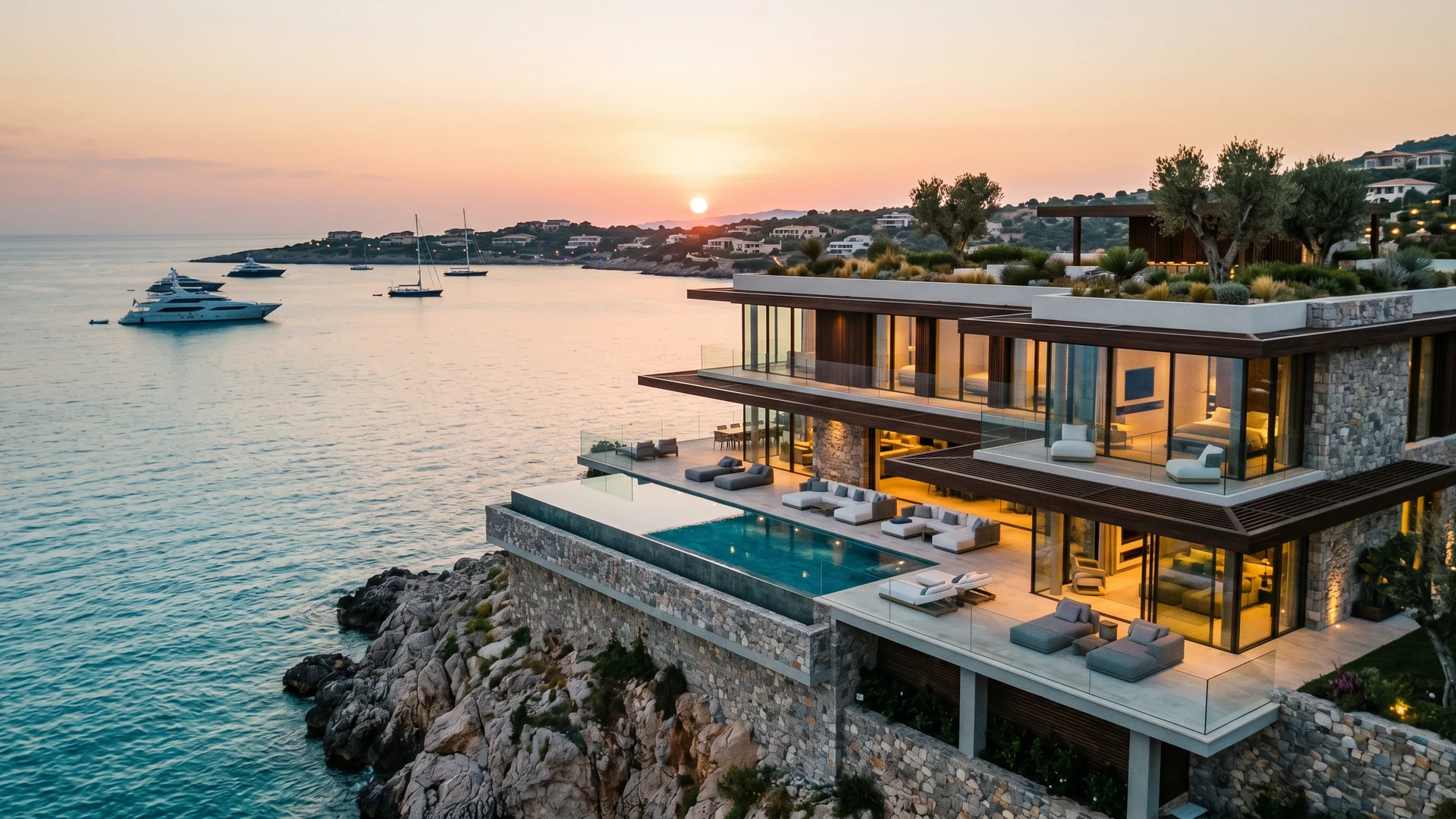
Monaco is the world's most expensive luxury property market, while London, Dubai, New York, Singapore and Hong Kong lead a global prime market that is normalizing in 2026.
Key Takeaways
- Monaco is the most expensive real estate market on Earth, with average prime resale prices exceeding 55,000 euros per square meter and new waterfront developments pushing 120,000 euros per square meter.
- Prime central London postcodes like Mayfair, Knightsbridge and Belgravia command 2,500 to 7,000 pounds per square foot, with values down roughly 12% from the 2014 peak, creating what advisors call a generational buying opportunity.
- Dubai offers zero property tax, zero capital gains and zero inheritance tax, plus a 10-year Golden Visa tied to purchases above AED 2 million (about 545,000 dollars), and recorded over 430 super-prime sales in 2025.
- Manhattan's ultra-luxury tier above 25 million dollars has rebounded, benchmarked by Ken Griffin's 238 million dollar quadruplex at 220 Central Park South, with prime condos averaging 3,000 to 5,500 dollars per square foot.
- The hotel-branded residence model is the fastest-growing luxury segment, with over 700 schemes operating globally and branding premiums exceeding 30% in most markets.
- Golden visa programs in Portugal, Spain, Ireland and Greece have closed or been restricted, shifting the market toward genuine residency with substance over property-only ownership.
- Buying luxury property across jurisdictions requires specialized legal and tax counsel, with acquisition costs ranging from about 4% in Dubai to over 20% for foreign buyers facing Singapore's ABSD.
🌐 Also available in: Español · Français
Top Global Markets
London: The Eternal Safe Haven
London remains the undisputed capital of global luxury real estate. Despite Brexit and stamp duty reforms, prime central London (PCL) continues to attract ultra-high-net-worth individuals (UHNWIs) from the Middle East, Asia, and Eastern Europe. The city’s unparalleled blend of cultural heritage, legal transparency, and educational excellence makes it a generational wealth preservation destination.
Prime postcodes, Mayfair, Knightsbridge, Belgravia, and Kensington, command £2,500 to £7,000+ per square foot. Super-prime new developments like The Whiteley in Bayswater and One Hyde Park have reset expectations, with penthouses trading north of £100 million. The revival of St. John’s Wood and Regent’s Park reflects a post-pandemic preference for green space and lateral living over vertical trophy towers.
In 2026, the market is stabilizing after the 2024bis25 correction. Values are down roughly 12% from the 2014 peak in real terms, creating what many advisors call a generational buying opportunity. The weak pound amplifies foreign purchasing power, particularly for dollar-pegged and Swiss franc buyers. Rental yields in prime postcodes hover between 2.5% and 3.5%, though capital preservation, not yield, drives demand.
Monaco: Density Without Compromise
Monaco is the most expensive real estate market on Earth, where €100,000 per square meter is the floor, not the ceiling. The principality’s zero income tax, political stability, and Mediterranean lifestyle create a gravitational pull that defies economic gravity. Space is finite, just 2.02 square kilometers, making every transaction a zero-sum game.
The Tour Odéon penthouse famously sold for €335 million, and prices have only marched upward since. In 2026, average prime resale prices exceed €55,000/m², with new waterfront developments in the Larvotto and Portier Cove land extension pushing €120,000/m². Demand consistently outstrips supply by a factor of three to one.
Buyers here require not just capital but also patience and discretion. Residency applications are scrutinized meticulously, though property ownership over €1 million significantly streamlines the process. Service charges in luxury residences run €15, €30/m² per month, among the highest globally, but include concierge, valet, and 24/7 security.
Dubai: The Ascendant Titan
Dubai has transformed from an emerging market into a mature luxury powerhouse in under two decades. The emirate now rivals London in transaction volumes above $10 million, with 2025 recording over 430 super-prime sales, a 22% year-on-year increase. Palm Jumeirah, Emirates Hills, and the new Palm Jebel Ali are the epicenters of villa demand.
What sets Dubai apart: zero property tax, zero capital gains, zero inheritance tax, and a 10-year Golden Visa tied to purchases above AED 2 million (approximately $545,000). Prices on the Palm range from AED 3,500/ft² for beachfront apartments to AED 8,500+/ft² for signature villas. The branded residence model, Bvlgari, Armani, Six Senses, has exploded, with premiums of 30bis50% over non-branded equivalents.
The 2026 story is absorption of new supply. An estimated 42,000 units deliver this year, but nearly 70% are in the affordable segment. Ultra-luxury supply remains constrained, supporting price resilience at the top. Russian, Indian, and European buyers dominate, with Chinese purchasing recovering strongly post-zero-COVID.
New York: The Trophy Market Reawakens
Manhattan’s luxury segment, defined as the top 10% of sales, has rebounded fiercely. 2025 closed with over 1,600 contracts above $4 million, and 2026 is trending 8% higher. The ultra-luxury tier ($25 million+) has seen a renaissance driven by equity-market wealth, returning international buyers, and a finite pipeline of new super-prime condominiums.
220 Central Park South set the benchmark with Ken Griffin’s $238 million quadruplex, but recent sales at Central Park Tower and Aman New York confirm the depth of demand. Prime condominium averages hover at $3,000, $5,500/ft², with penthouses reaching $10,000+/ft². Townhouse values on the Upper East Side and in the West Village range from $15 million to over $100 million.
The 2026 market benefits from a strong dollar (a double-edged sword), low inventory, and the delayed wealth-effect of AI and tech IPOs concentrated in the tri-state area. The mansion tax, a progressive tax reaching 3.9% on sales above $25 million, has been absorbed into pricing expectations.
Singapore: Asia’s Wealth Fortress
Singapore is Asia’s most stable luxury market, underpinned by political continuity, a world-class banking system, and its status as the continent’s family-office hub. The Good Class Bungalow (GCB) segment, limited to approximately 2,800 plots, represents the pinnacle, with transactions frequently exceeding SGD 50 million.
Prime condominiums in Districts 9, 10, and 11 (Orchard, Holland, Bukit Timah) trade at SGD 3,000bis5,500 per square foot. The 60% Additional Buyer’s Stamp Duty (ABSD) for foreigners has not cooled demand as much as it has recalibrated expectations, purchasers now build the duty into their total cost of ownership models. The family office ecosystem (over 1,600 single-family offices) ensures a permanent bid on trophy assets.
2026 sees continued northward pressure on GCB land, with plot values approaching SGD 2,000/ft² on land area. New launches like the redevelopment of former government land in River Valley command premiums of 15bis25% over resale equivalents.
Hong Kong: The Phoenix Market
Hong Kong’s luxury market has endured a tumultuous decade, protests, COVID lockdowns, and the national security law triggered a 25% correction from 2019 peaks. But 2025bis2026 marks a cautious resurgence. The removal of all property cooling measures in February 2024 unleashed pent-up demand, with super-prime transactions above HK$100 million doubling year-on-year.
The Peak remains Asia’s most prestigious address, with houses trading above HK$100,000/ft² (gross floor area). Mid-Levels and Southside (Repulse Bay, Stanley) offer relative value at HK$35,000bis55,000/ft². The new stamp duty regime, a flat HK$100 for all buyers, has revitalized both local and mainland Chinese demand.
In 2026, the reopening of the border and the Talent Scheme (attracting over 160,000 professionals) are injecting fresh demand into the luxury rental market, pushing yields to 2.5bis3.2%. The question is whether the market can sustain momentum as new supply from the Northern Metropolis project comes online later in the decade.
European Hotspots
Côte d’Azur: The Original Riviera
The French Riviera remains the Mediterranean benchmark for luxury. From Cap Ferrat to Saint-Tropez, this coastline has been a playground for royalty, artists, and oligarchs for over a century. The market is bifurcated: waterfront estates with private beach access command €25, €70 million, while hillside villas with sea views in Mougins or Valbonne trade between €3, €15 million.
Cap Ferrat is the crown jewel: limited supply, private peninsular setting, and prices reaching €80,000/m² for frontline properties. Saint-Jean-Cap-Ferrat has only 1,500 residents and perhaps 40 truly trophy estates, ensuring perpetual scarcity. St. Tropez has evolved from a seasonal village to a year-round luxury hub, with vineyards and tech wealth diversifying the buyer pool beyond summer tourists.
In 2026, the market is adjusting to France’s revised wealth tax regime (IFI), which exempts primary residences but captures secondary homes above €1.3 million. This has catalyzed a shift toward longer-term ownership and rental structures.
Tuscany: The Agriturismo Aristocracy
Tuscany’s luxury real estate market is defined by heritage, landscape, and the slow-living philosophy that has become a post-pandemic luxury. The Chianti Classico region, Val d’Orcia (UNESCO-listed), and the hills around Lucca and Siena are the prime zones. Restored farmhouses with 5bis20 hectares of vineyards or olive groves trade between €2 million and €15 million.
What distinguishes Tuscany from other European rural markets is the productive estate premium. Properties with producing vineyards (Brunello di Montalcino, Chianti Classico DOCG) command 40bis60% premiums over non-producing equivalents. The wine estate as a luxury asset class has attracted tech entrepreneurs, hedge fund managers, and celebrities seeking a blend of lifestyle and (modest) commercial return.
The 2026 market is experiencing increased American and Northern European demand, partly driven by the “succession” effect, buyers seeking generational estates to pass down. The Italian flat-tax regime for new residents (€200,000 annual opt-in) adds fiscal appeal.
Mallorca: The Mediterranean All-Rounder
Mallorca has evolved from a German package-tourist island into a sophisticated luxury destination with distinct micro-markets. The southwest, Puerto de Andratx, Son Vida, and the Tramuntana foothills, is the established luxury core, with villas trading between €3 million and €30 million. The northeast (Pollensa, Alcudia) and the rustic interior (Sóller Valley, Deià) appeal to a quieter, arts-oriented buyer profile.
The island’s infrastructure: Palma’s international airport with year-round connections, excellent private schools (Baleares International College, The Academy), and world-class marinas, supports permanent residency, not just seasonal occupation. This distinguishes Mallorca from more ephemeral Mediterranean markets.
2026 sees a supply crunch in the super-prime segment. Strict coastal building restrictions and the saturation of the most desirable plots mean new-build luxury is rare, pushing buyers toward high-quality renovations. Spanish Golden Visa abolition in April 2025 has shifted buyer emphasis toward lifestyle-first rather than visa-driven purchases.
Swiss Alps: The Alpine Trophy Market
The Swiss Alps occupy a unique niche: winter luxury with summer optionality. St. Moritz, Gstaad, Verbier, and Zermatt are the names that dominate. Unlike French or Austrian resorts, Swiss alpine property benefits from the country’s broader attributes, currency stability, legal certainty, and the Lex Koller framework that restricts but legitimizes foreign ownership.
St. Moritz remains the apex, with chalets and apartments commanding CHF 35,000bis70,000/m². Gstaad’s car-free promenade and discretion attract old-money European families; Verbier draws a younger, more active wealth demographic. The Lex Koller reforms of 2024, which relaxed restrictions in designated tourist zones, have reopened certain municipalities to non-resident buyers.
In 2026, climate resilience is a growing factor. Higher-altitude resorts (St. Moritz at 1,800m; Zermatt with year-round glacier skiing) command premiums over lower-altitude alternatives as snow reliability becomes a valuation parameter. The Swiss franc’s strength is a headwind for foreign buyers but a tailwind for existing owners.
Caribbean & Island Markets
The Caribbean luxury market has undergone a fundamental repricing since 2020. The pandemic-driven flight to space, privacy, and self-sufficiency transformed islands from seasonal retreats into primary-residence alternatives. While the frenzy has cooled, prices remain 35bis50% above 2019 levels with no sign of retreat.
Mustique remains the ultimate private-island fantasy, villas start at $5 million and exceed $40 million for significant estates, but the true story is the expansion of the luxury geography. Bahamas (Lyford Cay, Albany, Harbour Island) offers proximity to the US East Coast and a well-established financial services infrastructure. Turks and Caicos has seen beachfront values triple since 2018, with Grace Bay villas reaching $2,500bis4,000/ft². Cayman Islands benefits from zero direct taxation and a sophisticated legal framework.
The 2026 market is shaped by two crosscurrents: insurance cost escalation (hurricane premiums have risen 40bis60% in three years, adding $50,000, $200,000 annually to carrying costs) and citizenship-by-investment programs. Dominica, St. Kitts, and Grenada offer passports at investment thresholds of $200,000, $400,000, blending lifestyle with mobility, a proposition increasingly valued by American, Russian, and Middle Eastern buyers.
New resort-branded residences: Aman in the Dominican Republic, Six Senses in Grenada, Rosewood in St. Barths, are creating inventory that didn’t exist five years ago, with prices reflecting 25bis50% branding premiums over independent villas.
Emerging Markets
Lisbon: Europe’s Lifestyle Capital
Lisbon has completed its transformation from a post-austerity bargain to a genuine luxury contender. The city’s appeal, 290 days of sunshine, a vibrant tech scene (Web Summit’s permanent home), and the Non-Habitual Resident (NHR) tax regime, has drawn waves of French, Brazilian, British, and American buyers.
Prime neighborhoods, Chiado, Lapa, Estrela, and Avenida da Liberdade, now trade at €10,000bis18,000/m² for renovated apartments, up from €4,000bis7,000/m² in 2018. The Comporta and Melides coast (one hour south) has emerged as a standalone luxury micro-market, with land values rising tenfold since 2016 and boutique resorts by Christian Louboutin and Philippe Starck anchoring the narrative.
2026 marks a regulatory pivot. The NHR program has been partially curtailed, the Golden Visa real estate route closed, and short-term rental licenses restricted in historic neighborhoods. The market is transitioning from tax-driven to lifestyle-driven, a healthier foundation, but one that may moderate price appreciation to 3bis5% annually from the double-digit rates of 2018bis2023.
Mexico City: The Cultural Capital Awakens
Mexico City is the most undervalued luxury market in the Western Hemisphere. Neighborhoods like Polanco, Lomas de Chapultepec, and the emerging Juárez/Cuauhtémoc corridor offer architectural grandeur. Beaux-Arts mansions, mid-century modernist masterpieces, and cutting-edge contemporary design, at $2,500bis5,000/m², a steep discount to comparable global cities.
The drivers are structural: a booming creative and tech economy, proximity to the US, a deep cultural scene (museums, gastronomy, design), and a cost of living that enables a lifestyle unattainable in New York or London. The peso’s relative stability against the dollar since 2021 has encouraged foreign buyers to treat CDMX as a long-term bet rather than a currency play.
Risks include water scarcity in certain colonias, uneven infrastructure, and security concerns, though the luxury enclaves maintain private security ecosystems. The 2026 outlook is strong, with international gallery expansions (Hauser & Wirth, Gagosian) and hotel openings (Rosewood, Four Seasons expansion) acting as leading indicators of wealth concentration.
Bangkok: Asia’s Value Luxury Play
Bangkok offers a luxury proposition unlike any other Asian gateway: freehold condominium ownership for foreigners (within the 49% foreign quota), world-class amenities, and prices that are 70bis80% lower than Singapore or Hong Kong equivalents. Prime Sukhumvit (Thonglor, Ekkamai, Phrom Phong) and the riverside (Charoenkrung, the new ICONSIAM district) are the core luxury zones, with top-tier condos at THB 250,000bis450,000/m² (approximately $7,000bis12,500/m²).
The Thai Elite Visa and the new Long-Term Resident (LTR) visa provide practical residency pathways. Bangkok’s medical infrastructure, Bumrungrad and Samitivej hospitals rank among Asia’s best, appeals to retirement-age buyers, while the city’s F&B and nightlife scene attracts a younger, entrepreneurial demographic.
The 2026 market is absorbing a significant luxury supply pipeline (over 15,000 premium units delivering 2025bis2027), which may pressure resale values by 5bis8%. However, the relative value proposition, a 200 m² river-view penthouse for $2.5 million, remains compelling against regional comparables.
Buying Process & Legal Considerations
Navigating a luxury real estate acquisition across jurisdictions requires specialized legal and tax counsel at every step. While processes vary, a structured approach applies universally:
- Pre-acquisition structuring: Determine the optimal holding entity, personal name, limited company, trust, foundation, or offshore vehicle. The choice affects tax liability, succession, anonymity, and future sale flexibility. A mistake here can cost millions in unnecessary stamp duty, capital gains, or inheritance tax.
- Know Your Customer (KYC) and source of funds: Every reputable jurisdiction now requires comprehensive documentation of wealth origin. Expect to provide audited financial statements, bank references, and proof of business ownership. Monaco, Switzerland, and Singapore are particularly rigorous; some transactions take 3bis6 months for compliance clearance alone.
- Due diligence: Beyond standard structural surveys, luxury acquisitions require legal title verification, planning/zoning review, coastal or heritage consent checks, and in some cases, political exposure screening of counterparties. In emerging markets, engage a title insurance provider (Stewart, First American) for additional protection.
- Contract and deposit: Deposits range from 5% (UK) to 30% (some Caribbean markets). The purchase contract should address completion timelines, fixtures and chattels (especially important in furnished luxury sales), defect periods, and default remedies.
- Completion and registration: Transfer taxes and notarial fees range from 0.5% (Hong Kong, post-reform) to 20%+ (Singapore ABSD for foreign buyers). Registration must be flawless, errors in title registration can take years to unwind in civil-law jurisdictions.
Critical jurisdictions at a glance: The UK uses solicitor-led conveyancing with Land Registry registration. France requires a notaire (government-appointed) who verifies title and collects taxes, 7bis8% total acquisition costs for existing properties. Dubai’s process is streamlined through the Dubai Land Department, with a 4% transfer fee and Oqood (off-plan registration) for new developments. Switzerland’s Lex Koller restricts foreign acquisition in non-tourist areas, requiring cantonal authorization. The US is title-insurance based, with differing rules across 50 states.
Tax & Offshore Strategies
Tax efficiency is not evasion, it is prudent wealth management. For luxury real estate, the primary concerns are acquisition taxes, holding taxes, rental income taxation, capital gains on disposal, and inheritance/succession taxes. A cross-border portfolio requires careful layering of holding structures and residency planning.
Key strategies employed by UHNW buyers:
- Corporate holding vehicles: Holding property in a company rather than personally can reduce transfer taxes (shares may not attract the same stamp duty as direct property), provide anonymity, and simplify inheritance (shares pass under the company’s governing law). BVI, Cayman, and Luxembourg SPVs are common for European and Asian portfolios.
- Trust structures: Especially relevant for UK property (to mitigate inheritance tax at 40% above £325,000) and US property (to avoid probate and manage estate tax thresholds). Jersey, Guernsey, and Isle of Man trusts remain favored for their maturity and judicial predictability.
- Residency planning: The most powerful tax lever. Monaco (zero income/capital gains), UAE (zero), Portugal’s NHR (10% pension rate, though curtailed), Italy’s flat tax (€200,000/year), and Swiss lump-sum taxation enable dramatic liability reduction, but require genuine substance and days-count compliance.
- Debt layering: Borrowing against property creates deductible interest (jurisdiction-dependent) and can reduce taxable equity exposure. Private banks. UBS, HSBC Private, J.P. Morgan Private Bank, compete aggressively on Lombard lending terms for UHNW clients, often at 50bis70% LTV with rates linked to SOFR or SONIA plus 100bis150bps.
- Double taxation treaties: Essential for buyers owning in multiple jurisdictions. The treaty network determines where rental income is taxed, whether capital gains are creditable, and which jurisdiction has primary taxing rights. A mismatch can result in effective rates exceeding 60%.
Word of caution: The era of opaque offshore ownership is ending. The OECD’s Common Reporting Standard (CRS) means tax authorities share information automatically. The UK’s Register of Overseas Entities requires declaration of beneficial owners. The Corporate Transparency Act in the US mandates beneficial ownership reporting. Compliance is not optional, penalties can reach 150% of tax due plus criminal referral.
Market Trends 2026
The luxury real estate market in 2026 is shaped by five macro forces that savvy investors must internalize:
- 1. The Great Normalization: The post-pandemic frenzy has subsided. Price growth has moderated to 2bis5% annually across most prime markets, down from 8bis15% in 2021bis2022. This is a healthy correction, not a crash, transaction volumes remain above 2019 baselines, and distressed sales are rare in the super-prime segment.
- 2. Climate Capital: Sea-level rise, wildfire risk, and extreme heat are entering valuation models. Properties in Vail and Aspen are seeing premiums over equivalent beachfront in low-lying Caribbean locations. Elevation, water security, and microclimate are becoming must-have due diligence items. Zurich Insurance now offers parametric climate coverage for luxury portfolios.
- 3. Branded Residences Proliferation: The hotel-branded residence model is the fastest-growing luxury segment. Over 700 schemes operate globally, projected to exceed 1,000 by 2027. Ritz-Carlton, Four Seasons, Aman, and Bvlgari lead, but automotive brands (Porsche Design Tower, Bentley Residences, Aston Martin) and fashion houses (Armani, Fendi, Missoni) are entering with full force. Branding premiums exceed 30% in most markets.
- 4. AI-Era Wealth Creation: Nvidia’s ascent, the generative AI boom, and record private equity distributions are minting a new generation of billionaires concentrated in Silicon Valley, Austin, Miami, and London. These buyers are younger (median 42 vs. 58 for traditional luxury buyers), tech-literate, and demand smart-home integration, wellness amenities, and sustainability credentials as baseline expectations.
- 5. Golden Visa Erosion and Residency Recalibration: Portugal, Spain, Ireland, and Greece have closed or restricted their golden visa programs. The market is adapting: genuine residency with substance (actual days spent, family relocation, business establishment) now commands the tax and mobility benefits that property ownership alone once unlocked. Cyprus, Malta, and Caribbean CBI programs remain active but face EU pressure.
Price Comparison Table
| Market | Prime Area | Price Range (USD/ft²) | Price Range (Local) | Foreign Ownership | Acquisition Costs |
|---|---|---|---|---|---|
| Monaco | Larvotto / Carré d’Or | $8,500, $11,500 | €90,000, €120,000/m² | Freehold with residency | ~6.5% |
| London | Mayfair / Knightsbridge | $3,200, $9,000 | £2,500, £7,000/ft² | Freehold / Leasehold | 6bis15% (SDLT) |
| New York | Central Park South / Tribeca | $3,000, $10,000 | , | Freehold / Condominium | 4bis8% |
| Hong Kong | The Peak / Mid-Levels | $4,500, $12,800 | HK$35,000 bis 100,000/ft² | Freehold (rare leasehold) | 1.5bis4.25% |
| Singapore | Orchard / Nassim | $2,500, $4,600 | SGD 3,000 bis 5,500/ft² | Condo freehold (GCBs restricted) | ~24% (foreign ABSD) |
| Dubai | Palm Jumeirah / Jumeirah Bay | $950, $2,300 | AED 3,500 bis 8,500/ft² | Freehold (designated areas) | ~4% + 2% agency |
| Swiss Alps | St. Moritz / Gstaad | $3,300, $6,500 | CHF 35,000 bis 70,000/m² | Restricted (Lex Koller) | 3bis5% |
| French Riviera | Cap Ferrat / St. Tropez | $4,500, $8,000 | €50,000 bis 85,000/m² | Freehold | 7bis8% |
| Tuscany | Chianti / Val d’Orcia | $400, $1,200 | €4,000 bis 12,000/m² | Freehold | 9bis10% |
| Mallorca | Son Vida / Puerto Andratx | $650, $1,800 | €7,000 bis 19,000/m² | Freehold | 10bis12% |
| Bahamas | Lyford Cay / Harbour Island | $800, $3,500 | , | Freehold (permit required) | 10bis15% |
| Lisbon | Chiado / Avenida da Liberdade | $950, $1,700 | €10,000 bis 18,000/m² | Freehold | 7bis8% |
| Mexico City | Polanco / Lomas | $230, $465 | MX$50,000 bis 100,000/m² | Fideicomiso (trust) | 5bis7% |
| Bangkok | Sukhumvit / Riverside | $650, $1,160 | THB 250,000 bis 450,000/m² | Condo freehold (49% quota) | 3bis5% |
Prices as of Q1 2026. USD equivalents are approximate and subject to exchange rate fluctuations. Acquisition costs include transfer taxes, stamp duties, notarial fees, and legal costs but exclude agency commissions (typically 2bis5% depending on jurisdiction). Foreign ownership rules may require specific structuring; consult local counsel.
Insider Tips
After decades of guiding UHNW clients through luxury acquisitions across every major market, certain patterns emerge, lessons that cannot be learned from a brochure. These insider insights separate successful luxury investors from the merely wealthy:
- Buy the neighborhood, not the house. In luxury markets, your return is determined more by the trajectory of the surrounding area than by the fixtures inside your walls. A mediocre villa on Cap Ferrat will outperform a masterpiece in a declining enclave. Study planning applications, infrastructure commitments, and the migration patterns of peer-group wealth, these are your leading indicators.
- Understand the seller’s motivation before negotiating on price. Luxury transactions are often discretionary. A seller with no urgency will not discount, they will wait years. Conversely, a divorce, inheritance, or business distress creates negotiating leverage that can yield 15bis25% below market. Your agent should be skilled enough to uncover these motivations without compromising confidentiality.
- Visit in the off-season. Monaco in August, St. Moritz in July, Mallorca in January. A destination’s best version is when the crowds have left. You will see the local infrastructure, genuine service levels, and community fabric, and you will negotiate from a position of being one of few buyers in town.
- Budget carrying costs at 2bis3% of property value annually. Service charges, property taxes (even in low-tax jurisdictions), insurance, utilities, maintenance, and staffing add up. A $10 million property will cost $200,000, $300,000 per year to hold before any mortgage service. Under-budgeting is the most common luxury real estate mistake.
- Build your team before you build your portfolio. The minimum viable team: a conflict-free buyer’s agent (not a dual agent), a cross-border tax attorney, a trust and estates lawyer, a private banker with luxury real estate specialization, and an independent surveyor. Assemble them before you view a single property. Coordinating them after you’ve fallen in love with a villa is an expensive way to make mistakes.
- Liquidity matters more than price appreciation. Luxury properties are illiquid by nature. The $5bis20 million segment typically has a 6bis12 month marketing period in normal markets; above $50 million, expect 12bis24 months. Structure your portfolio so you are never a forced seller. A line of credit against your primary residence is better than needing to liquidate a trophy asset in a hurry.
- The second view should be with the architect, not the agent. Once a property passes initial screening, schedule a technical walk-through with a local architect or structural engineer. They will see roof conditions, damp, foundation issues, and renovation feasibility that agents overlook or choose not to mention. This €2,000 investment routinely saves millions.
- Negotiate with data, not emotion. Luxury sellers are often sophisticated negotiators. Come armed with comparable sales data, days-on-market analysis, price-per-square-meter trends, and awareness of competing listings. Emotional appeals do not move the needle; documented market evidence does.
Frequently Asked Questions (FAQ)
What is the most expensive luxury real estate market in the world?
Monaco is the most expensive real estate market on Earth, where 100,000 euros per square meter is the floor, not the ceiling. In 2026, average prime resale prices exceed 55,000 euros per square meter, while new waterfront developments in Larvotto and Portier Cove push toward 120,000 euros per square meter, with demand outstripping supply three to one.
Why is London still considered a safe haven for luxury property buyers?
London remains the capital of global luxury real estate thanks to its cultural heritage, legal transparency and educational excellence. Prime central postcodes like Mayfair and Knightsbridge command 2,500 to 7,000 pounds per square foot. In 2026 values are down roughly 12% from the 2014 peak, and a weak pound amplifies foreign purchasing power, creating a generational buying opportunity.
What tax advantages does buying luxury property in Dubai offer?
Dubai offers zero property tax, zero capital gains tax and zero inheritance tax. Buyers can also obtain a 10-year Golden Visa tied to purchases above AED 2 million, approximately 545,000 dollars. Palm Jumeirah prices range from AED 3,500 per square foot for beachfront apartments to AED 8,500 and above for signature villas, with branded residences carrying 30 to 50% premiums.
How much does prime property cost in Singapore and what tax do foreigners pay?
Prime condominiums in Singapore's Districts 9, 10 and 11, covering Orchard, Holland and Bukit Timah, trade at SGD 3,000 to 5,500 per square foot. Foreign buyers face a 60% Additional Buyer's Stamp Duty, which has recalibrated rather than cooled demand. The Good Class Bungalow segment, limited to about 2,800 plots, represents the pinnacle, with transactions frequently exceeding SGD 50 million.
Which emerging markets offer the best value in luxury real estate?
Mexico City is called the most undervalued luxury market in the Western Hemisphere, with prices of 2,500 to 5,000 dollars per square meter. Bangkok offers freehold condos 70 to 80% cheaper than Singapore or Hong Kong, and Lisbon's prime neighborhoods trade at 10,000 to 18,000 euros per square meter after transforming from a post-austerity bargain into a luxury contender.
What should buyers know about purchasing luxury real estate across different countries?
Navigating luxury acquisitions across jurisdictions requires specialized legal and tax counsel at every step. Buyers must address pre-acquisition structuring, Know Your Customer and source-of-funds documentation, due diligence, contracts and deposits, then completion and registration. Deposits range from 5% in the UK to 30% in some Caribbean markets, and acquisition costs vary widely between jurisdictions.
How are golden visa changes affecting the luxury property market in 2026?
Portugal, Spain, Ireland and Greece have closed or restricted their golden visa programs. The market is adapting so that genuine residency with substance, meaning actual days spent, family relocation and business establishment, now commands the tax and mobility benefits property ownership alone once unlocked. Cyprus, Malta and Caribbean citizenship-by-investment programs remain active but face EU pressure.
What are the major trends shaping luxury real estate in 2026?
Five macro forces define 2026: the Great Normalization, with price growth moderating to 2 to 5% annually; Climate Capital, as elevation and water security enter valuations; branded residences proliferation, with over 700 schemes globally; AI-era wealth creation minting younger billionaires with a median age of 42; and golden visa erosion driving a shift toward genuine residency.
More from Real Estate
Luxury Holiday Home Ownership: The Complete Guide to Buying Your Dream Vacation Property
The Rise of the Second Home Economy The global second home market has undergone a seismic shift over the past decade. What was once the exclusive doma…
The World’s Most Prestigious Addresses: Where the Global Elite Call Home
What Makes an Address Prestigious Prestige isn’t just about a high price tag, it’s about scarcity, history, privacy, and the company you …
The Ultimate Guide to Luxury Property Investment in 2026
Why Luxury Real Estate Remains the Ultimate Asset Class For centuries, prime real estate has stood apart from every other investment vehicle. Unlike e…