Luxury Fragrances & Niche Perfumes: The Complete Guide
Explore luxury fragrances and niche perfumes: fragrance families, top houses like Creed, Byredo, Le Labo, Kilian, Roja, and how to choose and store your scent.…
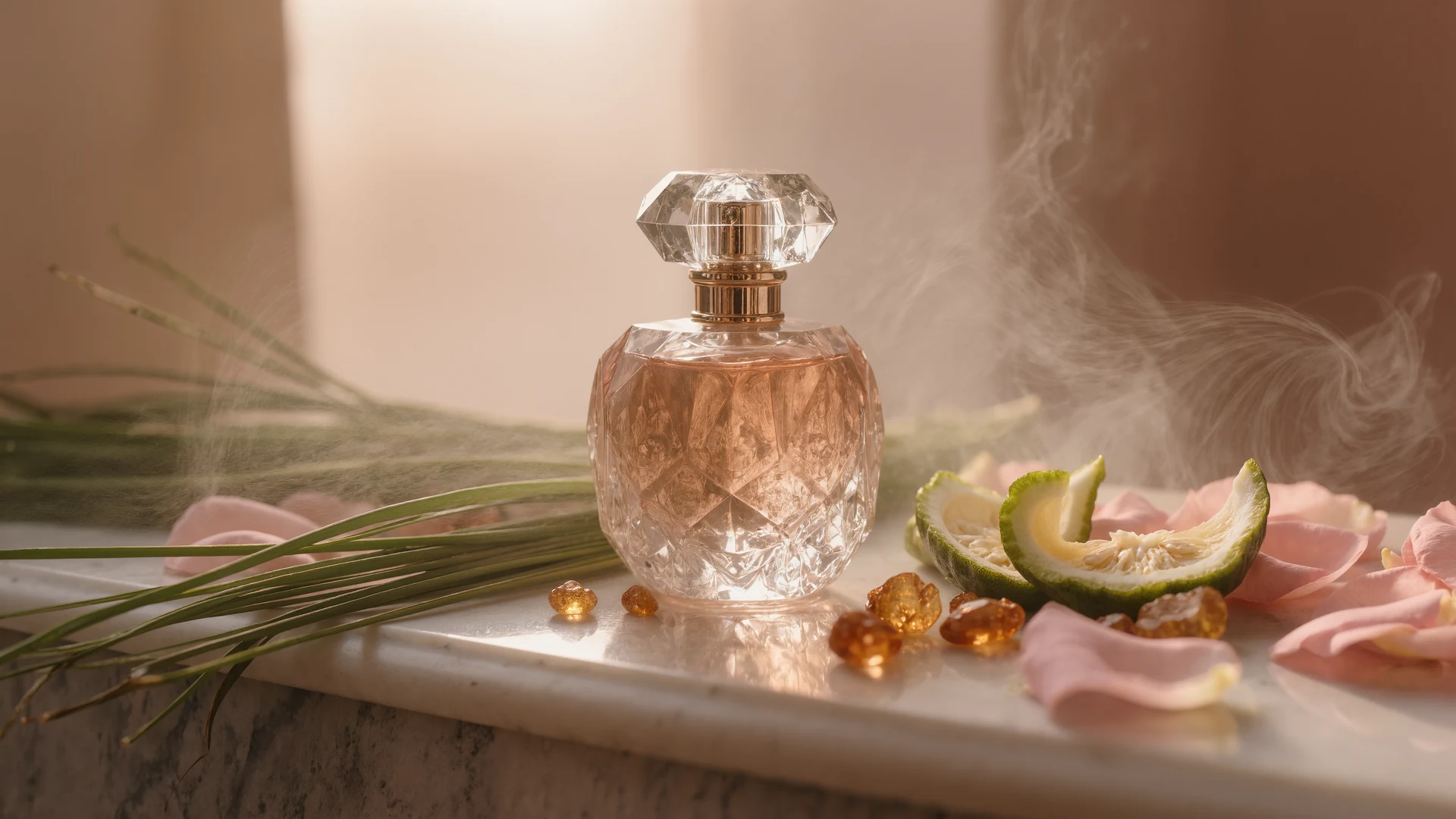
Luxury and niche perfumery prioritizes artistic vision, rare ingredients, and creative freedom over mass-market appeal, organizing fine fragrances into families like citrus, floral, oriental, woody, chypre, fougère, and leather.
Key Takeaways
- Niche perfumery is a philosophy, not a style: houses spend twenty to fifty percent or more of retail price on ingredients, versus three to five percent for typical designer fragrances.
- Fragrances are grouped into seven classical families: citrus/hesperidic, floral, oriental/amber, woody, chypre, fougère, and leather, each defined by signature raw materials.
- Creed, founded in 1760 and run through seven generations, is famed for Aventus (2010), Green Irish Tweed, and hand-filled bottles using ambergris, Florentine iris, and Bulgarian rose.
- Le Labo, founded in 2006 by Fabrice Penot and Eddie Roschi, compounds fragrances by hand at purchase; Santal 33 became a cult signature scent of a generation.
- Frédéric Malle acts as a publisher, crediting perfumers on the bottle; Dominique Ropion's Portrait of a Lady reportedly carries over 400 rose molecules of Turkish rose.
- Roja Parfums, founded by ex-Guerlain perfumer Roja Dove, makes arguably the world's most expensive fragrances, with some extraits selling for thousands of dollars per bottle.
- Fragrances degrade from light, heat, oxygen, and humidity; ideal storage is original boxes in a cool, dark, dry place or a fragrance fridge at 10bis15°C, lasting three to five years or longer after opening.
🌐 Also available in: Español · Français
Understanding Fragrance Families
The world of luxury perfumery is built upon a classical foundation: fragrance families. Understanding these olfactory categories is the first step toward appreciating and selecting a fine fragrance. Fragrance families classify perfumes based on their dominant characteristics and the raw materials that define their personality. In luxury and niche perfumery, these families serve not as rigid boxes but as reference points from which master perfumers depart to create something truly extraordinary.
Citrus / Hesperidic. Bright, effervescent, and instantly uplifting, citrus fragrances are built around notes of bergamot, lemon, grapefruit, mandarin, and bitter orange. In luxury perfumery, citrus takes on a sophisticated dimension through the use of rare varieties like Calabrian bergamot, yuzu from Japan, or Amalfi lemon. Creed’s Aventus Cologne and Le Labo’s Bergamote 22 showcase how citrus can be elevated from simple freshness to complex artistry through careful blending with woods, musks, and spices. Citrus fragrances are traditionally classified as top-note dominant, meaning they announce themselves immediately but require skilled composition to maintain presence throughout the wear.
Floral. The most expansive and historically significant fragrance family, floral scents range from the delicate whisper of a single bloom to opulent bouquets of jasmine, rose, tuberose, iris, and orange blossom. Niche perfumery treats florals with unprecedented reverence, often sourcing ingredients from specific harvests and regions. Frederic Malle’s Portrait of a Lady demonstrates how Turkish rose can be paired with patchouli and incense to create a floral that transcends gender. Byredo’s Rose of No Man’s Land reimagines rose with pink pepper and raspberry blossom for a modern, minimalist interpretation. The floral family encompasses subcategories including white florals (tuberose, jasmine, gardenia), powdery florals (iris, violet), and green florals that incorporate leafy, stem-like freshness.
Oriental / Amber. Rich, warm, and sensual, the oriental family draws its character from resins, balsams, vanilla, amber, and exotic spices. These fragrances possess remarkable depth and tenacity, often evolving dramatically over hours of wear. Kilian’s Angels’ Share exemplifies the modern oriental with its cognac-inspired accord, cinnamon, tonka bean, and oak wood. Oriental fragrances in the niche world often incorporate unexpected elements, leather, oud, incense, or tobacco, to create scents of extraordinary complexity. The subcategory of gourmand orientals, featuring edible notes like chocolate, caramel, and coffee, has become increasingly prominent in luxury perfumery.
Woody. Grounded in the aromatic richness of cedar, sandalwood, vetiver, patchouli, and oud, woody fragrances convey warmth, sophistication, and quiet confidence. Niche houses prize Mysore sandalwood, Haitian vetiver, and sustainably harvested oud for their unparalleled olfactory profiles. Le Labo’s Santal 33 became a cultural phenomenon precisely because it demonstrated how woody notes, Australian sandalwood, cedar, cardamom, and iris, could feel simultaneously rugged and refined. Roja Parfums’ ouds are legendary for their use of real agarwood oil, producing woody fragrances of staggering depth and cost.
Chypre. Named after the French word for Cyprus, the chypre family is defined by the contrasting accord of citrus top notes (typically bergamot) over a heart of labdanum and an oakmoss-rich base. Chypres are inherently sophisticated, often described as the most intellectual of fragrance families. Modern regulations restricting oakmoss have led niche perfumers to innovate with synthetic moss replacements and creative reformulations that preserve the chypre spirit. Classic luxury chypres like Roja’s Diaghilev demonstrate how this venerable structure can remain relevant and breathtaking in contemporary perfumery.
Fougère. The fougère (French for “fern”) family centers on a classic accord of lavender, oakmoss, and coumarin. Traditionally associated with men’s fragrances, the modern niche interpretation has dissolved gender boundaries. Fougères can range from aromatic and herbaceous to dark and leathery. Creed’s Green Irish Tweed exemplifies the aromatic fougère, while more avant-garde niche interpretations incorporate unexpected notes like cannabis, immortelle, or marine accords to push the structure into new territory.
Leather. A distinctive family within luxury perfumery, leather fragrances evoke the scent of fine leather goods through notes of birch tar, castoreum, styrax, and modern synthetic leather accords. These fragrances possess an unmistakable character, smoky, animalic, and deeply luxurious. Byredo’s Bibliothèque and Kilian’s Dark Lord showcase different facets of leather, from supple and fruity to dark and aggressive. Leather fragrances often overlap with woody and oriental families, creating some of the most memorable and polarizing scents in niche perfumery.
Understanding these families provides the vocabulary to describe what you smell and the framework to explore with intention. The greatest luxury fragrances, however, rarely conform to a single category, they exist at the intersections, borrowing elements from multiple families to create something impossible to classify.
The World of Niche Perfumery
Niche perfumery represents a fundamental shift in how fragrance is conceived, created, and appreciated. Unlike mass-market designer fragrances, which must appeal to broad demographics and satisfy marketing briefs, niche fragrances prioritize artistic vision, ingredient quality, and creative freedom above all else. The term “niche” does not describe a fragrance style; it describes a philosophy.
Artistic Freedom Over Market Research. A niche perfumer or creative director begins with an idea, a memory, or an ingredient, not a gap in the market. Frédéric Malle, founder of Editions de Parfums Frédéric Malle, describes his role as that of a book publisher: he provides the platform and resources, then gives the world’s greatest perfumers complete creative freedom, their names even appear on the bottle. This model produces fragrances that are uncompromising, sometimes challenging, and frequently transcendent.
Ingredient Quality and Sourcing. Niche houses distinguish themselves through extraordinary raw materials. While a designer fragrance might allocate three to five percent of its retail price to ingredients, niche houses routinely spend twenty to fifty percent or more. Creed uses hand-harvested Calabrian bergamot and Bulgarian rose. Roja Parfums sources genuine Mysore sandalwood and uses real oud oil rather than synthetic approximations. Le Labo compounds its fragrances on demand, filling each bottle by hand at the point of sale. This commitment to quality is immediately apparent to anyone who applies a niche fragrance alongside a mass-market equivalent.
Limited Distribution and Exclusivity. Niche fragrances are not designed to be everywhere. They are sold through select boutiques, luxury department stores, and the houses’ own flagships. This limited distribution serves multiple purposes: it maintains brand prestige, ensures knowledgeable staff can educate customers, and creates an experience around purchasing that mirrors the luxury of the product itself. When you buy a Creed or a Kilian, you are not simply purchasing a fragrance, you are entering a world.
The Rise of the Perfume Auteur. The niche movement has elevated individual perfumers to celebrity status. Names like Olivier Creed, Francis Kurkdjian, Bertrand Duchaufour, and Christopher Chong are known and followed by enthusiasts. This stands in stark contrast to the designer world, where the perfumer is usually anonymous behind the brand. Social media and fragrance communities have accelerated this trend, creating direct connections between creators and collectors that would have been unimaginable two decades ago.
Niche vs. Indie vs. Artisanal. These terms are sometimes used interchangeably but carry distinct meanings. Niche refers to brands that focus exclusively on fragrance and operate outside the designer paradigm. Creed, Diptyque, Byredo. Indie typically describes smaller, independent operations often founded and run by a single perfumer, brands like Zoologist, Imaginary Authors, or Hiram Green. Artisanal emphasizes small-batch production, handcrafted processes, and often natural ingredients. Understanding these distinctions helps navigate the landscape, though the boundaries blur frequently.
Why Niche Commands Premium Prices. The cost of a niche fragrance reflects more than marketing markup. It encompasses rare and expensive ingredients, smaller production runs that cannot benefit from economies of scale, hand-finishing and packaging, and the simple economics of a business that refuses to cut corners. A 50ml bottle of a niche fragrance may contain several times the ingredient cost of a 100ml designer bottle, and the difference is perceptible on skin.
Top Niche Houses
Creed: The Heritage House
Founded in 1760 as a tailoring house that transitioned to fragrance, Creed represents the pinnacle of heritage in niche perfumery. Passed through seven generations of the Creed family, the house is renowned for its millésime (vintage-dated) collection and its use of the traditional infusion technique, which purportedly eschews modern high-heat distillation for a gentler, time-intensive process using fruit tinctures as a base.
Creed’s most iconic creation, Aventus (2010), single-handedly redefined modern masculine perfumery with its explosive opening of pineapple, blackcurrant, and bergamot over birch, ambergris, and musk. Other essential Creeds include Green Irish Tweed, the definitive aromatic fougère worn by Cary Grant and countless others, Silver Mountain Water with its crystalline blackcurrant and tea accord over sandalwood, and Virgin Island Water, a transportive blend of lime, coconut, and rum that captures the Caribbean in a bottle. For women, Love in White and Fleurissimo (created for Grace Kelly’s wedding) demonstrate Creed’s mastery of classic floral elegance.
Every Creed bottle is hand-filled and hand-stoppered. The house’s commitment to natural ingredients, including ambergris from the Mediterranean, iris from Florence, and roses from Bulgaria, places it among the most expensive fragrance operations in the world in terms of raw material cost.
Byredo: Scandinavian Minimalism
Founded in Stockholm in 2006 by Ben Gorham, Byredo has reshaped the niche landscape with its austere Scandinavian aesthetic and emotionally resonant fragrances. Gorham, who has no formal perfumery training, approaches scent creation as a form of memory translation, each fragrance aims to evoke a specific moment, place, or feeling through a deliberately restrained palette of notes.
Gypsy Water encapsulates the Byredo philosophy: bergamot, juniper, lemon, and pepper over incense, pine needles, and vanilla, a fragrance that feels both familiar and impossible to place. Bal d’Afrique celebrates Gorham’s personal heritage with a joyful blend of African marigold, bergamot, violet, and cedarwood. Mojave Ghost uses sapodilla fruit, ambrette, and magnolia to conjure the ghost flower of the Mojave Desert. Rose of No Man’s Land commemorates nurses in World War I with Turkish rose, pink pepper, and raspberry blossom, a rose stripped of sentimentality.
Byredo’s visual identity, with its minimalist black-and-white labeling and magnetic caps designed by Gorham himself, has become as influential as the fragrances. The house has expanded into leather goods, eyewear, and makeup while maintaining its fragrance-first identity. Byredo represents the modern face of niche: culturally literate, design-forward, and globally aspirational.
Le Labo: The Artisan’s Laboratory
Le Labo, French for “The Laboratory”, was founded in 2006 by Fabrice Penot and Eddie Roschi with a radical proposition: fragrances should be freshly compounded at the moment of purchase, not mass-manufactured months in advance. Each Le Labo boutique features a compounding station where fragrances are hand-blended upon order, with personalized labels bearing the purchaser’s name, the date, and the location.
Santal 33 achieved cult status for good reason: its unmistakable accord of Australian sandalwood, cedarwood, cardamom, iris, and violet, with leathery and musky undertones, became the scent of a generation, worn by creatives, celebrities, and anyone seeking instant olfactory recognition. Another 13, created in collaboration with AnOther Magazine, pushes the boundaries of perceptibility with ambroxan, jasmine, moss, and a pear note that creates an addictive, almost pheromonal effect. Thé Noir 29 reimagines black tea with fig, tobacco, and bergamot in a fragrance that defies easy classification.
Le Labo’s city-exclusive collection: fragrances available only in the city for which they are named, except during a brief annual worldwide release, has created a global collector culture. Gaiac 10 (Tokyo), Vanille 44 (Paris), and Poivre 23 (London) demonstrate how geographic identity can be translated into scent.
Kilian: Parisian Opulence
Kilian Hennessy, heir to the Hennessy cognac dynasty, launched his eponymous house in 2007 with a vision of luxury that explicitly draws upon his family heritage. Kilian fragrances are defined by their richness, longevity, and unabashed decadence, these are scents that announce their presence and refuse to be ignored.
Angels’ Share, the house’s modern masterpiece, channels the aroma of cognac evaporating from oak barrels, the “angel’s share” of distillation lore, through cognac oil, cinnamon, tonka bean, and oak absolute. Packaged in a faceted glass flacon designed to resemble a whiskey tumbler, it is one of the most successful niche launches of the past decade. Good Girl Gone Bad explores the duality of innocence and seduction through osmanthus, tuberose, jasmine, and rose, while Love, Don’t Be Shy, famously worn by Rihanna, wraps neroli, orange blossom, and marshmallow in a gourmand embrace that is simultaneously childlike and sophisticated.
Kilian’s packaging philosophy is as considered as his fragrances: bottles are designed to be refillable forever, displayed on lacquered trays that double as clutch bags, and housed in coffrets adorned with Achilles’s shield motifs. The house represents the most luxurious end of niche, where fragrance is inseparable from ritual and display.
Frédéric Malle: The Perfumer’s Publisher
Editions de Parfums Frédéric Malle, founded in 2000, operates on a unique premise: Frédéric Malle functions not as a perfumer but as a publisher, commissioning the world’s greatest noses to create fragrances with complete creative freedom and full credit. Each bottle bears the perfumer’s name alongside the fragrance title, an innovation that was unprecedented at the time and fundamentally changed how the industry recognizes its artists.
Portrait of a Lady, composed by Dominique Ropion, stands as one of the greatest fragrances of the 21st century: a staggering dose of Turkish rose (reportedly over 400 individual rose molecules per bottle) anchored by patchouli, frankincense, clove, and sandalwood. It is simultaneously a soliflore and an oriental, a floral and a woody, a fragrance that defies categorization. Musc Ravageur, Maurice Roucel’s sensual masterpiece, pairs bergamot, lavender, and cinnamon with vanilla, musk, and amber in a composition that has been described as “the scent of skin after love.” Carnal Flower, Ropion’s tuberose soliflore, captures the flower’s mentholated, camphorous facets alongside its creamy opulence.
Malle’s commissioning model has produced one of the most consistently extraordinary catalogs in perfumery, from Jean-Claude Ellena’s transparent L’Eau d’Hiver to Pierre Bourdon’s citrus landmark French Lover, each fragrance represents a perfumer working at the absolute peak of their powers, unconstrained by briefs or budgets.
Roja: British Extravagance
Roja Dove, a British perfumer who spent two decades at Guerlain before founding his own house, creates fragrances of breathtaking opulence. Roja Parfums produces what are arguably the most expensive commercially available fragrances in the world, with some extraits selling for thousands of dollars per bottle. The house’s guiding philosophy is uncompromising quality: if the finest version of an ingredient costs ten or a hundred times more than an adequate alternative, Roja uses the finest.
Roja’s fragrance catalog is organized into collections that mirror classical perfume concentrations: Parfum Cologne (fresh, day wear), Eau de Parfum (balanced, versatile), and Parfum/Pure Parfum (the highest concentration, most precious ingredients, intended for evenings and occasions). Elysium in the Parfum Cologne collection redefines what a fresh men’s fragrance can be with grapefruit, lemon, bergamot, vetiver, and ambergris of staggering natural quality. Enigma (marketed as Creation-E in some regions) wraps cognac, tobacco, vanilla, and benzoin in an intoxicating, almost edible warmth. Diaghilev, a tribute to the Ballets Russes impresario, is among the most expensive and celebrated chypres ever created, a kaleidoscope of bergamot, peach, jasmine, violet, oakmoss, labdanum, leather, and musk that evolves over twelve or more hours on skin.
Roja’s limited editions and high-jewelry presentations: bottles adorned with Swarovski crystals, gold-plated caps, and hand-lacquered cases, elevate perfume to the level of fine art and collectible luxury goods.
How to Choose Your Signature Scent
Finding a signature fragrance is a deeply personal journey that rewards patience, curiosity, and method. A signature scent is not simply the fragrance you wear most often, it is the fragrance that feels like an extension of your identity, the one that prompts others to say “that smells like you” even when you are not wearing it. Here is how to approach the search.
Start with Self-Knowledge, Not Notes Lists. Before you study pyramids and accords, reflect on what moves you. What smells trigger powerful memories? Do you gravitate toward the freshness of a pine forest, the warmth of baking spices, the sensuality of leather, the elegance of fresh laundry? Your emotional response to scent categories matters more than any objective assessment of what you “should” like. The fragrance that suits you is the one that makes you feel most yourself.
Sample Extensively Before Committing. Never purchase a luxury fragrance based on a single paper-strip test or a brief in-store encounter. Fragrances evolve dramatically over hours, and what smells appealing on a blotter may turn harsh, cloying, or entirely different on your skin. Invest in discovery sets from houses that intrigue you. Creed, Le Labo, and Byredo all offer curated sample collections. Wear each sample for at least one full day, ideally on clean, unscented skin, and document your impressions. Pay attention to the dry-down, the fragrance’s final phase, hours after application, as this is what you and those around you will experience for most of the wear.
Consider Context and Climate. A fragrance that feels magnificent at an autumn wedding may overwhelm in a summer office. Your signature scent should perform across your most common contexts, or you should consider maintaining a small wardrobe of two or three fragrances for different seasons and situations. Humidity, temperature, and even your own skin chemistry, influenced by diet, hormones, and medication, can dramatically alter how a fragrance behaves.
Ignore Gender Classifications. The most interesting niche fragrances transcend gender. A man can wear rose; a woman can wear leather. What matters is whether the fragrance harmonizes with your natural scent and personal style. Frédéric Malle’s Portrait of a Lady has as many male devotees as female. Le Labo’s Santal 33 is worn universally. Let your nose be the judge.
Trust the Evolution. A truly exceptional fragrance is not static; it tells a story across hours. The bright citrus opening should give way to a more complex heart, which in turn should settle into a warm, lingering base. Judge a fragrance by its full arc, not just its first impression. Many niche masterpieces require multiple wearings to fully reveal themselves.
Fragrance Collecting & Storage
For those who fall deeply into the world of luxury fragrance, collecting becomes a natural extension of appreciation. A well-curated collection tells a personal story, with each bottle representing a memory, a mood, or an artistic fascination. However, fragrances are delicate chemical compositions that degrade when improperly stored.
The Enemies of Fragrance. Light, heat, oxygen, and humidity are the four horsemen of fragrance degradation. Ultraviolet light breaks down fragrance molecules, causing discoloration, loss of top notes, and eventual spoilage. Heat accelerates all chemical reactions, including the undesirable ones. Oxygen introduced through repeated opening of bottles causes gradual oxidation. Humidity can compromise seals and introduce moisture into alcohol-based formulations.
Ideal Storage Conditions. Store fragrances in their original boxes in a cool, dark, dry location. A dedicated fragrance refrigerator set to 10bis15°C (50bis59°F) represents the gold standard, but a dark closet shelf away from bathrooms and radiators will serve well. Never store fragrances in a bathroom, where heat and humidity fluctuate dramatically. Avoid displaying bottles on windowsills or vanities exposed to direct sunlight, no matter how beautiful they look.
Collection Organization. Organize your collection in a way that facilitates use and discovery. Some collectors rotate seasonally, keeping current-season fragrances accessible and storing off-season bottles. Others organize by house, concentration, or olfactory family. The key is to use your fragrances, keeping an expensive niche fragrance sealed indefinitely defeats its purpose. Fragrances are meant to be experienced.
Longevity and Shelf Life. With proper storage, most alcohol-based fragrances remain stable for three to five years after opening, with many lasting far longer. Signs of degradation include significant darkening of the liquid, a vinegar-like sharpness, or loss of the fragrance’s characteristic opening. Oil-based and extrait concentrations, with their higher ratio of aromatic compounds to alcohol, tend to age more gracefully than eau de toilettes. Some collectors even prize well-aged fragrances, noting that certain compositions, particularly those heavy in resins, woods, and animalics, deepen and improve with time, much like fine wine.
Insurance and Documentation. For serious collectors whose holdings may exceed tens of thousands of dollars, documenting your collection with photographs and receipts and confirming coverage under homeowners or renters insurance is advisable. Specialized collectibles insurance may be warranted for particularly rare or valuable bottles, such as limited editions from Roja or discontinued Creeds.
Seasonal Scent Guide
The relationship between fragrance and season is not mere convention, it reflects how temperature, humidity, and even the psychological associations of each season interact with scent molecules and our perception of them. Understanding seasonal fragrance dynamics transforms a wardrobe of scents from random accumulation into intentional curation.
Spring. Spring calls for fragrances that mirror the season’s awakening: green, floral, and gently luminous. Fresh citrus-floral hybrids and delicate green fragrances shine as temperatures begin to rise. Look for notes of neroli, petitgrain, lily of the valley, freesia, and green tea. Byredo’s Inflorescence captures spring’s lilac and magnolia in bloom. Le Labo’s Fleur d’Oranger 27 distills orange blossom into its purest, most joyful form. Creed’s Silver Mountain Water offers a crisp, invigorating alternative with its blackcurrant and green tea accord that feels as fresh as mountain air.
Summer. Heat amplifies projection and volatility. Summer fragrances must be chosen with care: what smells fresh in air-conditioned cool may become overwhelming at 35°C. Citrus, aquatic, and light aromatic fragrances perform best. Creed’s Virgin Island Water is the definitive summer luxury fragrance, with lime, coconut, and rum creating an island escape. Le Labo’s Bergamote 22 offers bergamot layered with grapefruit, vetiver, and musk for a citrus that lasts. Roja’s Elysium Parfum Cologne provides a sophisticated alternative to standard summer freshes with its complex vetiver, juniper, and grapefruit composition.
Autumn. As temperatures cool, fragrances can deepen. Autumn invites woody, spicy, and leathery compositions that mirror the season’s rich palette. Kilian’s Angels’ Share defines autumn luxury with its cinnamon, tonka, and cognac warmth. Le Labo’s Thé Noir 29 wraps black tea in fig, tobacco, and hay for a scent that feels like autumn in a bottle. Byredo’s Bibliothèque evokes old libraries with plum, leather, violet, and patchouli.
Winter. Cold weather demands fragrances with tenacity and warmth. Rich orientals, gourmands, and heavy woody compositions come into their own, their dense molecular structures projecting beautifully in cold, dry air. Frédéric Malle’s Portrait of a Lady reaches its full magnificence in winter, the rose and patchouli blooming dramatically. Roja’s Enigma wraps the wearer in cognac and tobacco. Kilian’s Black Phantom offers an audacious gourmand of dark chocolate, rum, coffee, and cyanide-tinged almond, a fragrance as dramatic as winter itself. Creed’s Royal Oud uses galbanum, angelica, and subtle oud to create a woody fragrance of aristocratic restraint that radiates beautifully in cold air.
Luxury Home Fragrance
The principles of niche perfumery extend beyond personal fragrance into the spaces we inhabit. Luxury home fragrance has undergone a revolution parallel to that of personal scent, with niche houses and specialized artisans bringing the same commitment to ingredient quality and artistic vision to candles, diffusers, and room sprays.
Candles as an Olfactory Statement. A luxury candle is not simply a scented wax cylinder; it is a deliberate atmospheric choice that defines the character of a room. Byredo’s candles, poured in mouth-blown glass vessels with cotton wicks, offer fragrances like Bibliothèque, Tree House (bamboo, leather, sandalwood), and Burning Rose (rose, birch, leather). Le Labo’s candles are hand-poured from soy wax and presented in their signature apothecary glass, with standouts including Santal 26 (the candle interpretation of Santal 33) and Petit Grain 21 (orange blossom, green, and woody). Diptyque, a pioneering niche house that predates the term, offers candles that defined the category, Baies, Feu de Bois, and Figuier have become interior-design staples.
Room Sprays and Diffusers. For those who prefer flame-free options or seek a more constant ambient presence, reed diffusers and room sprays offer elegant alternatives. Creed’s room sprays bring house fragrances like Aventus and Silver Mountain Water into the home environment. Kilian’s incense papers, thin sheets impregnated with fragrance that are folded accordion-style and burned, offer a ritualistic, almost ceremonial approach to home scent.
The Layered Home. Just as personal fragrances can be layered, home fragrance benefits from thoughtful combination. A fresh, citrus-forward diffuser in an entryway might give way to a woody candle in a living room and a softer floral in a bedroom. The goal is a coherent olfactory narrative that shifts subtly as one moves through a space.
The Art of Layering
Fragrance layering, the practice of combining two or more scents on the skin, is among the most personal and creative dimensions of perfumery. When executed skillfully, layering produces a scent that is uniquely yours, impossible to duplicate, and greater than the sum of its parts.
Principles of Successful Layering. Begin with a solid foundation: an unscented or lightly scented body lotion that hydrates skin and provides a base for fragrance molecules to adhere to. Apply the heavier, more tenacious fragrance first, as its molecules will anchor the composition. Lighter fragrances should go on top. The classic approach pairs fragrances that share a dominant note, a rose-forward scent layered over a woody rose creates dimensionality without discord. More adventurous layering contrasts families: a bright citrus over a smoky leather, a clean musk under a heady tuberose.
House-Specific Layering. Many niche houses formulate their collections with intentional compatibility. Le Labo fragrances are famously designed to be layered: Santal 33 under Another 13 creates a magnetic, textural effect; Thé Noir 29 under Rose 31 adds depth and spice to the house’s cumin-tinged rose. Byredo’s minimalist palette encourages experimentation across the line. Jo Malone London, while not strictly niche, popularized the concept of “fragrance combining” and offers pairing recommendations for its entire catalog.
Common Mistakes to Avoid. Avoid layering more than two or three fragrances; beyond this, the composition becomes muddy and individual character is lost. Test layering combinations on skin before wearing them out, as paper-strip testing cannot predict how the combination will evolve on your body chemistry. Be mindful of projection, two powerful fragrances layered may announce your presence before you enter a room.
Price Guide
Luxury niche fragrances represent a significant investment, and understanding the pricing landscape helps collectors make informed decisions. Prices vary dramatically based on concentration, ingredient costs, production methods, packaging, and brand positioning.
Entry-Level Niche (150bis250 USD / 130bis220 EUR for 50ml). Brands at this tier include Byredo (50ml EDP: approximately 200 USD), Le Labo (50ml EDP: approximately 220 USD), and Diptyque (75ml EDP: approximately 180 USD). These fragrances offer exceptional quality and distinctive artistic vision at a price point accessible to serious enthusiasts. Discovery sets from these houses typically range from 35 to 50 USD and represent excellent value for those beginning their niche journey.
Mid-Tier Niche (250bis450 USD / 220bis400 EUR for 50ml EDP). Creed occupies much of this range, with 50ml bottles of the core collection at approximately 330 USD and 100ml bottles at 470 USD. Kilian’s standard line falls here, with 50ml refillable bottles at approximately 280 USD. Frédéric Malle’s 50ml bottles are priced around 295 USD. These houses use demonstrably higher concentrations of expensive natural ingredients and provide more elaborate packaging.
Ultra-Luxury (450bis2,000+ USD / 400bis1,800+ EUR). Roja Parfums defines this tier, with the Parfum/Pure Parfum concentration reaching 500bis1,000 USD for 50ml. Limited editions and haute luxe presentations can exceed 2,000 USD. Creed’s limited releases and vintage-dated millésimes occasionally enter this range. Some houses, Clive Christian, Henry Jacques, Boadicea the Victorious, exist almost exclusively in this bracket, using quantities of real oud, ambergris, and orris butter that push ingredient costs into the hundreds of dollars per bottle.
Cost-Per-Wear Perspective. Viewed through the lens of cost per wear, luxury fragrances often represent better value than their price tags suggest. A 50ml bottle containing approximately 500bis750 sprays (depending on atomizer) worn three times weekly will last well over a year. At 300 USD, this equates to roughly 0.80 USD per wear, comparable to or less than a daily specialty coffee. Fragrances at higher concentrations require fewer sprays and last proportionally longer.
Decants and Splits. For collectors who want to experience ultra-luxury fragrances without committing to full bottles, the decant market offers a practical solution. Reputable decanters purchase full bottles and divide them into smaller aliquots, 5ml, 10ml, or 30ml, sold at proportional prices. This allows enthusiasts to own and wear small quantities of Roja’s Diaghilev or Creed’s most exclusive offerings for a fraction of the retail price. Always verify the reputation of decant sellers through fragrance communities before purchasing.
Insider Tips
The world of luxury fragrance rewards those who learn its unwritten rules. Here are insights gathered from collectors, industry professionals, and years of hands-on experience.
Apply to Pulse Points: But Also Elsewhere. The classic advice to apply fragrance to wrists, neck, and behind the ears is sound. But consider also the back of the knees (heat rises, carrying scent upward), the small of the back (for subtle trail), and even the hair (fragrance adheres to hair proteins and releases slowly). A dab of unscented petroleum jelly on pulse points before spraying can extend longevity.
Never Rub Your Wrists Together. The instinct to rub wrists after applying fragrance is deeply ingrained and entirely wrong. Rubbing generates friction and heat, which crushes fragile top-note molecules and forces the fragrance into its middle and base phases prematurely. Instead, gently press wrists together or simply allow the fragrance to dry naturally.
Department Store Timing Matters. If sampling fragrances in a department store, go early in the day before the air becomes saturated with competing scents. Bring your own unscented blotter strips if possible. Spray the blotter, wait thirty seconds for the alcohol to evaporate, then smell. If the fragrance intrigues you, spray it on your skin and leave the store, experience it over the next several hours before deciding.
Coffee Beans Are a Myth. The bowl of coffee beans offered by fragrance counters to “reset” your nose does not work as advertised. Olfactory fatigue occurs in the brain, not the nose, and coffee beans simply add another strong scent into the mix. The most effective palette cleanser is your own skin, smell the inside of your elbow or a clean wool sleeve to recalibrate between fragrances.
Batch Variations Are Real. Niche fragrances, particularly those from Creed, are known to exhibit variation between production batches. This results from natural ingredient variability, minor formula adjustments, and the inherent imprecision of working with living raw materials. Enthusiasts often track batch codes and develop preferences for specific years. If you find a batch of a beloved fragrance that smells particularly beautiful, consider buying a backup bottle.
Travel Wisely. Airport duty-free rarely carries true niche fragrances at meaningful discounts. The real value lies in discovering region-exclusive offerings: Le Labo’s city exclusives, certain Byredo compositions available only in specific markets, and fragrances from houses that have no distribution in your home country. When traveling, visit the boutiques, the experience of selecting a fragrance in a Le Labo laboratory or a Creed atelier adds immeasurably to its personal significance.
Join the Community, The online fragrance community, spanning Reddit, Basenotes, Fragrantica, and specialized Facebook groups, is an invaluable resource. Members share reviews, batch-code information, discovery tips, and trustworthy decant sources. The community is generally welcoming to newcomers, and the collective knowledge far exceeds what any individual can accumulate alone. Engaging with it transforms fragrance from a solitary pursuit into a shared passion.
Storage for Travel. Invest in quality travel atomizers. Brands like Travalo and Atelier Wen offer refillable atomizers that allow you to carry 5ml of your favorite niche fragrance without risking the original bottle. Never check full bottles in luggage that will be subjected to extreme temperatures and pressure changes in aircraft holds.
The Final Truth. The most expensive fragrance is not necessarily the best, and the most popular fragrance is not necessarily the right one for you. Trust your nose above reviews, above recommendations, above prestige, above price. The point of luxury fragrance is not to smell expensive, it is to experience beauty, to feel more completely yourself, and to create a sensory signature that those who know you will remember.
The world of luxury fragrances and niche perfumery rewards patience and curiosity. Start with discovery sets from the houses that intrigue you. Wear samples fully, over multiple days, in different conditions. Document your impressions. Allow yourself to be surprised, some of the greatest fragrance loves begin with a note you thought you disliked. Above all, understand that the quest for a signature scent is ultimately a quest for self-knowledge, conducted one beautiful bottle at a time.
Frequently Asked Questions (FAQ)
What is niche perfumery and how does it differ from designer fragrances?
Niche perfumery is a philosophy that prioritizes artistic vision, ingredient quality, and creative freedom over broad market appeal. Unlike mass-market designer fragrances built around marketing briefs, niche houses begin with an idea or ingredient. They routinely spend twenty to fifty percent or more of retail price on raw materials, versus three to five percent for designers.
What are the main luxury fragrance families?
There are seven classical families: citrus/hesperidic, floral, oriental/amber, woody, chypre, fougère, and leather. Each is defined by dominant raw materials, such as bergamot for citrus, jasmine and rose for floral, resins and vanilla for oriental, sandalwood and oud for woody, oakmoss for chypre, lavender and coumarin for fougère, and birch tar for leather.
Why does Creed fragrance cost so much?
Founded in 1760 and passed through seven generations, Creed sits among the world's most expensive fragrance operations by raw-material cost. Every bottle is hand-filled and hand-stoppered, and the house uses natural ingredients like ambergris from the Mediterranean, iris from Florence, and roses from Bulgaria, along with a traditional infusion technique using fruit tinctures.
What is Le Labo's Santal 33 and why is it famous?
Santal 33 is a Le Labo fragrance that achieved cult status as the scent of a generation, worn by creatives and celebrities seeking instant olfactory recognition. Its accord blends Australian sandalwood, cedarwood, cardamom, iris, and violet with leathery, musky undertones. Le Labo, founded in 2006, hand-compounds each bottle at purchase with personalized labels.
How is Frédéric Malle different from other perfume houses?
Frédéric Malle functions as a publisher rather than a perfumer, commissioning the world's greatest noses to create fragrances with complete creative freedom and full credit. Each bottle bears the perfumer's name beside the title, an unprecedented innovation. Examples include Portrait of a Lady by Dominique Ropion and Musc Ravageur by Maurice Roucel.
How do I choose a signature scent?
Start with self-knowledge rather than notes lists, reflecting on smells that move you. Sample extensively before committing, wearing each for a full day on clean skin and noting the dry-down. Consider context and climate, ignore gender classifications, and judge a fragrance by its full arc across hours, not just the first impression.
How should you store luxury perfumes to prevent degradation?
Store fragrances in their original boxes in a cool, dark, dry place, since light, heat, oxygen, and humidity cause degradation. A fragrance refrigerator at 10bis15°C is the gold standard, but a dark closet shelf away from bathrooms and radiators works well. Never store them in a bathroom or on sunlit windowsills.
How long do luxury fragrances last after opening?
With proper storage, most alcohol-based fragrances remain stable for three to five years after opening, and many last far longer. Oil-based and extrait concentrations age more gracefully than eau de toilettes. Signs of degradation include darkening liquid, a vinegar-like sharpness, or loss of the characteristic opening; some resin-heavy compositions even improve with time.
More from Beauty
Luxury Wellness & Longevity: The Complete Guide to Spas & Retreats
Discover the world’s best luxury wellness spas and longevity clinics, from Clinique La Prairie to SHA Wellness, with expert booking tips and bio…
The Science of Luxury Skincare: Ingredients, Treatments, and Routines That Actually Work
Why Luxury Skincare Is Different: and Worth It Walk into any high-end department store and the skincare section is overwhelming. Creams that cost mor…
Why BeMyPoncho is Leading the Luxury Silk Revolution
In the upper echelons of fashion, the loudest statement is often the quietest. We are currently witnessing a shift away from heavy logos toward what i…