Luxury Fashion: The Complete Style Guide
The complete luxury fashion style guide: bespoke tailoring, haute couture, heritage maisons like Hermes and Chanel, 2026 trends, investment bags and sustainability.…
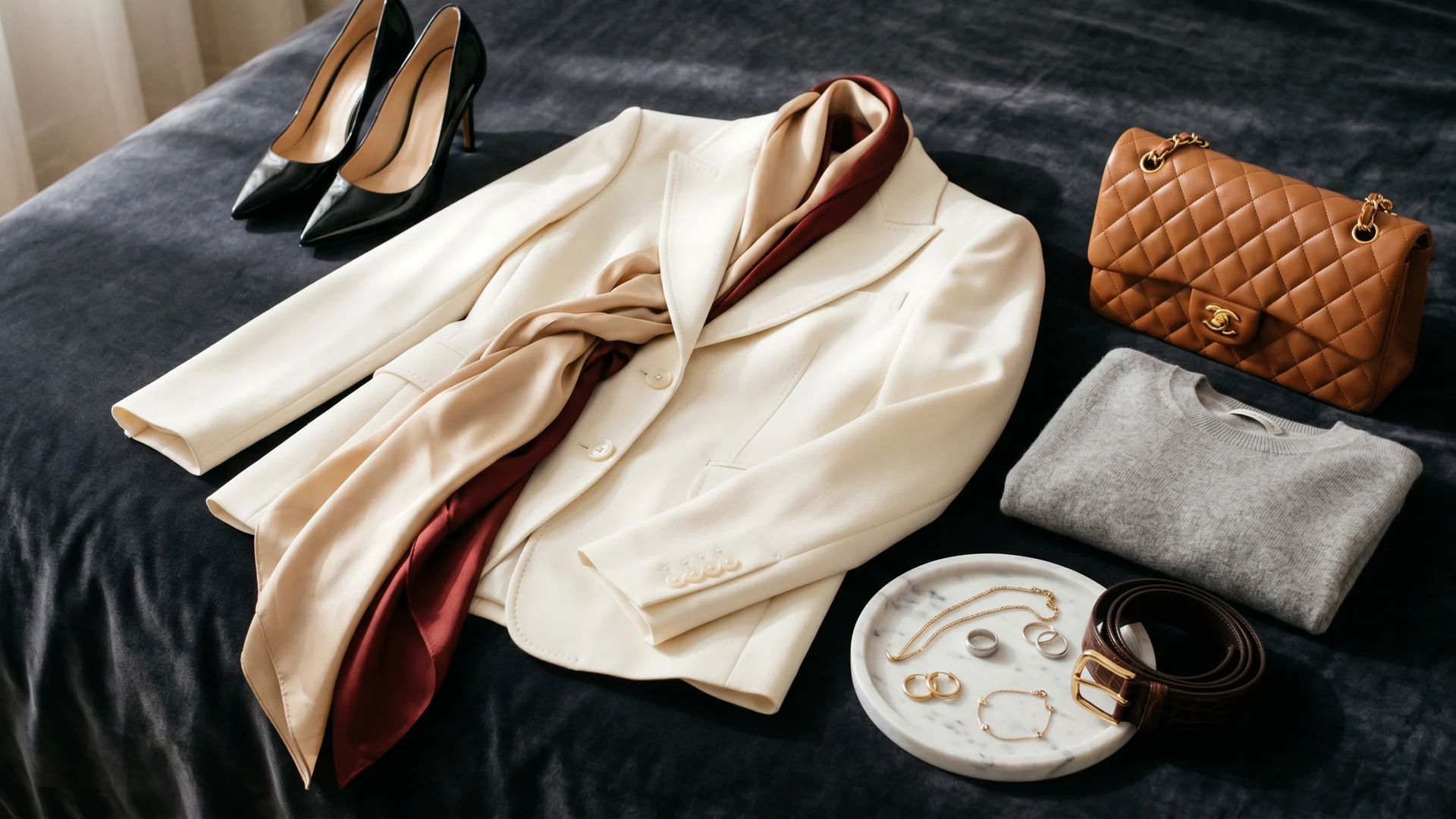
Luxury fashion is built on bespoke tailoring, haute couture handwork, heritage maisons like Hermes and Chanel, and investment pieces that hold or grow in value over time.
Key Takeaways
- A men's luxury foundation starts with a bespoke charcoal Super 150s wool suit from Savile Row or Milan's Via Montenapoleone, paired with Sea Island or Giza 45 cotton shirts from Charvet, Turnbull & Asser, or Kiton.
- Bench-made Goodyear-welted Oxfords from John Lobb, Edward Green, or Gaziano & Girling anchor the footwear rotation, spanning black cap-toe, dark brown semi-brogue, chestnut double monk, and suede loafer.
- Haute couture is legally protected by the Federation de la Haute Couture et de la Mode, with roughly fifteen permanent member houses including Chanel, Dior, Schiaparelli, and Maison Margiela, and pieces taking 150 to over 1,000 hours of handwork.
- Heritage maisons define the sphere: Hermes (founded 1837) hand-makes each Birkin and Kelly in eighteen to twenty-five hours, while Chanel remains the world's most valuable independent luxury brand.
- Spring/Summer 2026 embraces butter yellows, pistachio greens, and lavender with fluid tailoring, while Autumn/Winter 2026 returns to substantial outerwear, strong shoulders, defined waists, and the oversized bag.
- Investment handbags like the Hermes Birkin (1984), the Chanel 2.55 (February 1955), and the Lady Dior (1995) are cultural artefacts whose returns frequently outperform traditional asset classes.
- Sustainability is now central, driven by LVMH's Nona Source deadstock platform, Stella McCartney's mushroom-derived Mylo leather, and the Aura Blockchain Consortium's digital product passports.
🌐 Also available in: Español · Français
Men’s Luxury Wardrobe Essentials
The Perfect Suit: Bespoke vs. Made-to-Measure
Building a luxury wardrobe for the modern gentleman requires a curated approach that prioritises quality over quantity. The foundation of any distinguished men’s collection begins with impeccable tailoring. A bespoke charcoal suit crafted from Super 150s wool, hand-stitched in Savile Row or Milan’s Via Montenapoleone, represents the pinnacle of masculine refinement. This investment piece should feature a half-canvas or full-canvas construction, working buttonholes on the cuffs, and a silhouette that complements the wearer’s frame with surgical precision.
The luxury shirt collection demands equal attention. Sea Island cotton and Egyptian Giza 45 are the gold standards, with brands like Charvet, Turnbull & Asser, and Kiton producing shirts that feel weightless against the skin. A gentleman requires at least six crisp white dress shirts, three pale blue, and several in subtle stripes or checks. Mother-of-pearl buttons are non-negotiable, they are the quiet signal of quality that separates the exceptional from the merely expensive.
Essential Footwear Collection
Outerwear represents one of the most visible expressions of luxury style. A double-faced cashmere overcoat from Loro Piana or Brunello Cucinelli in camel or navy anchors the winter wardrobe, while a buttery-soft leather jacket from Berluti or Tom Ford bridges casual and refined. The trench coat, preferably from Burberry’s heritage line, cut in English-woven cotton gabardine, remains indispensable for transitional seasons.
Footwear is where the luxury wardrobe either triumphs or collapses. The bench-made Oxford from John Lobb, Edward Green, or Gaziano & Girling, constructed using the Goodyear welt method and polished to a mirror shine, communicates more about a man than his business card ever could. A complete rotation includes the black cap-toe Oxford for formal occasions, the dark brown semi-brogue for business, the chestnut double monk strap for smart-casual versatility, and the unlined suede loafer for summer elegance.
Watches & Fine Jewelry
Knitwear forms the tactile backbone of casual luxury. Cashmere from the Scottish Borders, particularly from Johnston’s of Elgin or Begg & Co, and extrafine merino wool from Zegna or Ermenegildo Zegna provide warmth without bulk. A navy crewneck, a charcoal V-neck, and a camel turtleneck constitute the essential trilogy.
Accessories complete the portrait. A mechanical timepiece from Patek Philippe, A. Lange & Sohne, or Vacheron Constantin transcends mere timekeeping. A hand-rolled silk tie from Hermes or Drake’s, a sterling silver tie bar, and cufflinks from Tiffany & Co. or Asprey add the finishing punctuation. The leather belt must precisely match the shoes in colour and finish, while a pocket square, always white linen for black tie, silk for everything else, demonstrates attention to the smallest details.
Denim in the luxury context deserves special consideration. Japanese selvedge denim from mills like Okayama’s Momotaro or Kojima’s Iron Heart, woven on vintage shuttle looms, produces jeans that develop a unique patina over years of wear. These are not casual garments but objet d’art that improve with age.
Women’s Haute Couture Guide
Couture vs. Ready-to-Wear: Key Differences
Haute couture represents the summit of fashion artistry: garments created entirely by hand in Paris ateliers that meet the rigorous standards of the Federation de la Haute Couture et de la Mode. Understanding this rarefied world requires appreciating that haute couture is not simply expensive clothing; it is wearable sculpture governed by strict legal protections and centuries of tradition.
The official haute couture calendar includes approximately fifteen permanent member houses, including Chanel, Christian Dior, Jean Paul Gaultier, Schiaparelli, and Maison Margiela. Each collection presented during Paris Haute Couture Week in January and July contains between thirty and sixty-five looks, with individual pieces requiring anywhere from one hundred and fifty to over one thousand hours of handwork by the petites mains, the highly skilled artisans who execute the designer’s vision through embroidery, featherwork, pleating, and lacework.
The Atelier Experience
The client experience is as elevated as the garments themselves. Private salon appointments at the house’s historic flagship, 31 Rue Cambon for Chanel, 30 Avenue Montaigne for Dior, begin with champagne and a personal consultation with the house’s directrice. Measurements are taken with extraordinary precision: a Chanel jacket requires over thirty individual measurements, while a Dior evening gown demands upwards of fifty. The process typically involves three to five fittings over several months, with muslin toiles created first to perfect the silhouette before cutting into the precious final fabrics.
The embroidery ateliers deserve their own celebration. Houses like Lesage (founded 1858), Montex, and Atelier Vermont produce hand-embroidered textiles of staggering complexity using techniques passed down through generations. A single embroidered panel for a couture gown may contain over ten thousand individual beads, sequins, and crystals, each applied by hand using a Luneville hook. The atelier’s archive at Lesage contains over seventy thousand embroidery samples dating back to the nineteenth century, serving as an inexhaustible source of inspiration.
Evening Wear & Red Carpet Dressing
For the woman building a haute couture relationship, daywear often provides the entry point. A Chanel tweed suit, each tweed specially woven for the house by Maison Lesage, represents the quintessential couture investment. The hand-stitched chain sewn into the hem of every Chanel jacket ensures perfect drape, while the quilted silk lining, signed and numbered, testifies to its provenance. These pieces, while costing as much as a luxury automobile, hold their value remarkably well and are often passed between generations.
Evening wear represents couture in its most spectacular form. Dior’s grand ball gowns, with their architectural construction hidden beneath layers of silk tulle and organza, can require over eight hundred hours of work. Valentino’s atelier in Rome’s Piazza Mignanelli produces gowns that combine Italian romanticism with French precision, while Armani Prive offers a more restrained, modern interpretation of couture evening wear that appeals to the contemporary woman.
The new generation of couture clients includes a younger, more global demographic. Houses now offer virtual fittings using digital avatars, and some, notably Schiaparelli under Daniel Roseberry, have embraced a more surrealist, social-media-friendly aesthetic that attracts attention far beyond the salon. Yet the essence remains unchanged: the direct relationship between creator and client, the primacy of handwork, and the creation of garments that exist in a realm beyond trends.
Top Designer Houses
Heritage Maisons & Their Legacies
The landscape of luxury fashion is dominated by an elite constellation of houses whose histories, aesthetics, and business models define the industry. Understanding these powerhouses, their heritage, creative directors, and signature codes, is essential literacy for anyone navigating the luxury sphere.
Hermes, founded in 1837 as a harness workshop, stands alone in its commitment to artisanal production and controlled growth. The house refuses to license its name, produces the vast majority of its goods in France, and maintains waiting lists for its most coveted items, most famously the Birkin and Kelly bags, each handcrafted by a single artisan over eighteen to twenty-five hours. Under the artistic direction of Nadege Vanhee for women’s ready-to-wear and Veronique Nichanian for men’s, Hermes represents quiet, enduring luxury that never shouts.
Contemporary Designers Redefining Luxury
Chanel, the house that Gabrielle “Coco” Chanel built and Karl Lagerfeld transformed into a global powerhouse, remains the world’s most valuable independent luxury brand. The codes are instantly recognisable: tweed, pearls, camellias, the interlocking CC, and the little black jacket. Under Virginie Viard, Chanel has evolved while maintaining its core DNA, with the Metiers d’Art collection each December celebrating the specialist ateliers the house has acquired to preserve endangered crafts.
Louis Vuitton, under the creative direction of Nicolas Ghesquiere for women and Pharrell Williams for men, has expanded far beyond its trunk-making origins into a complete luxury universe. The house’s collaborations, from Stephen Sprouse to Yayoi Kusama, have redefined how luxury brands engage with contemporary culture, while its ready-to-wear collections increasingly compete with traditional fashion houses for critical acclaim.
Gucci has undergone more transformations than nearly any other house, most recently under Sabato De Sarno following Alessandro Michele’s maximalist tenure. The house’s Florentine heritage, it was founded in 1921 as a leather goods workshop, anchors its identity, expressed through the iconic horsebit loafer, bamboo-handled bags, and green-red-green web stripe that have become global symbols of Italian luxury.
Emerging Talents to Watch
Dior, under Maria Grazia Chiuri (the first woman to lead the house), has embraced feminism as a creative lens while honouring the founder’s legacy of the New Look silhouette. Kim Jones at Dior Men has similarly revolutionised menswear through artistic collaborations that bridge streetwear and tailoring, creating a cultural conversation that extends far beyond fashion.
The Italian triumvirate of Prada, Bottega Veneta, and Brunello Cucinelli each represent distinct philosophies. Miuccia Prada and Raf Simons at Prada challenge conventional beauty through intellectual design. Bottega Veneta, under Matthieu Blazy, has elevated the house’s signature intrecciato leather weave into a contemporary art form. Brunello Cucinelli, the “philosopher of cashmere,” has built a business around humanistic capitalism and garments of serene, understated luxury.
Smaller houses punch above their weight in influence. Loewe, under Jonathan Anderson, has become the most critically admired brand in fashion through its playful, craft-focused aesthetic. The Row, founded by Mary-Kate and Ashley Olsen, has defined a new paradigm of ultra-luxury minimalism that prizes fabric and cut above all else.
Seasonal Trends 2026
Spring/Summer Key Looks
The 2026 luxury fashion landscape represents a fascinating convergence of several powerful currents. After years of quiet luxury dominance, the pendulum is swinging toward a refined maximalism, not the logo-driven excess of previous eras, but a celebration of extraordinary craftsmanship, texture, and colour that demands to be appreciated up close.
For Spring/Summer 2026, designers are embracing an optimistic palette. Soft butter yellows, pistachio greens, and lavender have emerged as the season’s directional colours, replacing the beige-and-grey monotony of recent years. Fluid tailoring in lightweight wool-silk blends offers a relaxed yet polished silhouette, with wide-leg trousers and deconstructed blazers dominating both men’s and women’s collections. The return of the full skirt, voluminous, midi-length, and often in crisp cotton poplin or silk taffeta, signals a post-pandemic embrace of drama and femininity.
Fall/Winter Forecast
The transparency trend has evolved into something more sophisticated for 2026. Rather than overt sheerness, designers are layering organza overlays, mesh inserts, and laser-cut leather to create garments that reveal and conceal in equal measure. Prada’s Spring collection showed skirts constructed from layers of gossamer-weight silk georgette, each layer a slightly different shade, creating a shifting, ethereal effect as the wearer moved.
In men’s fashion, Summer 2026 brings a renaissance of the tailored short. Not the cargo short of casual memory, but precisely cut walking shorts in linen, tropical wool, and silk blends, worn with matching jackets for a new formal vocabulary appropriate to warming climates. The unstructured blazer in featherweight fabrics, often unlined and almost cardigan-like in its ease, has become the season’s most versatile piece.
Autumn/Winter 2026 sees the return of substantial outerwear as the collection centrepiece. Max Mara’s enveloping cashmere wraps, Bottega Veneta’s leather trenches in oxblood and forest green, and Hermes’s double-faced wool coats with hidden closures exemplify the season’s investment dressing. Texture is the unifying theme: shearling, shearling-lined denim, brushed mohair, tactile boucle, and high-pile alpaca appear across collections, inviting touch and conveying substance.
Resort & Cruise Collections
The colour story for Autumn/Winter 2026 is unexpectedly warm. Deep aubergine, rust, teal, and chocolate brown form the core palette, with surprising accents of vibrant cobalt blue and burnt orange cutting through the richness. This represents a deliberate departure from the black-and-grey winter uniforms of the past decade.
Silhouette innovation focuses on the shoulder and the waist. Strong, defined shoulders, sometimes exaggerated, always precise, appear on coats, jackets, and even knitwear. Simultaneously, waist definition returns after seasons of oversized shapes: belts are wide and prominent, corsetry details appear on evening wear, and tailoring features suppressed waists that recall mid-century elegance without nostalgia.
The accessories narrative for 2026 centres on the oversized bag, a reaction to years of diminishing proportions. Totes large enough to carry a laptop and a change of clothes, rendered in the finest leathers, dominate. Meanwhile, shoes trend toward the substantial: chunky loafers with lug soles, knee-high boots with architectural heels, and the continued ascent of the ballet flat in jewel-toned satins and embellished leathers.
Accessories & Leather Goods
Investment Handbags & The Secondary Market
In the luxury hierarchy, accessories and leather goods occupy a uniquely important position. They are often the entry point to a house, the category that drives the majority of revenue for brands like Hermes and Louis Vuitton, and the pieces that retain or even increase in value over time. Understanding this category, from construction techniques to the secondary market, is essential for any serious luxury consumer.
The leather hierarchy begins with the material itself. Full-grain leather, which retains the hide’s natural surface with all its subtle imperfections, represents the highest quality and develops the richest patina over decades. Hermes exclusively uses full-grain leathers, sourced from specific tanneries with which the house maintains decades-long relationships. Box calf, the classic Hermes leather, is smooth and formal but susceptible to scratching, valued precisely because those scratches tell the bag’s story. Togo, a pebbled calfskin introduced in the 1990s, offers greater durability while maintaining the house’s exacting standards.
Silk Scarves, Ties & Pocket Squares
Construction methods separate the exceptional from the ordinary. The saddle stitch, a hand-sewing technique using two needles and a single waxed linen thread, produces seams that are stronger than machine stitching and will never unravel if a single stitch breaks. This technique, practised by Hermes artisans who train for a minimum of two years before touching a Birkin or Kelly, requires approximately eighteen to twenty-five hours per bag.
The iconic bag pantheon includes pieces whose designs have remained essentially unchanged for decades. The Hermes Birkin (created in 1984 after a chance encounter between Jean-Louis Dumas and Jane Birkin on a flight), the Kelly (originally the Sac a Depeches, renamed after Grace Kelly), the Chanel 2.55 (designed by Coco Chanel in February 1955, thus the name), and the Lady Dior (gifted to Princess Diana by France’s First Lady in 1995) are more than accessories, they are cultural artefacts with documented investment returns that frequently outperform traditional asset classes.
Small leather goods deserve equal attention. The wallet, cardholder, and passport cover are daily companions that receive more handling than any bag. Barenia leather, a smooth calfskin treated with oils that develops a remarkable honey-brown patina, is prized for small goods, as is Epsom, an embossed leather that resists scratches and maintains its structure indefinitely.
Luggage & Travel Accessories
Belts are surprisingly complex in the luxury context. The ideal dress belt features a leather that exactly matches one’s shoes, a buckle in the appropriate metal (white gold or platinum for formal, yellow gold or palladium for business), and a width proportional to the wearer’s frame. Hermes’s Collier de Chien belt, with its distinctive pyramid studs inspired by the house’s dog collar designs from the 1920s, has become an icon in its own right.
In women’s accessories, the silk scarf holds a special place. The Hermes carre, measuring ninety centimetres square and printed using the house’s proprietary engraving techniques that allow for up to forty-seven colours per design, requires over eighteen months from conception to production. Each season brings new designs but the investment in classic patterns, Brides de Gala, Astrologie, or any design by Annie Faivre or Philippe Ledoux, offers enduring value.
Fine jewellery increasingly blurs the line with accessories. Van Cleef & Arpels’ Alhambra collection, with its quatrefoil clover motif, has become a modern classic worn by women across generations. Cartier’s Love bracelet, designed in 1969 by Aldo Cipullo, requires a screwdriver to fasten, a design that has spawned countless imitations but whose original continues to appreciate on the secondary market.
Sustainable Luxury Fashion
Ethical Sourcing & Transparency
Sustainability has evolved from a niche concern to a central pillar of luxury fashion strategy. The paradox is inherent: an industry built on desire, novelty, and consumption must reconcile itself with planetary limits. The most forward-thinking houses are addressing this tension not as a constraint but as an opportunity for innovation and deeper client relationships.
Material innovation leads the transformation. LVMH’s Nona Source platform resells deadstock fabrics from the group’s maisons to emerging designers, preventing high-quality textiles from entering landfills. Stella McCartney, the pioneer of sustainable luxury since founding her eponymous house in 2001, has developed Mylo, a mushroom-derived leather alternative, and continues to pioneer bio-based materials alongside traditional sustainable fibres like organic cotton and regenerative wool.
Circular Fashion & Resale Platforms
Kering has embedded sustainability into its corporate structure through its Environmental Profit and Loss accounting, which quantifies the group’s environmental impact across its supply chain. Gucci’s Off the Grid collection, using recycled ECONYL nylon, represents the application of circular principles at the highest aesthetic level, while the house’s commitment to carbon neutrality across its entire supply chain demonstrates that sustainability can coexist with desirability.
The circular economy in luxury has expanded dramatically. The RealReal, Vestiaire Collective, and Rebag have mainstreamed the resale of authenticated luxury goods, creating liquidity that supports primary-market purchases. Some houses embrace this directly: Burberry, Stella McCartney, and Gucci have partnered with The RealReal on consignment programmes, while Valentino’s Vintage initiative resells archive pieces directly through the house’s own channels.
Innovative Eco-Materials
Traceability is becoming non-negotiable. The Aura Blockchain Consortium, founded by LVMH, Prada Group, and Cartier (part of Richemont), provides digital product passports that track a luxury item from raw material to point of sale, and beyond. For consumers, this means certifiable knowledge of a product’s provenance; for brands, it provides a powerful tool against counterfeiting while building trust with increasingly informed clients.
The slow fashion philosophy, long implicit in luxury’s emphasis on enduring quality, is now an explicit marketing position. Brunello Cucinelli’s commitment to repairing any garment the house has ever produced, regardless of age, embodies this approach. Hermes’s Petit H workshop transforms production scraps into whimsical objects, turning waste into desirability. The Row’s insistence on timeless design over seasonal trends is itself a form of sustainability through permanence.
Regenerative agriculture represents the next frontier. Luxury’s dependence on natural fibres, cashmere, wool, silk, cotton, ties it directly to farming practices. Brands like Loro Piana and Zegna are investing in regenerative grazing practices in Mongolia and Australia that sequester carbon while producing finer, more resilient fibres. This closes the loop: better farming practices produce superior raw materials, which create more desirable products, which command higher prices, which fund continued investment in regenerative practices.
Personal Styling & Bespoke
Finding the Right Stylist
The ultimate expression of luxury is clothing made specifically for the individual. Beyond ready-to-wear, beyond even made-to-measure, lies the world of bespoke, where a garment is created from a unique paper pattern drawn specifically for the client by a master cutter, then constructed entirely by hand over multiple fittings and many months.
Savile Row remains the spiritual home of bespoke tailoring for men. Houses like Anderson & Sheppard (known for its soft, draped cut), Huntsman (a more structured, equestrian silhouette), and Henry Poole (the acknowledged creator of the dinner suit) represent approaches as distinct as their clients. A bespoke suit from any of these houses requires approximately eighty hours of handwork, three to four fittings, and a minimum of three months, though the relationship, once established, often spans decades.
The Bespoke Commissioning Process
The bespoke process begins with cloth selection. A Savile Row house typically carries between five thousand and ten thousand fabric samples at any time, sourced from the great mills of Huddersfield and Biella, as well as specialist weavers in Scotland and Japan. The choice of cloth, its weight, weave, and composition, determines the garment’s character, and the head cutter’s guidance at this stage is invaluable.
For women, couture-level bespoke extends beyond the official haute couture houses. Independent ateliers in London, New York, Milan, and Tokyo offer women the opportunity to commission garments of extraordinary quality without the full couture price tag. These ateliers often specialise in particular categories: bridal, evening wear, or the perfect day dress that no ready-to-wear collection can provide.
Wardrobe Audits & Seasonal Rotation
The personal stylist and personal shopper have become essential intermediaries for time-pressed luxury clients. Harrods, Selfridges, and Bergdorf Goodman offer by-appointment personal shopping suites where curated selections await. Independent stylists, often former fashion editors or retail directors, provide wardrobe audits, seasonal edits, and ongoing advice that transforms dressing from a chore into a pleasure. Their real value lies in preventing expensive mistakes and building a coherent wardrobe rather than a collection of disparate expensive items.
Made-to-measure occupies the space between ready-to-wear and full bespoke. Using an existing block pattern adjusted to the client’s measurements, made-to-measure offers a higher degree of fit and personalisation than off-the-rack while remaining significantly more accessible than bespoke. The best programmes, such as those offered by Zegna, Canali, and Ralph Lauren Purple Label, offer hundreds of fabric options and dozens of customisation points from lapel width to button choice.
The shirtmaker’s art is a specialised subset of bespoke. Jermyn Street’s Turnbull & Asser and Hilditch & Key, Paris’s Charvet, and Naples’ Anna Matuozzo are among the world’s finest, producing shirts whose collars, cuffs, and plackets are entirely hand-cut and hand-sewn. A bespoke shirt programme typically requires a minimum order of four to six shirts, with the paper pattern retained for future orders. The difference between a bespoke shirt and even the finest ready-to-wear is immediately apparent in the collar’s posture and the cuff’s relationship to a jacket sleeve, details that seem small but fundamentally alter the wearer’s silhouette.
Fashion Week Calendar
The Big Four: Paris, Milan, London, New York
The international fashion week calendar structures the luxury year, dictating not merely when collections are shown but the rhythm of production, retail delivery, and cultural conversation. Understanding this calendar, its history, logistics, and evolving relevance, is essential for anyone serious about luxury fashion.
The calendar follows a twice-yearly cycle with two distinct seasons. Spring/Summer collections are presented in September of the preceding year, with deliveries to stores beginning in January and continuing through March. Autumn/Winter collections are shown in February, with retail arrivals from July through September. This counterintuitive schedule, showing winter clothes in summer and vice versa, originated in the mid-twentieth century to allow buyers and manufacturers sufficient lead time for production.
How to Secure Show Invitations
The four traditional fashion capitals present in a fixed sequence: New York opens the season, followed by London, then Milan, and finally Paris. Each city possesses a distinct character. New York brings commercial clarity and an emphasis on sportswear and evening wear. London champions emerging talent and creative risk-taking, with designers like Simone Rocha, Erdem, and JW Anderson leading the charge. Milan is the stronghold of Italian luxury, where Prada, Gucci, Bottega Veneta, and Versace command global attention. Paris, as the undisputed apex, hosts the largest houses, Chanel, Dior, Louis Vuitton, Hermes, and the most spectacular productions.
Men’s Fashion Weeks occur separately, typically in January and June, though the lines increasingly blur as houses stage co-ed shows or integrate menswear into their women’s presentations. Pitti Uomo in Florence, held twice yearly in January and June, precedes the official calendar and serves as a gathering point for the menswear industry, combining trade show with a celebration of masculine style that draws peacocks from around the world.
Menswear & Haute Couture Weeks
Haute Couture Week in Paris, held in January and July, operates on an entirely different logic. The collections presented, by invitation only to a tiny audience of clients, press, and buyers, exist outside the commercial calendar. Each look is available only to the client who commissions it, with prices beginning in the tens of thousands of euros and rising into the hundreds of thousands for heavily embroidered evening gowns.
The Cruise and Pre-Fall or “Resort” collections, shown between the main seasons, have grown from commercial afterthoughts into major cultural events. Chanel, Dior, Gucci, and Louis Vuitton now stage spectacular destination shows, at the Podium of the Parthenon, the Palace of Versailles, the Salk Institute, that generate as much attention as the main season presentations. These collections arrive in stores during November/December (Pre-Fall) and May/June (Cruise), filling the retail gaps between main deliveries and often constituting a significant percentage of a house’s annual sales.
The 2026 calendar highlights include the continued expansion of digital and experiential formats alongside physical shows. Livestreaming, virtual reality showrooms, and immersive brand experiences have become permanent features, democratising access to what was once an exclusively insular industry event. The Federation de la Haute Couture et de la Mode maintains the official calendar, balancing tradition with innovation as the industry navigates sustainability concerns and changing consumer expectations about the relentless pace of fashion.
Investment Pieces
Timeless Pieces That Appreciate
Luxury fashion, when approached strategically, can function as more than consumption, it can represent genuine investment. Certain categories of luxury goods have demonstrated consistent value retention and even appreciation over decades, creating a market that now attracts serious investors alongside passionate collectors.
The investment-grade handbag market is the most developed segment of luxury as an asset class. The Hermes Birkin has famously outperformed the S&P 500 over the past thirty-five years, with rare skins (Himalaya Niloticus crocodile), limited editions, and vintage pieces in pristine condition commanding multiples of their original retail price at auction. A matte white Himalaya Birkin 30 with palladium hardware sold at Christie’s in 2021 for over $400,000, establishing a new benchmark for handbag values.
Caring for Your Investment Wardrobe
Investment criteria follow consistent patterns. Scarcity is paramount, limited production runs, discontinued designs, and special-order pieces consistently outperform mass-produced items. Condition is nearly as important, with “full set” purchases (original box, dust bag, receipt, and authentication documents) commanding substantial premiums. Heritage and brand equity matter enormously: Hermes, Chanel, and Louis Vuitton consistently lead resale value rankings, while even the most beautifully crafted bag from a lesser-known house will depreciate rapidly.
The mechanical watch market represents luxury investment at its most developed. Rolex, Patek Philippe, and Audemars Piguet sports models, the Submariner, Nautilus, and Royal Oak, have experienced such extraordinary demand that retail waiting lists extend years, and secondary-market prices can double or triple the retail price. Independent watchmakers like F.P. Journe, Kari Voutilainen, and Rexhep Rexhepi command even more rarified premiums, with production measured in dozens rather than thousands of units annually.
Resale & Auction Strategies
Fine jewellery offers a different investment profile. While branded jewellery from Cartier, Van Cleef & Arpels, and Bulgari retains value well, the greatest appreciation potential lies in exceptional natural gemstones, particularly untreated Burmese rubies, Kashmir sapphires, and Colombian emeralds of significant size and quality. These stones, unlike branded jewellery, transcend fashion and appreciate based on global demand from collectors in Asia, the Middle East, and the West.
Vintage fashion has established itself as a distinct collecting category. Original pieces by Cristobal Balenciaga, Yves Saint Laurent (particularly from his Rive Gauche period), and early Comme des Garcons are sought by museums and private collectors alike. Condition, provenance, and rarity drive values, with museum-quality pieces by these masters regularly appearing at auction alongside fine art and antiques.
Practical investment strategy in luxury fashion requires discipline. The most reliable performers are the most iconic pieces: Hermes Birkin and Kelly bags in neutral colours and standard sizes (25, 28, 30, and 35 centimetres), Chanel Classic Flap bags in black lambskin or caviar leather, Rolex steel sports models, and Cartier Love bracelets in yellow gold. These pieces offer the deepest liquidity, the most reliable authentication infrastructure, and the broadest secondary market. Special editions, exotic skins, and unique commissioned pieces offer greater potential returns but with significantly higher risk and lower liquidity.
Insider Tips
Sample Sales & Private Trunk Shows
Navigating the luxury fashion world at the highest level requires knowledge that transcends what is available on brand websites or in fashion magazines. These insider insights, gathered from industry veterans, personal shoppers, atelier artisans, and long-time collectors, separate the truly informed luxury consumer from the merely wealthy.
Building relationships with sales associates is the single most powerful strategy for accessing limited items. The Birkin bag is famously not available for purchase by walking into an Hermes boutique and asking; it requires a purchase history and a relationship with a specific sales associate who advocates on the client’s behalf. This dynamic, while more pronounced at Hermes, applies across luxury brands. Regular, loyal purchases, even of small items, signal commitment, while treating sales associates as partners rather than servants is both good manners and good strategy.
Timing purchases strategically can yield significant savings without compromising quality. Luxury department stores’ private sales, typically held twice yearly and by invitation only, offer reductions of thirty to forty percent on current-season ready-to-wear and accessories. Brand sample sales, while increasingly rare as houses seek to control distribution, occasionally offer extraordinary value. The key is to focus on core, timeless pieces rather than seasonal trend items, the navy cashmere sweater or black wool trousers that will serve for years rather than the print-of-the-season that will feel dated in six months.
Building Relationships with SAs
Care and maintenance dramatically extend the life, and value, of luxury goods. Cashmere should be hand-washed or professionally dry-cleaned sparingly; between cleanings, airing the garment and using a cashmere comb to remove pills maintains its appearance. Leather goods benefit from annual conditioning with appropriate products (Saphir for smooth leathers, specific cleaners for exotic skins), and should be stored in their dust bags away from direct sunlight and humidity. Shoes require cedar shoe trees, regular polishing, and rotation, never wearing the same pair two days in a row allows the leather to recover its shape and prevents premature wear.
The authentication ecosystem has grown in sophistication alongside the counterfeiting industry. Services like Entrupy use microscopic imaging and artificial intelligence to authenticate handbags with a reported ninety-nine percent accuracy. For watches, brand service centres and certified watchmakers provide definitive authentication, indeed, the refusal of a brand service centre to work on a watch is often the first indication of a problem. For vintage and pre-owned purchases, authentication certificates from reputable services are now considered essential rather than optional.
Archive access represents the ultimate insider privilege. Houses maintain extensive archives of past collections, and while public access is restricted, clients with significant relationships may be granted appointments to view specific pieces, whether for reproduction of a favourite garment, research for a commissioned piece, or simply inspiration. Chanel’s Patrimoine department in Paris maintains over ten thousand pieces, while Dior’s archive at 30 Avenue Montaigne preserves the house’s heritage in climate-controlled storage.
Authentication & Counterfeit Avoidance
Sizing strategy across brands is essential knowledge. Italian luxury typically runs smaller than French, which runs smaller than American. A size 40 in Prada is not equivalent to a size 40 in Hermes, and knowing one’s measurements across houses prevents expensive tailoring and disappointment. The most sophisticated clients maintain a personal measurement card, updated annually, with detailed measurements taken by a professional tailor, allowing for precise purchasing even when trying on is not possible.
The secondary market for luxury fashion, particularly through platforms like Vestiaire Collective, The RealReal, and Rebag, offers access to past-season pieces, discontinued designs, and vintage treasures. The informed consumer understands that seasonality on these platforms is inverted, winter coats sell best in summer when they are needed least, and summer dresses command premium prices in December. Strategic purchasing on the secondary market, combined with patience and detailed saved searches, can yield extraordinary finds at fractions of retail prices.
Ultimately, the greatest insider tip is philosophical: buy less, buy better. A wardrobe of twenty exceptional pieces that fit perfectly, are maintained impeccably, and genuinely express the wearer’s identity will always serve better than one hundred pieces of mediocre quality. Luxury fashion’s promise, at its best, is not merely status but the daily pleasure of wearing objects of extraordinary quality, and that pleasure is available to anyone willing to invest thought, time, and care alongside money.
Frequently Asked Questions (FAQ)
What is the difference between bespoke and made-to-measure in luxury menswear?
Bespoke means a garment is created from a unique paper pattern drawn specifically for the client by a master cutter, then built entirely by hand over multiple fittings and many months. Made-to-measure occupies the space between ready-to-wear and bespoke, adjusting an existing block pattern. A Savile Row bespoke suit requires about eighty hours of handwork and three to four fittings.
What makes Hermes leather goods like the Birkin so valuable?
Each Hermes Birkin and Kelly bag is handcrafted by a single artisan over eighteen to twenty-five hours using the saddle stitch, a two-needle technique stronger than machine sewing. Hermes uses only full-grain leathers from long-term tanneries, and its artisans train at least two years before touching a Birkin. These bags carry documented investment returns that frequently outperform traditional asset classes.
What are the haute couture trends for Spring/Summer 2026?
Spring/Summer 2026 embraces an optimistic palette of soft butter yellows, pistachio greens, and lavender, replacing recent beige-and-grey monotony. Fluid tailoring in lightweight wool-silk blends brings wide-leg trousers and deconstructed blazers, while the voluminous, midi-length full skirt in cotton poplin or silk taffeta returns. Refined maximalism celebrates craftsmanship, texture, and colour over logo-driven excess.
Which houses are official members of haute couture in Paris?
The official haute couture calendar includes approximately fifteen permanent member houses, including Chanel, Christian Dior, Jean Paul Gaultier, Schiaparelli, and Maison Margiela. These houses meet the rigorous standards of the Federation de la Haute Couture et de la Mode, presenting collections during Paris Haute Couture Week in January and July, each containing between thirty and sixty-five looks created entirely by hand.
Where is the best place to commission a bespoke suit for men?
Savile Row in London remains the spiritual home of bespoke tailoring, with houses like Anderson & Sheppard for a soft draped cut, Huntsman for a structured equestrian silhouette, and Henry Poole, the acknowledged creator of the dinner suit. A bespoke suit requires roughly eighty hours of handwork, three to four fittings, and a minimum of three months. Milan's Via Montenapoleone is another bespoke destination.
How is luxury fashion becoming more sustainable in 2026?
Luxury houses treat sustainability as innovation rather than constraint. LVMH's Nona Source resells deadstock fabrics, Stella McCartney pioneers the mushroom-derived Mylo leather, and Gucci's Off the Grid uses recycled ECONYL nylon. The Aura Blockchain Consortium, founded by LVMH, Prada Group, and Cartier, provides digital product passports tracking items from raw material to sale, while resale platforms like The RealReal and Vestiaire Collective expand the circular economy.
What handbags are considered the best luxury investment pieces?
The iconic bag pantheon includes the Hermes Birkin, created in 1984 after Jean-Louis Dumas met Jane Birkin on a flight, the Kelly renamed after Grace Kelly, the Chanel 2.55 designed by Coco Chanel in February 1955, and the Lady Dior gifted to Princess Diana in 1995. These are cultural artefacts with documented investment returns that frequently outperform traditional asset classes.
What footwear is essential for a luxury men's wardrobe?
A complete luxury rotation centres on bench-made Oxfords from John Lobb, Edward Green, or Gaziano & Girling, constructed with the Goodyear welt method and polished to a mirror shine. It includes a black cap-toe Oxford for formal occasions, a dark brown semi-brogue for business, a chestnut double monk strap for smart-casual, and an unlined suede loafer for summer elegance.
What are the foundations of a men's luxury wardrobe?
What distinguishes haute couture from ready-to-wear?
Which heritage maisons define luxury fashion?
More from Magazine
Luxury Wedding Planning: The Ultimate Guide
Luxury wedding planning guide: top destination venues, couture bridal designers, Michelin catering, headline entertainment and elite planners for a fl…
Luxury Wine & Spirits Collecting: The Complete Guide
Luxury wine and spirits collecting guide: how to evaluate investment-grade Bordeaux, Burgundy, Champagne and rare whisky, plus auctions, storage and r…

Gourmet Melbourne: A Taste of Australia’s Culinary Innovations
Melbourne, the capital city of the Australian state of Victoria, has gained a well-deserved reputation as a foodie destination. With its diverse culin…