Luxury Bridal Jewelry & Engagement Rings: The Complete Guide
Luxury bridal jewelry and engagement ring guide: master the GIA 4Cs, designer maisons, colored gemstones, custom design, insurance, and insider buying tips.…
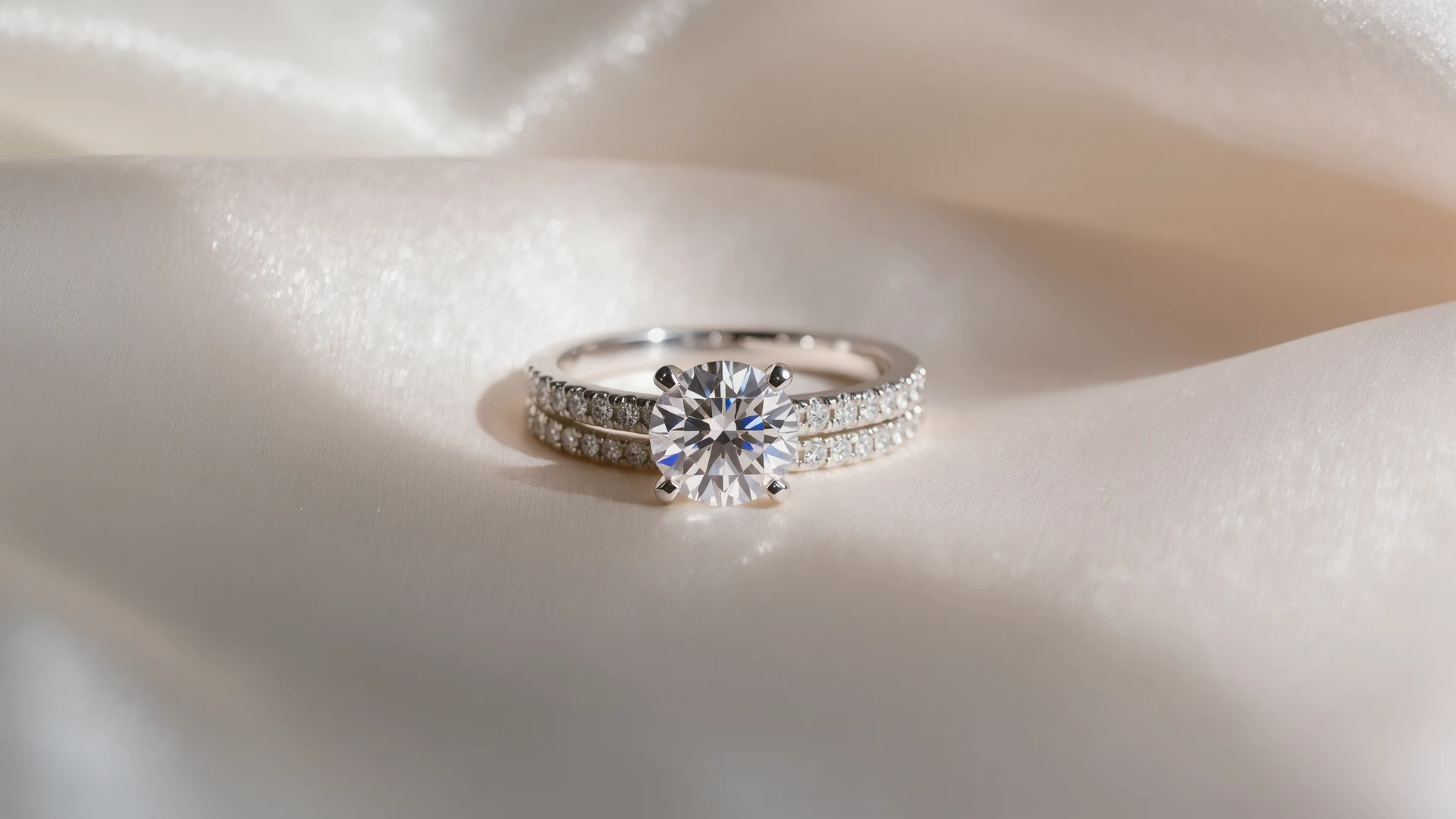
The smartest engagement ring choice balances the GIA 4Cs by never compromising on Cut, targeting the G-J near-colorless and VS2-SI1 eye-clean ranges, and shopping just below magic-number carat weights.
Key Takeaways
- The GIA 4Cs (Cut, Color, Clarity, Carat) are the gold standard for diamond quality; cut is the only one shaped by human craftsmanship and the one you should never compromise.
- G-J near-colorless diamonds and VS2 or SI1 eye-clean clarity deliver the best value, while D-F colorless stones can cost 30-50% more and Flawless grades matter mostly for investment.
- Buying just below magic-number thresholds such as 0.90-0.99, 1.40-1.49, and 1.90-1.99 carats drops the price while visual size difference stays negligible.
- Heritage maisons including Cartier, Tiffany & Co. Harry Winston, Van Cleef & Arpels, and Graff define designer bridal, with the 1886 Tiffany six-prong Setting the most recognized design in history.
- Colored stones offer durable alternatives: sapphires rank 9 on the Mohs scale, Burmese pigeon's-blood rubies are among the priciest gems per carat, and any engagement gemstone should be at least 7.5 on Mohs.
- Lab-grown diamonds are real diamonds costing 60-80% less than mined stones but with currently minimal resale value, so natural diamonds remain the stronger long-term investment.
- Fine bridal jewelry needs a scheduled insurance rider (homeowners policies cap items at $1,000-$2,500), appraisals updated every two to three years, and professional inspection every six months.
🌐 Also available in: Español · Français
Understanding Diamonds: The 4Cs of Engagement Ring Excellence
Every diamond tells a story, but understanding its language requires fluency in the universal 4Cs, Cut, Color, Clarity, and Carat Weight. Established by the Gemological Institute of America (GIA), this grading system remains the gold standard for evaluating diamond quality and value. Mastering these four pillars is the single most important step in selecting an engagement ring that balances beauty, brilliance, and budget.
Cut: The Sparkle Factor
Of all the 4Cs, cut is the only one directly influenced by human craftsmanship rather than nature. A diamond’s cut determines how light travels through the stone, creating the fire, brilliance, and scintillation that make diamonds mesmerizing. The GIA grades cut on a scale from Excellent to Poor. An Excellent or Ideal cut diamond reflects nearly all incoming light back through the crown, producing extraordinary sparkle. A Poor cut, by contrast, leaks light through the pavilion, leaving the stone dull regardless of its other qualities. When prioritizing your budget, never compromise on cut, a well-cut diamond of modest carat weight will outshine a poorly cut larger stone every time.
Color: The Purity Spectrum
GIA color grades range from D (absolutely colorless) to Z (noticeable yellow or brown tint). Truly colorless diamonds in the D, F range are exceptionally rare and command premium prices, sometimes 30bis50% more than their near-colorless counterparts. For most buyers, the G, J near-colorless range represents the sweet spot of value. These diamonds appear colorless to the naked eye when mounted in white gold or platinum settings, yet cost significantly less than D, F stones. For yellow gold or rose gold settings, you can comfortably extend into the K, M range, as the warm metal tone masks any faint color in the stone.
Clarity: Nature’s Fingerprint
Clarity measures the absence of internal inclusions and external blemishes. The GIA scale runs from Flawless (FL) to Included (I3). In practice, many inclusions are microscopic and invisible to the naked eye. An eye-clean diamond, typically VS2 or SI1 on the GIA scale, offers the best balance of appearance and value. You need not chase Flawless or Internally Flawless grades unless collecting for investment purposes. What matters is that the diamond faces up clean: no visible inclusions when viewed from the top at normal viewing distance.
Carat Weight: Size and Presence
Carat is the measure of a diamond’s weight, with one carat equaling 200 milligrams. While carat weight strongly influences price, it does not exist in a vacuum. A 0.90-carat diamond with an Excellent cut and G color will often appear more impressive than a 1.00-carat diamond with a Fair cut and J color. Savvy shoppers target magic number thresholds, 0.90bis0.99 carats, 1.40bis1.49 carats, 1.90bis1.99 carats, where prices drop perceptibly just below the round-number benchmarks while visual size difference remains negligible.
Designer Engagement Rings: Artistry Meets Romance
Designer engagement rings occupy a rarified space where jewelry becomes art. Unlike mass-produced settings, designer rings bear the unmistakable signature of a creative vision, distinctive proportions, unexpected stone arrangements, and hand-finished details that elevate the piece from beautiful to unforgettable. Maisons such as Cartier, Tiffany & Co. Harry Winston, Van Cleef & Arpels, and Graff have defined the category for generations, each contributing iconic designs that continue to influence bridal fashion worldwide.
The Tiffany® Setting, introduced in 1886, remains perhaps the most recognized engagement ring design in history. Its six-prong mounting lifts the diamond above the band, maximizing light entry and creating an uninterrupted profile that has inspired countless interpretations. Cartier’s Solitaire 1895 and Trinity Ruban collections embody the maison’s architectural sensibility, while Harry Winston’s HW Logo and Belle collections showcase the jeweler’s mastery of diamond-intensive design. Van Cleef & Arpels brings poetic romance through motifs drawn from nature, fairy tales, and couture, the Romance and Perlée collections are perennial bridal favorites.
Beyond the heritage maisons, contemporary designers are reshaping the category with bold innovation. Jessica McCormack fuses Georgian-era inspiration with modern edge, creating geometric settings with signature button-back details. Sophie Bille Brahe has redefined pearl-and-diamond bridal jewelry with her sculptural, deconstructed aesthetic. Irene Neuwirth and Nikos Koulis bring an art-world sensibility to fine jewelry, offering engagement rings that feel both timeless and utterly of the moment. Investing in a designer engagement ring means owning a piece of creative history, a wearable work of art that carries the legacy and expertise of its maker.
Colored Gemstones: Beyond the White Diamond
While the white diamond remains the traditional choice, colored gemstone engagement rings have surged in popularity, driven by a desire for individuality and personal meaning. From the deep velvety blue of a fine sapphire to the vivid fire of a ruby or the serene green of an emerald, colored center stones offer a distinctive alternative that reflects the wearer’s personality in ways a colorless diamond cannot.
Sapphires rank 9 on the Mohs hardness scale, second only to diamond, making them exceptionally durable for daily wear. Princess Diana’s iconic 12-carat Ceylon sapphire, now worn by Catherine, Princess of Wales, cemented the sapphire engagement ring’s place in popular imagination. The finest Kashmir and Ceylon sapphires display a rich, velvety cornflower blue that commands prices rivaling fine diamonds. Padparadscha sapphires, with their sunset blend of pink and orange, represent one of the rarest and most coveted colored gemstones in existence, prized by collectors and connoisseurs alike.
Rubies symbolize passion and vitality. Burmese rubies with the coveted “pigeon’s blood” hue, a vivid red with a hint of blue, are among the most valuable gemstones per carat on earth. A fine untreated ruby of significant size can exceed the per-carat price of a D-flawless diamond. Emeralds, with their lush green hue, evoke renewal and growth. Colombian emeralds set the standard, prized for their warm, slightly bluish-green color and characteristic jardin (garden), the natural inclusions that gemologists consider proof of authenticity rather than flaws.
For those seeking something truly unconventional, tourmalines, spinels, aquamarines, morganites, and tsavorites offer stunning color palettes at more accessible price points. Morganite’s soft peachy-pink has become especially popular in rose gold settings, creating a romantic, feminine aesthetic. Whatever gemstone you choose, ensure it has sufficient hardness (at least 7.5 on the Mohs scale) for the daily wear an engagement ring demands.
Vintage & Antique Rings: Romance Through the Ages
Vintage and antique engagement rings carry an irreplaceable quality: a sense of history that no newly manufactured piece can replicate. Each era of jewelry design left its distinctive mark, and understanding these periods helps you find a ring that speaks to your aesthetic sensibility while delivering exceptional craftsmanship that has already stood the test of time.
Victorian Era (1837bis1901): Rings from this period often feature rose gold, yellow gold, and silver-topped gold settings. Motifs include serpents (symbolizing eternity), clasped hands, hearts, and floral designs. Old mine-cut and rose-cut diamonds predominate, often accented with pearls, turquoise, and garnets. Victorian rings feel deeply romantic, with hidden compartments and engraved messages adding layers of personal significance.
Edwardian Era (1901bis1915): The Edwardian period brought platinum into prominence, enabling lace-like filigree and millegrain detailing of extraordinary delicacy. Diamonds became the dominant gemstone, set in airy, openwork designs that seem to float above the finger. The garland style, swags, bows, and floral wreaths executed in platinum and diamond, defines the era’s bridal aesthetic. Edwardian rings represent the apex of hand-fabricated platinum work, a level of craftsmanship rarely replicated today.
Art Deco (1920bis1935): Geometric precision, bold color contrasts, and architectural forms define Art Deco engagement rings. Calibré-cut sapphires, emeralds, and rubies frame diamonds in stark, graphic arrangements. The era introduced baguette-cut diamonds as primary accent stones, and asscher-cut and emerald-cut diamonds gained prominence as center stones. Cartier, Van Cleef & Arpels, and Boucheron produced some of the period’s most iconic designs, many of which remain highly collectible today.
Retro (1935bis1950): The Retro period saw a return to voluminous yellow and rose gold, with bold, sculptural forms influenced by Hollywood glamour. Large gemstones, aquamarines, citrines, and amethysts, often took center stage alongside diamonds. Cocktail-ring proportions translated into engagement rings with substantial presence and undeniable personality.
When purchasing vintage or antique, insist on a laboratory report from a respected gemological institute and work with a dealer who specializes in period jewelry. Original condition pieces command premiums, but well-executed restorations can offer comparable beauty at more accessible prices.
Wedding Bands: The Eternal Circle
Wedding bands represent continuity and commitment: the unbroken circle that has symbolized eternal love across cultures for millennia. Today’s couples approach wedding bands with the same thoughtfulness they bring to the engagement ring, treating the pairing as a curated set that tells their complete story.
Classic metal bands in platinum, 18K yellow gold, 18K white gold, and 18K rose gold remain the foundation of the category. A simple, well-proportioned band, typically 2mm to 4mm in width, offers timeless elegance and unparalleled comfort for everyday wear. Comfort-fit bands, with their slightly domed interior profile, slide over the knuckle more easily and feel noticeably lighter during extended wear. Platinum, prized for its natural white luster that never fades, density, and hypoallergenic properties, is the premium choice for those seeking a band that will endure generations without requiring replating.
Diamond-set bands range from a single accent stone to full eternity settings where diamonds encircle the entire band, a poetic expression of love without beginning or end. Half-eternity bands concentrate diamonds across the visible front of the finger, offering comparable brilliance with easier future resizing. Channel settings, pavé settings, and bezel settings each create different light effects: channel settings present clean, modern lines; pavé settings maximize sparkle with minimal metal visibility; bezel settings offer the most protection for diamonds in an active lifestyle.
Stacking and mixing has become a dominant trend in bridal styling. Many women now wear multiple bands, an engagement ring flanked by two diamond bands, or a wedding band paired with anniversary bands accumulated over the years. Mixing metal colors within a stack (rose gold band with a platinum engagement ring, for instance) creates a personalized, contemporary look. Some couples choose matching or complementary bands that share a design element, the same metal finish, a shared diamond pattern, or an engraved motif, creating a subtle visual connection between their rings.
Custom Design Process: Creating Your One-of-a-Kind Ring
For those who seek a ring that exists nowhere else: a piece conceived around a specific story, an inherited gemstone, or a deeply personal vision, custom design offers the ultimate expression of bridal jewelry. The process transforms an abstract dream into a tangible heirloom through a structured collaboration between client and jeweler.
Phase 1: Discovery and Consultation. The journey begins with an in-depth conversation about your vision, lifestyle, and budget. Bring inspiration images, inherited stones, and any sketches or notes. A skilled custom jeweler will ask about your daily activities (a ring for a surgeon differs from a ring for a writer), metal preferences, gemstone inclinations, and the emotional story you want the ring to carry. This phase establishes the creative brief that guides every subsequent decision.
Phase 2: Design Development. Using your brief, the jeweler creates initial sketches and, increasingly, CAD (Computer-Aided Design) renderings that show the ring from multiple angles with photorealistic precision. You’ll review proportions, stone placement, prong styles, gallery details, and profile views, elements often invisible from the top but critical to the ring’s overall beauty and comfort. Expect two to four rounds of refinement as the design evolves toward perfection.
Phase 3: Wax Model or 3D Prototype. Before committing to precious metals, many jewelers produce a resin or wax model, either hand-carved or 3D-printed, that you can try on. This tactile step reveals how the ring sits on your hand, how the proportions relate to your finger length and width, and whether the height profile suits your daily life. Adjustments at this stage are straightforward and cost-free.
Phase 4: Casting and Fabrication. With the design finalized, the ring moves into production. Lost-wax casting transforms the model into precious metal, while hand-fabrication techniques, forging, soldering, and assembling components individually, may be used for the highest-level custom work. This phase typically takes four to eight weeks, depending on complexity.
Phase 5: Stone Setting and Finishing. Master setters secure each gemstone with microscopic precision. The ring then undergoes polishing, engraving (if desired), and final quality inspection. A hallmark is applied, certifying the metal purity. Your custom ring emerges as a singular creation, no other piece like it exists anywhere in the world.
Bridal Jewelry Suite: Completing the Wedding Day Look
While the engagement ring commands center stage, a complete bridal jewelry suite elevates the entire wedding-day presence, creating a cohesive, intentional aesthetic that photographs beautifully and carries emotional significance far beyond the ceremony itself.
Earrings frame the face, arguably the most photographed feature on a wedding day. Diamond studs offer timeless versatility, ranging from 0.50 total carat weight for understated elegance to 2.00+ carats for dramatic impact. Drop earrings and chandelier styles introduce movement and can incorporate colored gemstones that echo the wedding palette. For a modern bride, ear climbers or asymmetric designs create editorial-worthy looks. Pearl and diamond combinations remain perennially popular, offering a luminous softness that complements every skin tone.
Necklaces anchor the bridal neckline. A tennis necklace, a continuous line of individually set diamonds, delivers extraordinary brilliance against bare skin and pairs beautifully with strapless, sweetheart, and V-neck gowns. For high necklines, a pendant featuring a meaningful gemstone draws the eye upward. The classic pearl strand, whether in a single or double row, brings a vintage sophistication that never dates. Some brides choose to wear a family heirloom necklace, weaving generations of love into their wedding-day ensemble.
Bracelets add sparkle to every gesture, the exchange of rings, the raising of a champagne flute, the first dance. A tennis bracelet, with its fluid line of diamonds, catches light with every movement. Bangle stacks in mixed metals or diamond pavé offer a more contemporary look. For formal weddings, a pair of diamond bracelets worn on the same wrist creates a striking, editorial effect.
Hair jewelry, diamond hairpins, tiaras, combs, and headbands, transforms bridal styling into something regal. A tiara need not feel costume-like; contemporary designs in platinum and diamond, often with detachable elements, offer refined elegance. Diamond hairpins scattered through an updo create a constellation effect that photographs magically. The key to a successful bridal suite is coherence: pieces should share a design language, the same metal, the same diamond cut, the same period or aesthetic, so the overall effect reads as intentional rather than assembled.
Investment & Insurance: Protecting Your Bridal Jewelry
An engagement ring and bridal suite represent one of life’s most significant emotional and financial investments. Protecting that investment through proper appraisal, insurance, and maintenance ensures your jewelry remains as brilliant decades from now as on the day it was first worn.
Appraisal and Documentation. Obtain an independent appraisal from a credentialed gemologist (GIA Graduate Gemologist or equivalent) immediately upon purchase. The appraisal should include detailed descriptions of every gemstone, metal specifications, manufacturing method, and current retail replacement value. Keep the laboratory grading report (GIA, AGS, or equivalent) together with the appraisal. Photograph your jewelry from multiple angles against a plain background, capturing any distinctive inclusions or features. Update appraisals every two to three years, as precious metal and gemstone markets fluctuate significantly over time.
Insurance: The Essential Safety Net. Standard homeowners’ and renters’ insurance policies typically cap jewelry coverage at $1,000, $2,500 per item, far below the value of fine bridal jewelry. A scheduled personal property endorsement (also called a rider or floater) extends your existing policy to cover each listed piece at its appraised value, protecting against loss, theft, damage, and mysterious disappearance. Alternatively, specialized jewelry insurers such as Jewelers Mutual and Lavalier offer standalone policies designed exclusively for fine jewelry, often with more comprehensive coverage and no deductible options. Expect annual premiums of approximately 1bis2% of the appraised value, varying by location and security measures.
Maintenance and Care. Have your engagement ring inspected by a professional jeweler every six months. Prongs wear down over time, especially on platinum settings, which are softer than commonly assumed, and a loose prong can mean a lost diamond. Most jewelers offer complimentary inspections and cleaning for clients. At home, clean your jewelry gently with warm water, mild dish soap, and a soft-bristled brush. Avoid ultrasonic cleaners for emeralds, opals, pearls, and any fracture-filled diamonds, as vibrations can damage these materials. Remove rings before swimming (chlorine damages gold alloys), gardening, working out, or handling harsh chemicals. Store each piece separately in a fabric-lined jewelry box to prevent diamonds from scratching other jewelry.
Proposal Planning: The Moment That Changes Everything
The engagement ring is the centerpiece of a proposal, but the moment itself requires thoughtful orchestration. A well-planned proposal honors the relationship’s unique story while creating a memory that will be recounted for a lifetime.
Know Your Partner’s Style. Before purchasing the ring, gather intelligence. Browse jewelry together casually, window shopping or online browsing, and note which styles draw genuine excitement. Enlist a trusted friend or family member who can probe preferences without raising suspicion. Pay attention to the jewelry your partner already wears: is it yellow gold, white gold, or rose gold? Minimalist or statement? Modern or vintage? This research is the foundation of a choice your partner will love wearing every day for the rest of their life.
Location and Timing. The most memorable proposals are personal, not performative. A location that holds meaning for your relationship, the site of your first date, a favorite hiking trail, the city where you met, carries more emotional weight than a generic scenic overlook. Consider your partner’s personality: an introvert may prefer an intimate private moment, while an extrovert might cherish a celebration surrounded by family and friends. Sunset proposals offer golden-hour light that flatters both the ring and the photographs you’ll treasure. If hiring a photographer, brief them on the plan and ensure they understand the need for discretion.
What to Say. You need not deliver a memorized speech. Speak from the heart, recall a specific memory, express what your partner means to you, and articulate your hopes for the future. The words matter far more than the setting. If nerves threaten, write your thoughts in a letter that your partner can keep and reread through the years. Some proposers incorporate culturally significant traditions, asking for a parent’s blessing, incorporating family heirlooms, or including religious or cultural rituals that honor heritage.
Capture the Moment. Whether through a professional photographer, a discreetly positioned videographer, or simply a friend with a good camera phone, ensure the moment is documented. The seconds after the question, the surprise, the emotion, the first look at the ring on their hand, are irreplaceable. Plan a celebration afterward: a dinner reservation at a meaningful restaurant, a gathering of close friends, or simply a quiet evening together to savor the moment before sharing the news with the world.
Insider Tips: What Jewelers Wish You Knew
After decades in the fine jewelry industry, certain truths emerge that can save you money, prevent disappointment, and lead you to a ring that exceeds expectations. These insider insights come from master jewelers, gemologists, and industry veterans who have guided thousands of couples through the engagement ring journey.
Buy the Diamond, Not the Paper. A GIA or AGS grading report is essential, it verifies what you are purchasing. But two diamonds with identical paper grades can look dramatically different. Always view the diamond in person or request high-resolution video under multiple lighting conditions. Fluorescence, a diamond’s reaction to ultraviolet light, can make some stones appear milky or hazy, yet it is rarely reflected in the grading report’s value assessment. Medium to strong blue fluorescence in colorless diamonds (D, F) can actually reduce value, while in near-colorless diamonds (I, J), slight fluorescence may improve perceived whiteness.
Lab-Grown Diamonds: Know What You’re Buying. Lab-grown diamonds are chemically, physically, and optically identical to mined diamonds, they are real diamonds, not simulants. They offer significant cost savings, typically 60bis80% less than comparable mined diamonds. However, their resale value is currently minimal, and the market continues to evolve. If long-term value retention matters to you, a natural diamond remains the stronger investment. If maximizing size and quality for a given budget is your priority, lab-grown diamonds present a compelling option. The choice is personal; what matters is making it with full awareness of the trade-offs.
Negotiate: Respectfully. Fine jewelry carries margins that allow for measured negotiation, especially on settings and designer pieces where brand markup can be substantial. Independent jewelers often have more pricing flexibility than chain retailers. Ask, “Is this the best price you can offer?” rather than demanding a specific discount. Bundling the engagement ring with wedding bands frequently unlocks additional savings. Paying by wire transfer rather than credit card can save the retailer 2bis3% in processing fees, savings they may share with you.
The Setting Matters as Much as the Stone. A poorly constructed setting can make even the finest diamond look ordinary, while a masterfully designed mounting elevates a modest stone. Inspect the ring from the side and underneath, the gallery (the area beneath the center stone) should be finished with the same care as the top. Prongs should be uniform in size and securely positioned. The shank (band) should feel substantial without being heavy. For pavé settings, examine the spacing between small diamonds, uneven gaps signal rushed craftsmanship.
Timing Your Purchase. Engagement ring sales follow seasonal patterns. Prices are often most negotiable during slower months, January through March and August through early October, when jewelers are eager to move inventory. The weeks leading into Christmas and Valentine’s Day see peak demand and firmer pricing. Give yourself at least six to eight weeks before your planned proposal date. Custom designs require 8bis12 weeks. Rush fees can add 15bis30% to the cost, and the stress of a ticking clock rarely leads to the best decisions.
Trust Your Instincts. The “rules” of engagement ring buying, spend three months’ salary, choose a round brilliant, buy only natural diamonds, are marketing conventions, not mandates. The only rule that matters is that your partner loves the ring and feels joy every time they look at their hand. If a sapphire speaks to your story more than a diamond, buy the sapphire. If an antique ring from the 1920s makes your heart race, buy the antique. The ring is a symbol of your unique commitment, it should reflect your unique story, not someone else’s formula.
Your journey into luxury bridal jewelry begins with knowledge and ends with a piece that captures your love in precious metal and gemstone, a tangible promise that will shine across a lifetime and beyond.
Frequently Asked Questions (FAQ)
What are the 4Cs of a diamond and which one matters most for an engagement ring?
The 4Cs are Cut, Color, Clarity, and Carat Weight, established by the GIA as the gold standard for grading diamonds. Cut matters most because it is the only C shaped by human craftsmanship and determines a diamond's sparkle. A well-cut modest stone outshines a poorly cut larger one every time.
What diamond color and clarity grades give the best value for an engagement ring?
The G-J near-colorless range is the sweet spot for value, appearing colorless to the naked eye in white gold or platinum while costing far less than rare D-F stones. For clarity, an eye-clean diamond, typically VS2 or SI1 on the GIA scale, balances appearance and value without chasing Flawless grades.
Are colored gemstones like sapphires and rubies durable enough for an engagement ring?
Yes, if hardness is sufficient. Sapphires rank 9 on the Mohs scale, second only to diamond, making them ideal for daily wear. The article advises any engagement gemstone reach at least 7.5 on the Mohs scale. Rubies and emeralds are popular, while Princess Diana's Ceylon sapphire cemented the sapphire ring's appeal.
Should I buy a lab-grown or natural diamond for my engagement ring?
It depends on your priority. Lab-grown diamonds are chemically, physically, and optically identical to mined diamonds and cost 60-80% less, but their resale value is currently minimal. Choose lab-grown to maximize size and quality on a budget, or a natural diamond if long-term value retention matters more to you.
What is the Tiffany Setting and why is it so famous?
The Tiffany Setting, introduced in 1886, is perhaps the most recognized engagement ring design in history. Its six-prong mounting lifts the diamond above the band, maximizing light entry and creating an uninterrupted profile. This design has inspired countless interpretations and helped define the designer engagement ring category for generations.
How should I insure and care for my luxury engagement ring?
Standard homeowners policies cap jewelry at $1,000-$2,500 per item, so add a scheduled personal property rider or a standalone policy from insurers like Jewelers Mutual or Lavalier, expecting premiums of 1-2% of appraised value. Have the ring inspected every six months and update appraisals every two to three years.
What are the steps in the custom engagement ring design process?
Custom design unfolds in five phases: discovery and consultation to set the creative brief, design development with sketches and CAD renderings, a wax or 3D prototype to try on, casting and fabrication, then stone setting and finishing with a hallmark. Casting typically takes four to eight weeks depending on complexity.
How can I save money when buying a designer engagement ring?
Fine jewelry margins allow respectful negotiation, especially on settings and designer pieces. Independent jewelers often have more pricing flexibility than chains. Ask if it is the best price they can offer, bundle the ring with wedding bands to unlock savings, and consider paying by wire transfer to save the retailer 2-3% in fees.
More from Jewelry
Watch Collecting & Investment: The Complete Guide
Watch collecting and investment guide: how Rolex, Patek Philippe, Audemars Piguet and Richard Mille hold value, plus complications, auctions and 2026 …
Fine Jewelry as an Alternative Asset: The Complete Investment Guide
Why Fine Jewelry Is Emerging as a Serious Asset Class Fine jewelry has quietly transformed from a passion purchase into one of the most compelling alt…
Revive Your Precious Gems: The Importance of Jewelry Repair
Jewelry holds a special place in our hearts. Whether it’s a family heirloom passed down through generations or a piece that holds sentimental va…