The World’s Most Prestigious Addresses: Where the Global Elite Call Home
What Makes an Address Prestigious Prestige isn’t just about a high price tag, it’s about scarcity, history, privacy, and the company you keep. The world’s most c…
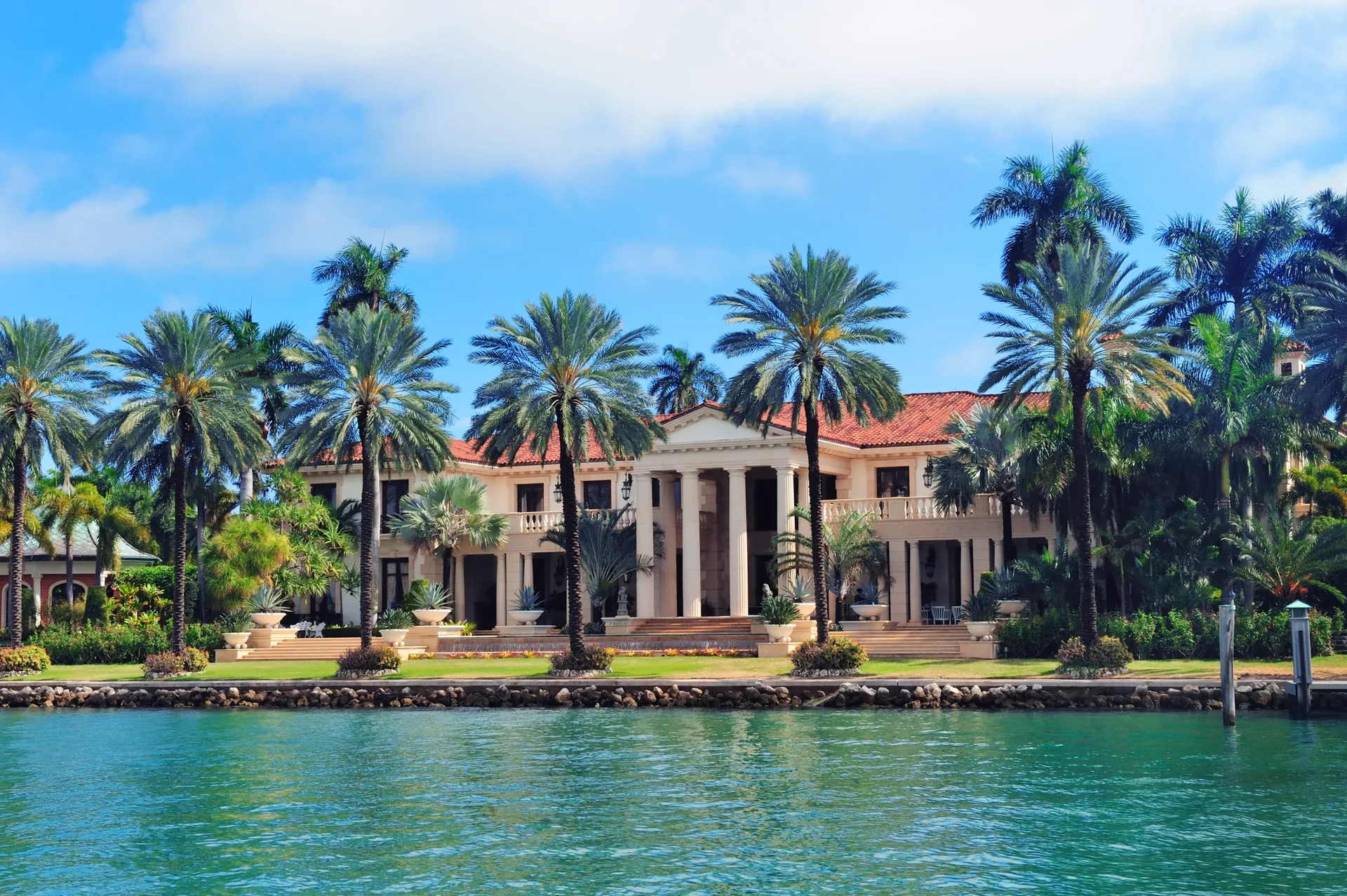
What Makes an Address Prestigious
Prestige isn’t just about a high price tag: it’s about scarcity, history, privacy, and the company you keep. The world’s most coveted addresses share a handful of characteristics: limited inventory, multi-generational wealth concentration, proximity to power (whether political, financial, or cultural), and an almost mythical reputation that transcends real estate cycles. These are streets where properties rarely hit the open market, where transactions happen quietly between family offices, and where a ZIP code alone can open doors that money cannot.
What separates a merely expensive neighborhood from a truly prestigious one is longevity. Hot markets come and go, but addresses like Avenue Montaigne or Central Park South have commanded premium prices for centuries. They weather recessions, political upheavals, and market corrections with remarkable resilience. When global uncertainty rises, trophy addresses don’t depreciate, they become more desirable as safe havens for capital.
Another hallmark: institutional memory. These addresses carry stories, of royal families, industrial titans, and cultural icons who shaped the modern world. Owning there means buying into a narrative larger than yourself. It’s why a modest apartment on Île Saint-Louis can outprice a sprawling villa elsewhere in Paris.
Europe’s Crown Jewels
London: Mayfair, Knightsbridge, Belgravia
London’s golden triangle of Mayfair, Knightsbridge, and Belgravia represents arguably the densest concentration of private wealth on the planet. Mayfair, bounded by Park Lane and Regent Street, has been London’s most expensive district since the 18th century. Grosvenor Square, once home to the American Embassy, is flanked by Georgian townhouses that rarely change hands. Knightsbridge needs little introduction. One Hyde Park, the Rogers Stirk Harbour-designed development, shattered records with a £140 million penthouse sale in 2014. Belgravia, with its white stucco terraces and garden squares, offers something rarer in central London: genuine residential tranquility. Eaton Square remains the crown jewel, where a six-bedroom apartment can command north of £35 million.
What makes London unique is its legal infrastructure. The UK’s robust property rights, transparent land registry, and stable political environment attract capital from jurisdictions where those things are less certain. A Mayfair address isn’t just a home, it’s an insurance policy.
Paris, Île Saint-Louis, Avenue Montaigne
Parisian prestige operates on a different wavelength. Whereas London prizes square footage, Paris values provenance. Île Saint-Louis, the smaller of Paris’s two natural islands on the Seine, contains only about 2,500 residents. Apartments here, many in 17th-century hôtels particuliers, overlook the Seine with views of Notre-Dame. When they appear on the market, which is rarely, they command €30,000, €40,000 per square meter.
Avenue Montaigne, in the 8th arrondissement, is the Champs-Élysées’ more refined sibling. Lined with Dior, Chanel, and Valentino flagship stores, its residential apartments sit above the world’s most prestigious retail addresses. A pied-à-terre here signals arrival in Parisian society.
Monaco: Larvotto, Monte-Carlo
Monaco is an anomaly: a sovereign city-state smaller than Central Park where the average price per square meter exceeds €50,000. Larvotto, the beachfront district, is home to the Tour Odéon. Europe’s tallest residential tower and the site of a €330 million penthouse, the most expensive apartment ever sold. Monte-Carlo, centered around the Casino and Hôtel de Paris, offers Belle Époque elegance. Monaco’s zero income tax and political stability make it a magnet for the world’s ultra-high-net-worth individuals. Residency here isn’t just about the view, it’s about the jurisdiction.
Geneva: Cologny, Champel
Switzerland’s most prestigious addresses occupy the hills above Lake Geneva. Cologny, a commune of roughly 5,000 residents, has the highest property prices in the country. It’s where the World Economic Forum was born, where private banks maintain discreet offices, and where billionaires park assets in lakefront villas invisible from the road. Champel, closer to the city center, offers a quieter form of prestige, leafy streets, excellent international schools, and proximity to the UN and WHO headquarters. Swiss discretion means these transactions are rarely publicized, but properties routinely change hands above CHF 30 million.
The Americas
New York, 57th Street, Central Park South, Tribeca
New York’s trophy address landscape was transformed by the “supertall” boom along 57th Street, now known as Billionaires’ Row. 432 Park Avenue, at 1,396 feet, and 111 West 57th Street, the world’s skinniest skyscraper, redefined what urban luxury could mean. A penthouse at 220 Central Park South set the American record at $238 million in 2019. Central Park South remains the city’s most enduringly prestigious corridor, the Ritz-Carlton, the Plaza, and 15 Central Park West anchor a strip where park views command eight-figure premiums.
Tribeca represents a different flavor of prestige: celebrity-driven, loft-living cool. Robert De Niro’s Greenwich Hotel and Taylor Swift’s $50 million compound have cemented the neighborhood as downtown’s answer to uptown wealth.
Miami: Star Island, Indian Creek
Miami’s ultra-luxury market has boomed since 2020, but two islands have always occupied their own tier. Star Island, connected to the MacArthur Causeway, counts Gloria Estefan and Sean Combs among its residents. The 35-home island offers complete privacy with a guard gate and panoramic Biscayne Bay views. Indian Creek Village, aka the “Billionaire Bunker,” is an even more exclusive 41-home enclave with its own police force. Jeff Bezos has purchased multiple properties here, pushing values past $100 million. The island’s total population: 42 residents.
Los Angeles: Beverly Hills, Bel Air, Holmby Hills
Los Angeles’s “Platinum Triangle”, Beverly Hills, Bel Air, and Holmby Hills, forms the backbone of West Coast prestige. Beverly Hills’s 90210 ZIP code is globally recognized; North and South Bedford Drive, Roxbury Drive, and the Flats are where pedigreed wealth concentrates. Bel Air, in the hills above UCLA, offers sprawling estates behind gates. The “Bel Air Spec” market has seen new construction list above $150 million. Holmby Hills, the smallest and most exclusive of the three, is home to fewer than 500 properties on large, wooded lots, including the Playboy Mansion and the Spelling Manor.
Middle East & Africa
Dubai: Palm Jumeirah, Emirates Hills
Dubai has emerged as a global luxury powerhouse. Palm Jumeirah, the iconic artificial archipelago, offers beachfront villas with private stretches of sand and views of the Dubai Marina skyline. Signature villas on the fronds have sold for north of AED 300 million (£62 million), attracting buyers from Europe, Russia, and India. Emirates Hills, the Beverly Hills of Dubai, surrounds the Montgomerie Golf Course with palatial villas. The neighborhood is home to diplomats, business magnates, and members of royal families from across the Gulf. Zero property tax and a tax-free environment amplify the value proposition.
Cape Town: Clifton, Bantry Bay
South Africa’s most prestigious addresses cling to the slopes of the Twelve Apostles mountain range overlooking the Atlantic. Clifton’s four beaches, imaginatively named First through Fourth, are backed by modern glass-and-concrete villas embedded in the cliffs. A Clifton beachfront bungalow sold for R175 million in 2023, a South African record. Bantry Bay, a short drive toward the city center, offers larger plots and even fewer properties. The area attracts European buyers seeking a second-home market where the weak rand makes trophy properties remarkably accessible in hard-currency terms.
Asia-Pacific
Hong Kong: The Peak, Deep Water Bay
Hong Kong has consistently ranked as the world’s most expensive residential market, and The Peak is its apex, literally and figuratively. At 552 meters above Victoria Harbour, this mountaintop enclave offers commanding views and, critically, cooler air in a subtropical city. Peak Road and Mount Austin Road are lined with mansions owned by old Hong Kong trading families and mainland Chinese billionaires. A house on The Peak sold for HK$2.1 billion (US$268 million) in 2021. Deep Water Bay, on the south side of Hong Kong Island, offers beachfront luxury and is home to Li Ka-shing, Hong Kong’s richest man. The Hong Kong Golf Club and Deep Water Bay Beach frame an enclave of fewer than 30 houses.
Singapore: Nassim Road, Sentosa Cove
Singapore’s Nassim Road is the city-state’s most expensive street. Flanked by Good Class Bungalows, a planning designation reserved for the most exclusive residential properties, it’s where embassies, old-money families, and recently arrived tech billionaires coexist. A Nassim Road GCB sold for S$230 million in 2024. Sentosa Cove offers the only oceanfront landed housing in Singapore. With its own marina and strict foreign ownership rules, it’s become a magnet for international buyers seeking a tropical bolthole with a Singaporean passport’s advantages: rule of law, world-class healthcare, and political stability.
Sydney: Point Piper, Darling Point
Australia’s most expensive street, Wolseley Road in Point Piper, occupies a tiny peninsula in Sydney Harbour with views of the Harbour Bridge and Opera House. Point Piper’s roughly 1,400 residents include some of the country’s wealthiest families. Point Piper’s real estate record sits at A$130 million for a single property. Darling Point, on the harbour’s south side, combines waterfront mansions with proximity to the CBD and elite private schools like Ascham and Scots College. Sydney’s harbourfront trophy market is supply-constrained by geography, there simply isn’t more waterfront land to build on.
What You Actually Get: Price Benchmarks
What does the money buy at these altitudes? Here’s a realistic picture:
- $1bis3 million. A studio or small one-bedroom in a prime Paris or London building. A one-bedroom pied-à-terre in a less prestigious New York co-op. Entry-level Clifton apartment in Cape Town.
- $5bis10 million. A two-bedroom apartment on Central Park South (below the 20th floor). A modest family apartment in Belgravia. A Sentosa Cove condo unit. A well-located Beverly Hills single-family home needing renovation.
- $20bis50 million. A full-floor apartment on Billionaires’ Row. A Nassim Road Good Class Bungalow (entry level). A Palm Jumeirah signature villa. A Point Piper waterfront house.
- $100 million+. A penthouse atop a supertall. A Peak mansion. A Bel Air spec estate. A Star Island or Indian Creek compound. At this tier, you’re competing with sovereign wealth funds and tech founders who treat real estate as an alternative asset class.
What’s striking is not just the absolute numbers, but the price per square meter. Monaco regularly exceeds €100,000/m². The Peak in Hong Kong has hit HK$1.5 million/m² (US$192,000/m²). By comparison, even prime Manhattan seems almost reasonable at $30,000, $50,000/m². These are prices where square footage ceases to be a meaningful metric, you’re buying the address, not the air rights.
The Hidden Costs of a Trophy Address
The purchase price is just the entry ticket. Maintaining a trophy property comes with a second set of costs that catch even sophisticated buyers off guard:
- Service charges and building fees. In super-prime London and New York developments, annual service charges can run £50,000, £200,000+. One Hyde Park’s service charge is approximately £18,000 per year for a one-bedroom. These cover concierge, security, spa, and pool facilities but represent a permanent overhead.
- Property taxes. The UK’s stamp duty land tax on a £20 million property exceeds £2.3 million. In Singapore, foreign buyers pay a 60% Additional Buyer’s Stamp Duty. New York’s mansion tax can add millions. Some jurisdictions, like Monaco and Dubai, offer relative relief, but that’s priced into the market.
- Staff. A serious estate in Bel Air or The Peak requires permanent staff: housekeepers, drivers, gardeners, private chefs. Annual staffing costs can exceed $500,000 before benefits.
- Insurance. Insuring a $100 million property, particularly one with an art collection, requires specialized underwriters. Premiums routinely reach six figures annually.
- Currency risk. Most of these markets transact in local currency. A British buyer purchasing in Monaco (euros) or a Chinese buyer in London (sterling) faces exchange-rate exposure that can add or subtract millions from the effective price over a holding period.
Buying into a Prestigious Address: The Process
Acquiring a trophy property is nothing like a standard residential purchase. The process is deliberately opaque, designed to filter out casual interest:
- Off-market access. The best properties never appear on public listing portals. They’re traded through specialized agents, family offices, and private networks. Buyers without the right introductions may never know a property was available.
- Proof of funds. Before any viewing, expect to provide a banker’s reference or proof of liquid assets. No agent at this level will show a property without verified capability.
- Legal structuring. Purchases are almost always made through corporate entities, trusts, or offshore holding companies. This isn’t just about tax optimization, it’s about privacy. The Land Registry entry for a Belgravia townhouse might list a BVI company, not an individual.
- Due diligence. At this price point, due diligence extends beyond structural surveys. Buyers investigate title history, neighbor disputes, planned developments, conservation restrictions, and political risk. A thorough process can take 6bis12 months.
- Negotiation and closing. Negotiations are multi-month affairs conducted between solicitors. In some jurisdictions, like Monaco, the notary plays a central role. In others, like Dubai, the Land Department oversees transfer. Closing costs, legal, notary, registration, can add 5bis10% to the purchase price.
Emerging Prestige: Where the Next Billionaires Are Buying
While the established addresses above aren’t going anywhere, a new generation of wealth is reshaping the map. Several locations are emerging as the trophy addresses of tomorrow:
- Aspen, Colorado. Red Mountain and Starwood have seen values quadruple in a decade. Remote workers and climate-conscious buyers are migrating to altitude. A Red Mountain estate listed at $100 million in 2024.
- Lake Como, Italy. The Golden Triangle of Blevio, Torno, and Laglio continues to attract tech wealth. George Clooney’s Villa Oleandra made the lake famous, but it’s the privacy and proximity to Milan that drives prices.
- Algarve, Portugal. The Golden Triangle of Quinta do Lago, Vale do Lobo, and Vilamoura offers European luxury at a discount to Monaco. Portugal’s tax incentives and Golden Visa history have seeded a community of international buyers.
- Tokyo: Shirokane, Minami-Azabu. Japan’s ultra-luxury market is relatively underdeveloped, but that’s changing. New high-end developments in central Tokyo are attracting Asian wealth seeking a politically neutral, culturally rich safe haven.
- Riyadh and Abu Dhabi. As Gulf economies diversify beyond oil, new luxury enclaves are emerging. Saudi Arabia’s Diriyah Gate and the UAE’s Saadiyat Island are positioning themselves for the next wave of regional wealth.
Is a Trophy Address Worth It?
The honest answer: it depends on what you’re buying it for. As a pure financial investment, trophy addresses have historically outperformed broader real estate indices but underperformed equities over very long horizons, unless you factor in their role as capital preservation vehicles. In a world of currency devaluation, political instability, and rising wealth taxes, a freehold property in a stable jurisdiction with strong rule of law functions as a form of wealth insurance that no stock certificate can replicate.
As a lifestyle purchase, the value is even harder to quantify. Access to networks, the “neighbor effect”, is real. Living on The Peak or Nassim Road puts you in daily proximity to people who move markets, shape policy, and create opportunities. For entrepreneurs and investors, this is often the unspoken ROI of a trophy address: lunch with a neighbor can be worth more than the property itself.
But there are trade-offs. These neighborhoods can feel like gilded cages, beautiful, secure, and insulated from the grit that gives cities their soul. Privacy comes at the cost of community. And the maintenance burden, both financial and administrative, is relentless. A trophy address is not a passive asset; it’s a responsibility.
The buyers who thrive in these markets are those who understand what they’re purchasing: not just walls and windows, but a permanent seat at a table most people never see. Whether that’s worth eight, nine, or ten figures is a question only the buyer can answer.
Explore more at laxary.com/topics/real-estate/ and laxary.com/topics/living/.
More from Real Estate
Luxury Real Estate Worldwide: The Complete Guide to Prime Property Markets
Luxury real estate worldwide guide: compare prime property markets in London, Monaco, Dubai, New York and beyond, with 2026 prices, taxes and buying s…
Luxury Holiday Home Ownership: The Complete Guide to Buying Your Dream Vacation Property
The Rise of the Second Home Economy The global second home market has undergone a seismic shift over the past decade. What was once the exclusive doma…
The Ultimate Guide to Luxury Property Investment in 2026
Why Luxury Real Estate Remains the Ultimate Asset Class For centuries, prime real estate has stood apart from every other investment vehicle. Unlike e…